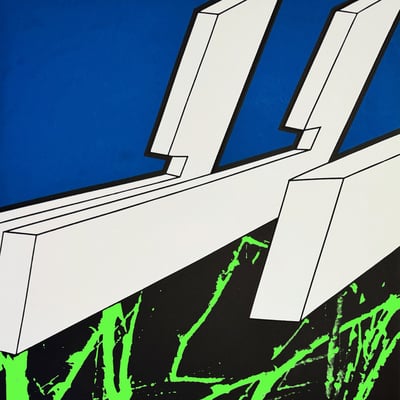
Oneohtrix Point Never Tranquilizer
Released Nov 21, 2025 Warp Records
Established consensus 9 professional reviews Updated Nov 28, 2025
Broadly positive consensus
Oneohtrix Point Never's Tranquilizer arrives as a meticulously assembled collage of vanished sounds and 1990s-era textures, and critics largely agree it marks a striking return to form.
How ChoruScore worksCritics' Top Tracks
The songs critics returned to most
Rodl Glide
8 critic mentions
“shift during Rodl Glide, where a slow ooze of sound is dramatically replaced by full-on rave dynamics” — The Guardian
D.I.S.
8 critic mentions
“The vast blankets of sound that open "D.I.S." get poked with clicks and crackles” — Paste Magazine
Lifeworld
8 critic mentions
“In the next track, “Lifeworld,” scattered percussion brings to mind infinite monkeys” — Pitchfork
Full critic consensus
Oneohtrix Point Never's Tranquilizer arrives as a meticulously assembled collage of vanished sounds and 1990s-era textures, and critics largely agree it marks a striking return to form. Across nine professional reviews the record earned an 83.71/100 consensus score, with reviewers repeatedly praising the album's ability to turn archival samples into vivid, otherworldly atmospheres that balance dejection and surreal bliss. Standout moments named again and again include “Rodl Glide”, “Bumpy”, “Lifeworld” and “D.I.S.”, while “Waterfalls” is frequently cited as a luminous closer.
Critics consistently highlight Lopatin's textural freeform composition and sample-based reconstitution as the album's chief strengths. Reviews from The Quietus, Pitchfork and The Guardian note how 90s ambient and chillout signifiers are warped into unsettling juxtapositions, producing high-fidelity production that still feels haunted by digital decay and lost media. Writers such as those at Paste Magazine and The Needle Drop emphasize the record's slipperiness - fragments cohere into propulsion and then mutate - and treat that structural tension as deliberate craft rather than a flaw. Across professional reviews, “Rodl Glide” emerges as the most frequently lauded track for its ecstatic shifts, while “Bumpy” and “Lifeworld” receive praise for sustained momentum and evocative synth breadth.
While the consensus is favorable, some critics register ambivalence about the album's refusal of tidy pop structures: the pleasure comes from discovery and process, not instant hooks. That nuance makes Tranquilizer a record best appreciated with close listening; for readers searching for a Tranquilizer review or wondering what the best songs on Tranquilizer are, the critical consensus points to “Rodl Glide”, “Bumpy” and “Lifeworld” as essential entry points. The reviews below unpack how Lopatin's archival approach turns digital ephemera into moments of genuine enchantment and unease.
Track Ratings
How critics rated each track, relative to this album (0-100). Only tracks that made critics feel something are rated.
For Residue
Bumpy
Lifeworld
Measuring Ruins
Modern Lust
Fear of Symmetry
Vestigel
Cherry Blue
Bell Scanner
D.I.S.
Tranquilizer
Storm Show
Petro
Rodl Glide
Waterfalls
Get the next albums worth your time.
Critic-backed picks in one clean digest. No clutter.
What Critics Are Saying
Deep insights from 9 critics who reviewed this album

Critic's Take
Paul Attard hears the best songs on Tranquilizer as moments where Daniel Lopatin lets sampled artifacts fully collide - the opener “For Residue” serves as a mesmerizing preview, “Bumpy” glows with shimmering piano reverb against noise, and “Rodl Glide” detonates into a hardcore techno switch-up. Attard writes in a measured, analytical tone that revels in texture and structural tension, praising how tracks like “Lifeworld” sustain propulsive momentum while others mutate before they resolve. The review frames these top tracks as exemplars of Lopatin’s knack for making artificial sounds feel eerily organic and vibrantly alive.
Key Points
-
The best song, "For Residue," is best because it sets the album’s menacing, sample-based tone in a concise, mesmerizing way.
-
The album’s core strength is Lopatin’s mastery of structural tension, making synthetic fragments mutate and collide into vivid, pulsating textures.
Themes

Critic's Take
Oneohtrix Point Never's Tranquilizer is a project born of lost online archives, and its best songs - notably “Rodl Glide” and “D.I.S.” - turn dusty sample CDs into moments of real wonder. Liam Inscoe-Jones writes with a relish for the album's uncanny textures, calling the record a celebration rather than a requiem, and pointing to “Rodl Glide” as possibly the best OPN song in a decade. The review emphasises how the process-led approach yields both melancholy (the piano in “Fear of Symmetry”) and ecstatic synth eruptions (the flurry in “D.I.S.”), which together make the best tracks on Tranquilizer feel like discoveries.
Key Points
-
‘Rodl Glide’ is singled out as the album's pinnacle and possibly the best OPN song in a decade.
-
The album's core strength is transforming lost digital detritus into moments of enchantment and emotional range.
Themes

Critic's Take
Philip Sherburne hears Lopatin mining archived commercial samples to great effect on Tranquilizer, and he repeatedly singles out the opening swirl and “Lifeworld” as the album’s clearest pleasures. The review’s tone is admiring and precise, noting how the record’s textures—wind, chimes, pitched-down voices, cottony clouds—make tracks like “For Residue” and “Lifeworld” the best songs on Tranquilizer. Sherburne frames these moments as transportive and pleasurable rather than purely conceptual, arguing that Lopatin’s intuitive use of samples yields the album’s sweetest rewards.
Key Points
-
The best song is the opening "For Residue" because its layered textures establish the album’s mysterious, transportive mood.
-
The album’s core strengths are its evocative use of archived samples and rich, cinematic electronic textures.

Critic's Take
Oneohtrix Point Never's Tranquilizer feels like a meditation on digital ephemerality, where Lopatin turns vanished samples into surprised triumphs. The review holds up songs like “Bumpy”, “Lifeworld” and “Rodl Glide” as moments when fragments cohere into something beautiful, often slipping apart only to reconstitute themselves. Devon Chodzin's voice stays measured and observant, praising these freeform excursions over the pop structures of prior records, and arguing that the album's slipperiness is exactly its strength. For listeners asking about the best songs on Tranquilizer, the review elevates those three tracks as the clearest exemplars of Lopatin's tour-de-force sampling and textural daring.
Key Points
-
The review singles out "Rodl Glide" as a euphoric tour de force and highlights "Bumpy" and "Lifeworld" for their vivid sample-driven moments.
-
Tranquilizer's core strength is its skillful reworking of ephemeral, archival samples into slippery, beautiful freeform compositions.
Themes

Critic's Take
Oneohtrix Point Never's Tranquilizer repeatedly rewards close listening, and the review makes clear which tracks stand out - the creeping unease of “Bumpy”, the lightheaded tilt of “Lifeworld” and the rave-like surge of “Rodl Glide”. Petridis writes in his familiar analytical, detail-rich voice, noting how familiar 90s ambient signifiers are warped into unsettling juxtapositions that make those songs the album's most compelling moments. The piece frames the best songs on Tranquilizer as moments where nostalgia is bent into something unpredictable, so listeners searching for the best tracks on Tranquilizer should start with “Bumpy”, “Lifeworld” and “Rodl Glide”.
Key Points
-
The best song(s) are those that warp familiar 90s ambient signifiers into unsettling, attention-demanding moments, notably Bumpy and Lifeworld.
-
The album's core strength is its meticulous use of archival sample CDs to create nostalgia-tinged but restless, kaleidoscopic soundscapes.
Themes

Critic's Take
In a typically evocative voice, Oneohtrix Point Never's Tranquilizer finds its best songs in the way they reanimate buried sounds - notably “For Residue” and “Rodl Glide” - turning '90s sample-CD fragments into vivid, strange pop. The record's highs, from the pulsing opener to the head-nodding power of “Rodl Glide”, show Lopatin's gift for making archival detritus feel alive and uncanny. At its center, tracks like “D.I.S.” and “Waterfalls” balance exhaustion with tenderness, revealing why listeners ask which are the best songs on Tranquilizer and keep returning for more.
Key Points
-
The best song, exemplified by "Rodl Glide", succeeds as a head-nodding powerhouse blending J Dilla warmth and Aphex Twin oddity.
-
The album's core strengths are its archival sampling, evocative '90s textures, and the way Lopatin transmutes obsolete sounds into warm, nostalgic but tense compositions.
Themes

Critic's Take
Fabrics of the past quilted together is exactly how Oneohtrix Point Never constructs Tranquilizer, and the reviewer highlights the best songs accordingly. The review repeatedly praises “Bumpy” and “Lifeworld” for their sweeping synthesizer breath and pacing, and names “D.I.S.” and “Rodl Glide” among the recommended tracks for their textural surprises. The voice is admiring and analytic, noting how “Waterfalls” closes the record on an upbeat, layered New Age note while the standout “Rodl Glide” shifts from trip hop into glitchy rave. Overall the critic frames these as the best tracks on Tranquilizer because they balance nostalgia, momentum and inventive production.
Key Points
-
The standout "Rodl Glide" is best for its abrupt stylistic shifts and unique structure.
-
The album’s core strengths are its nostalgic sampling, layered ambient textures, and disciplined pacing.
Themes
Th
Critic's Take
Oneohtrix Point Never's Tranquilizer feels like Daniel Lopatin turning dusty sample CDs into vivid, otherworldly sound collages, and the best songs on Tranquilizer - like “Cherry Blue” and “Waterfalls” - show that uncanny mix of classic synth beauty and alien texture. The record's highs are intoxicating: “Cherry Blue” is a killer synth composition that evolves like vintage Tangerine Dream, while the closer “Waterfalls” finishes with a gorgeous harpsichord flourish. Elsewhere, tracks such as “Bumpy” and “Rodl Glide” deliver striking imagery and edge-of-your-seat moments, even when some pieces feel deliberately slippery. Overall, Tranquilizer presents captivating, studied craft, making its best tracks stand out as the album's emotional and sonic centerpieces.
Key Points
-
The best song, notably "Waterfalls", succeeds because it provides a gorgeous, cohesive finish that unifies the album's collage palette.
-
The album's core strengths are its evocative collage-based sound design, high-fidelity production, and ability to evoke vivid imagery.
Themes

Critic's Take
In a glowing return to form, Oneohtrix Point Never shapes Tranquilizer into a meditation on digital ephemerality where tracks like “Bumpy” and “Rodl Glide” stand out as the album's best songs for their euphoric eruptions and cosmic stutter. The record’s slipperiness and reconstitution of samples make these best tracks on Tranquilizer feel like mini-journeys, rewarding attentive listening rather than tidy pop hooks.
Key Points
-
“Bumpy” is the best song because its off-center samples evaporate into a compelling, cosmic stew that exemplifies the album's strengths.
-
The album's core strengths are its manipulation of samples and freeform, reconstituting structures that reward attentive listening.