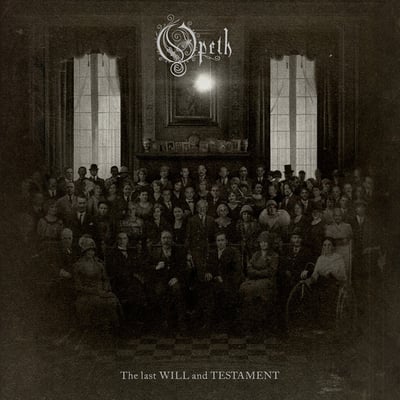
Opeth The Last Will and Testament
Released Nov 22, 2024 Moderbolaget, Ltd Under exclusive license from Moderbolaget, Ltd to Reigning Phoenix Music GmbH All Rights Reserved
Established consensus 6 professional reviews Updated Dec 29, 2025
Broadly positive consensus
Opeth's The Last Will and Testament returns the band to a widescreen, often gothic theater of sound where narrative ambition and heavy prog collide.
How ChoruScore worksCritics' Top Tracks
The songs critics returned to most
§1
5 critic mentions
“If you’ve heard the first two singles, “§1” and “§3,” you know what you’re getting.” — Glide Magazine
§4
3 critic mentions
“§4” offers some of The Last Will and Testament’s most thrilling moments” — PopMatters
§3
3 critic mentions
“You may like Opeth's new animated video for §3 offers a visual interpretation of The Last Will And Testament's narrative” — Classic Rock Magazine
Full critic consensus
Opeth's The Last Will and Testament returns the band to a widescreen, often gothic theater of sound where narrative ambition and heavy prog collide. Across six professional reviews the record earns a 62.83/100 consensus score, and critics consistently point to a handful of standout songs that anchor the album's strengths and expose its faults.
Reviewers agree that the best songs on The Last Will and Testament provide the clearest examples of Opeth's renewed heft and cinematic prog evolution. “§1” repeatedly surfaces as a rampaging, showpiece opener, while “§4” is praised for its dramatic pivot from gothic death metal to harp and flute textures. Critics also name “§3” and “A Story Never Told” among the record's highlights for memorable solos, emotional closure and dynamic control. Professional reviews from PopMatters, Classic Rock and Glide frame these tracks as the moments where instrumental virtuosity, literary narrative and a return to heaviness cohere.
Still, the consensus flags inconsistency. Several critics note the album's ambitious scope sometimes yields excess - sections intended to fuse Opeth's eras can feel muddied or disjointed rather than transcendent. Praise and reservation sit side by side: some reviewers call the album the band's heaviest and most disciplined work in years, while others find the sprawling concept and showmanship undermine cohesion. That tension between prog experimentation and extreme metal roots defines the critical conversation.
For readers searching for an The Last Will and Testament review or wondering "is it worth listening," the verdict is mixed but compelling: the collection contains must-listen moments that justify the album's ambition, even if the full sequence does not always sustain its own drama.
Track Ratings
How critics rated each track, relative to this album (0-100). Only tracks that made critics feel something are rated.
§1
§2
§3
§4
§5
§6
§7
A Story Never Told
Get the next albums worth your time.
Critic-backed picks in one clean digest. No clutter.
What Critics Are Saying
Deep insights from 7 critics who reviewed this album

Critic's Take
Adrien Begrand writes with relish that Opeth's The Last Will and Testament finds the band bridging extremes, and he singles out “§1” and “§4” as the album's showpieces. He treats “§1” as a rampaging opener that recalls earlier glories while establishing the drama, and presents “§4” as one of the record's most thrilling moments, shifting from gothic death metal to harp, flute and a monumental bridge. The review frames these best tracks as evidence that Opeth have produced their most focused, disciplined and heaviest work in over 15 years.
Key Points
-
“A Story Never Told” is best for its gorgeous mellotron-driven balladry and emotional coda that reframes the narrative.
-
The album's core strengths are its seamless fusion of extreme metal, 1970s progressive rock, and chamber textures with focused songwriting.
Themes

Cl
Critic's Take
Opeth sound reinvigorated on The Last Will and Testament, a protean, shape-shifting record whose best moments include “§1” and “A Story Never Told”. The reviewer's tone is celebratory and analytical, noting the welcome return of Åkerfeldt's death growl and the literariness that elevates the concept. He praises the dynamic control that makes even the most extreme passages oddly welcoming, arguing that the album ranks with Still Life and Blackwater Park.
Key Points
-
The best song, §1, stands out for its sepulchral contrasts and a cameo that heightens its strangeness.
-
The album's core strengths are narrative ambition, dynamic control, and successful blending of prog and occasional extremity.
Themes

Critic's Take
Opeth's The Last Will and Testament is a triumphant synthesis of the band's heavier instincts and '70s prog flourishes, and the best songs on the album - notably “§1” and “§3” - illustrate that marriage perfectly. McMahan writes with delighted certainty, calling the record the band's heaviest material since Watershed and praising the cinematic, haunted textures that make tracks like “§6” stand out. He frames the record as an epic-poem style narrative rather than an overt concept album, which lets standout songs breathe within a cohesive whole.
Key Points
-
The best song(s) like "§1" stand out because they fuse Opeth's renewed heaviness with '70s prog flair.
-
The album's core strengths are its cinematic, literary narrative and cohesive pacing that make tracks flow as a unified whole.
Themes
Ke
Critic's Take
Longstanding purveyors of the elaborate and the unexpected, Opeth on The Last Will and Testament show off their ambition but also their excess. The writing voice remains admiring of their attention to detail, even as it warns that the album's sheer expanse may overwhelm casual listeners. Ultimately the opener and second track are framed as the most immediately impressive pieces on the record.
Key Points
-
The album's core strength is meticulous attention to detail and ambitious prog-metal showmanship, though its length and expansiveness can overwhelm.
Themes

Critic's Take
Yet the tone remains measured and critical, noting the album is often muddied by attempts to fuse eras rather than transcend them. Ultimately the best tracks deliver on heaviness and melody, but the record as a whole feels disjointed rather than triumphant.
Key Points
-
The best song, Paragraph Two, is praised for coherence, infectious grooves and heavier impact.
-
The album's core strengths are its concept and initial heaviness, but it struggles with consistency and blending eras.
Themes

Critic's Take
In his measured, evocative tone Mike Ainscoe crowns Opeth's The Last Will and Testament as a dark, theatrical return where the best songs - notably “§4” and “A Story Never Told” - crystallize the album's strengths. He writes with the same solemn relish the record itself offers, pointing to the mid-point where “§4” moves from demonic drama to a flute‑laced, guitar‑soaked standout and to the pastoral closure of “A Story Never Told” for emotional payoff. The review reads like the sleeve note to the record: heavy on narrative, heavy on atmosphere, and satisfied that Opeth have nudged their goalposts into something darker and more rewarding for fans of both Prog and Death Metal.
Key Points
-
§4 is best for its dramatic arc, flute decoration, and a guitar solo called one of the standouts.
-
The album's core strengths are its gothic narrative, balance of Prog and Death Metal, and strong performances.