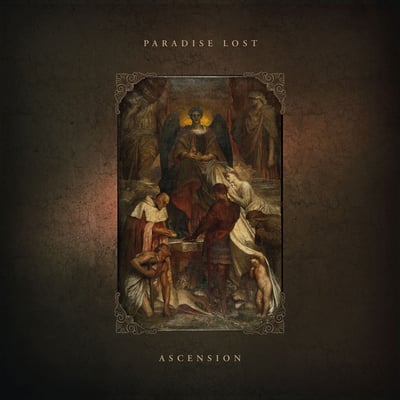
Paradise Lost Ascension
Released Sep 19, 2025 Nuclear Blast
Established consensus 7 professional reviews Updated Sep 4, 2026
Broadly positive consensus
Paradise Lost's Ascension arrives as a confident late-career statement that stitches the band's doom and goth metal roots into a vividly contemporary sound.
How ChoruScore worksCritics' Top Tracks
The songs critics returned to most
Serpent On The Cross
4 critic mentions
“This is my favorite Paradise Lost song since their heyday and I can’t stop spinning it” — Angry Metal Guy
Diluvium
3 critic mentions
“Late album scorcher “Diluvium” starts off as a plodding, downtrodden number, before riffing up a storm” — Angry Metal Guy
Salvation
4 critic mentions
“Elsewhere, there’s the heavy funereal doom of Salvation and the beautiful melancholy of The Precipice .” — Classic Rock Magazine
Full critic consensus
Paradise Lost's Ascension arrives as a confident late-career statement that stitches the band's doom and goth metal roots into a vividly contemporary sound. Across seven professional reviews the record earned a 78.57/100 consensus score, with critics repeatedly pointing to a career-retrospective feel that balances miserabilism with moments of hard-won catharsis. Opener “Serpent On The Cross” is singled out as an immediate highlight, while “Salvation” and “Tyrants Serenade” emerge as standout tracks that showcase the album's heft and melodic craft.
Critics consistently praise the songwriting and textural shifts that make the best songs on Ascension feel both familiar and freshly urgent. Reviewers from Distorted Sound and Blabbermouth emphasize the searing guitars and swelling production on “Diluvium” and “Salvation”, while Kerrang! and Classic Rock point to a deliberate nod to earlier eras - riffs that recall Icon and Draconian Times alongside sparse acoustics that swell into gothic grandeur. Across professional reviews the record's strengths are its heavy riffs, melancholy lyricism and a return to stonier textures that reward repeated listens.
While most critics frame the album as a late-career resurgence, some note restraint rather than radical reinvention; praise centers on mastery of form more than risk. That blend of celebration amid oppression gives Ascension both emotional weight and replay value, making it a record that answers the question "is Ascension good" with a qualified yes: not merely nostalgic padding but thoughtfully crafted doom that sits proudly in the band's catalog. Read on for detailed reviews and track-by-track takes below.
Track Ratings
How critics rated each track, relative to this album (0-100). Only tracks that made critics feel something are rated.
Serpent On The Cross
Tyrants Serenade
Salvation
Silence Like The Grave
Lay A Wreath Upon The World
Diluvium
Savage Days
Sirens
Deceivers
The Precipice
This Stark Town
A Life Unknown
Get the next albums worth your time.
Critic-backed picks in one clean digest. No clutter.
What Critics Are Saying
Deep insights from 7 critics who reviewed this album
Bl
Critic's Take
Paradise Lost sound incandescent on Ascension, a late-career triumph that leans into doom and goth metal with ruthless confidence. The review gushes for opener “Serpent On The Cross”, calling it bleak, bullish and instantly memorable, and elevates “Salvation” as a magnificent, crestfallen colossus. The tone is celebratory and assured, insisting this is an instant classic and proof that the band remain at the top of their game.
Key Points
-
The best song is "Serpent On The Cross" because it encapsulates the album's late-career surge with memorable melodies and morose majesty.
-
The album's core strengths are its fusion of doom and goth metal, masterful songwriting, and sustained late-career vitality.
Themes
Di
Critic's Take
On Ascension Paradise Lost reaffirm why they remain gothic-doom stalwarts, with the best tracks like “Serpent On The Cross”, “Salvation” and “Diluvium” showcasing their searing guitars and swelling textures. The record opens with “Serpent On The Cross” as a richly layered, crashing introduction that sets the tone, while “Salvation” pushes guitars and venomous vocals into urgent territory. Moments such as “Diluvium” and “This Stark Town” dare the listener to lose themselves, and the slow build of “Lay A Wreath Upon The World” delivers anthemic payoff. Overall the album balances misery and ascent, delivering heavy enjoyment with lush production and authentic identity.
Key Points
-
The best song is the opening “Serpent On The Cross” because it sets the album's richly layered, crashing tone and rallying emotional arc.
-
The album's core strengths are authentic gothic-doom songwriting, lush production, searing guitars, and an ability to balance misery with uplifting melodies.
Themes

Critic's Take
There is a curious, celebratory gloom on Ascension that makes the best songs feel simultaneously elegiac and defiant. Paradise Lost sound reclaimed on opening “Serpent On The Cross”, where Gregor Mackintosh’s six-string melodies wreath a gnashing core like flowers on a crumbling war memorial. The venomous swagger of “Tyrants Serenade” and the brutal bounce of “Sirens” stand out as the album’s sharpest moments, proof that the band’s elder-statesman doom still hits with fresh, diabolical playfulness. For listeners searching for the best tracks on Ascension, those three songs best capture its blend of beauty, nobility and punch.
Key Points
-
The best song, “Serpent On The Cross”, is best for marrying gnashing death-metal with Gregor Mackintosh’s gorgeous melodies.
-
The album’s core strengths are its blend of mournful beauty, rejuvenated stonier textures, and a playful, nihilistic energy.
Themes


Cl
Critic's Take
Paradise Lost have made an album that revels in their long shadow while still delivering standouts, and Ascension confirms they know how to write memorable gloom. Paul Travers notes that “Silence Like The Grave” and “Sirens” riff back to Icon with a straightforward crunch, and that gives those tracks immediate punch. He praises “Tyrants Serenade” for its Type O Negative-esque creep and singles out “Lay A Wreath Upon The World” for its sparse acoustics swelling into gothic grandeur. Overall, the best songs on Ascension are the ones that wear the band’s history proudly while offering texture and nuance that reward repeated listens.
Key Points
-
Silence Like The Grave stands out by recapturing Icon-era crunch while showcasing vocal variety.
-
Ascension’s strengths are its gothic textures, nods to the band’s past eras, and well-crafted melancholic dynamics.
Themes
An
Critic's Take
As a long-time fan, I found Paradise Lost's Ascension full of victories, led by “Serpent on the Cross” and the sprawling “Salvation” which act as the album's principal triumphs. The record reads like a guided tour of the band's eras, and songs such as “Tyrants Serenade” and “Diluvium” keep the hooks and heft balanced. In the reviewer's voice: this is late-career spark that actually lands, making the best tracks on Ascension feel immediate and essential rather than nostalgic padding.
Key Points
-
“Serpent on the Cross” is the standout for its aggressive, memorable riffs and the reviewer calls it their favorite since the band's heyday.
-
The album's core strengths are strong songwriting, varied callbacks to the band's eras, and sustained heaviness without filler.