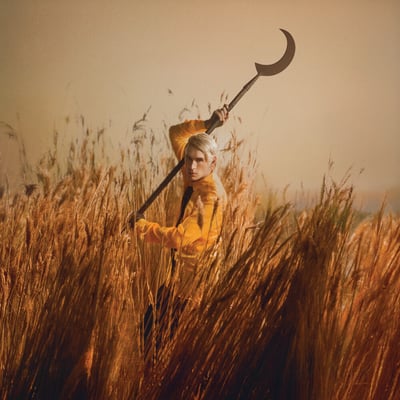
Patrick Wolf Crying The Neck
Released Jun 13, 2025 Apport
Consensus forming 4 professional reviews Updated Nov 29, 2025
Broadly positive consensus
Consensus is still forming across 4 professional reviews. Patrick Wolf's Crying The Neck reconvenes his mythic imagination with a clearer, more chastened voice, mapping Kentian psychogeography onto recovery and renewal.
How ChoruScore worksCritics' Top Tracks
The songs critics returned to most
Good Riddance
1 critic mention
“she manages a perky as well as gorgeously floaty, cathartic, if still bittersweet final track - Good Riddance” — Song Bar
Dies Irae
2 critic mentions
“when Wolf utters "I love you too" at the end of the song, it’s a solemn and life-giving moment” — The Quietus
Math Equation
1 critic mention
“On Math Equation, for example: "You said I needed my own friends / So I found them / Then you fucked them.” — Song Bar
Full critic consensus
Patrick Wolf's Crying The Neck reconvenes his mythic imagination with a clearer, more chastened voice, mapping Kentian psychogeography onto recovery and renewal. Critics agree the record balances chamber strings and spare piano against occasional bursts of electronica, and the consensus suggests a moving, if uneven, return: the album earned a 74.5/100 consensus score across 4 professional reviews.
Reviewers consistently praise the album's quieter, grief-tethered moments as its emotional core. “Dies Irae” and “Reculver” emerge repeatedly as standout tracks, with critics noting how they fold personal mourning into broader ritual and landscape. Critics also single out “Hymn of the Haar” and the high-heat single “Good Riddance” for their blend of bittersweet irony and catharsis, while chamber pieces such as “Song of the Scythe” and “The Curfew Bell” are highlighted for letting Wolf's baritone and strings breathe. Across reviews, themes of mourning and resurrection, recovery from addiction, and modern England criticism thread together to give the album a moral spine.
While some reviewers celebrate the record as a triumphant, emotionally exposed comeback, others flag occasional grandiosity and overblown choruses that undercut its intimacy. The critical consensus praises Wolf's capacity for wry humour and ritualized lyricism even as it calls for sharper restraint going forward. For readers wondering if Crying The Neck is worth listening to, the professional reviews point to a collection where the best songs - notably “Dies Irae”, “Reculver”, and “Hymn of the Haar” - make the album a rewarding, if imperfect, re-emergence in his catalog.
Track Ratings
How critics rated each track, relative to this album (0-100). Only tracks that made critics feel something are rated.
Reculver
Limbo (feat. Zola Jesus)
The Last of England
Jupiter
On Your Side
Oozlum
Dies Irae
The Curfew Bell
Lughnasa (feat. Serafina Steer)
Song of the Scythe
Better or Worse
Hymn of the Haar
Foreland
Get the next albums worth your time.
Critic-backed picks in one clean digest. No clutter.
What Critics Are Saying
Deep insights from 4 critics who reviewed this album
mu

Critic's Take
Patrick Wolf's Crying The Neck is at once a hardscrabble elegy and a stubborn act of repair, and the best tracks - notably “Reculver” and “Dies Irae” - register that uneasy alchemy with crystalline force. Robert Davidson writes with the same mythic sweep that animates the record, dwelling on how “Reculver” unifies two decades of pain and salvation, while “Dies Irae” folds Wolf's fraught past into a life-affirming renewal. This is not a comeback that merely regurgitates former glories, but a measured, cathartic reconfiguration of Wolf's signature extremes into something eerily consoling.
Key Points
-
The best song is "Dies Irae" because it crystallises renewal, personal grief, and Wolf's definitive musical hallmarks into a single, life-affirming track.
-
The album's core strengths are its intertwining of Kentian landscape and ritual with intimate reckoning, producing a cathartic and erudite reinvention of Wolf's sound.
Themes

Critic's Take
Patrick Wolf's comeback on Crying The Neck is emphatic and emotionally exposed, opening with "irresistibly delicate piano chords" that set the tone. Brendan Sharp writes plainly but vividly about recovery and transformation, noting lines like "feet don’t fail me now, don’t fail me again" as evidence of the album's raw honesty.
Key Points
-
The album's core strengths are its candid lyrics, vivid narrative of recovery, and moments of concentrated dark beauty like “The Last Of England”.
Themes

Critic's Take
After a decade away, Patrick Wolf returns with Crying the Neck, where the best songs - chiefly “Reculver” and “Dies Irae” - find him at his most affecting. Attila Peter hears Wolf at his most powerful when he pares back to voice and strings, as on “Song of the Scythe” and “The Curfew Bell”, and praises the moments of minimalism while chiding the overblown choruses. The album trades in contrast - dark and harrowing yet hopeful - and its finest tracks are those small, aching chamber pieces that let Wolf's baritone soar. If he can rein in his excesses, these best tracks suggest a reinvigorated songwriter ready for a stronger follow-up.
Key Points
-
The best song moments come from pared-back arrangements of voice and strings, notably on "Dies Irae".
-
The album’s core strength is its emotional honesty and chamber-like arrangements balanced against occasionally overblown production.