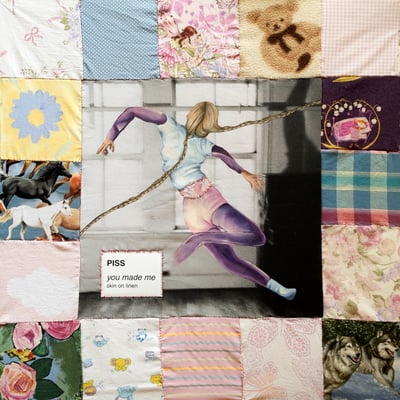
PISS you made me / skin on linen
Released Oct 30, 2026 Sub Pop Records
Consensus forming 4 professional reviews Updated Oct 30, 2026
Strong critical consensus
Consensus is still forming across 4 professional reviews. PISS's you made me / skin on linen is a fierce, difficult listen that turns confronting trauma into an act of resistance.
How ChoruScore worksCritics' Top Tracks
The songs critics returned to most
blocking a scene you can't remember
3 critic mentions
“At the album’s climax, “blocking a scene you can’t remember,” Zantingh, backed by a Slint-esque slowcore build, performs a screenplay in third-person perspective:” — The Line of Best Fit
i keep trying to change the ending
2 critic mentions
Rote Zora. “Resistance is Possible.” Emma, no. 6, June 1984, pp. 39-41.
1 critic mention
Full critic consensus
PISS's you made me / skin on linen is a fierce, difficult listen that turns confronting trauma into an act of resistance. The record earns a 92.5/100 consensus score across four professional reviews, with critics praising its unflinching treatment of sexual violence, misogyny, and survival. Rather than offer easy catharsis, the band uses discomfort to make these experiences impossible to ignore.
Critics agree that the album's force comes from the interplay of spoken word, noise rock, and shifting voices. Its most consistently praised track, “blocking a scene you can't remember,” builds from slowcore tension into manic intensity, centering a raw account of trauma. “i keep trying to change the ending” offers a quieter, more searching counterpoint, imagining safety and change without pretending either comes easily. Reviewers also single out “i wanted to be a singer” for its transformation of spoken word into a scream. Together, these songs trace the lasting effects of gender-based violence while insisting on the possibility of recovery and collective liberation.
The critical consensus is overwhelmingly positive, though the praise comes with a clear caveat: this is not passive or comfortable listening. Some critics emphasize the exhausting pressure of the album's full-length experience, while others focus on the precision and emotional weight of its individual songs. That tension is central to the record's achievement. you made me / skin on linen makes room for rage, vulnerability, and flashes of hope without softening their edges, and the reviews below explore why its confrontation feels purposeful rather than gratuitous.
Track Ratings
How critics rated each track, relative to this album (0-100). Only tracks that made critics feel something are rated.
kai and friends
i wanted to be a singer
andrea I
time loop at hot slit
manon on the trial of gisèle pelicot
a little girl's horse craze betrays her
toni
there was a door
andrea II
how can you act opposite to this emotion?
blocking a scene you can't remember
self-blame with thorn necklace and hummingbird
vikki
Rote Zora. “Resistance is Possible.” Emma, no. 6, June 1984, pp. 39-41.
i keep trying to change the ending
Get the next albums worth your time.
Critic-backed picks in one clean digest. No clutter.
What Critics Are Saying
Deep insights from 5 critics who reviewed this album
Fa
Critic's Take
The best tracks on you made me / skin on linen are not easy listens, and that is precisely the point: PISS make these conversations impossible to ignore. “time loop at hot slit” and “a little girl's horse craze betrays her” move through the misogyny of adolescence, before the most horrific scenes are played out on “there was a door”. The album’s centrepiece, “blocking a scene you can't remember”, is where fractured syntax and Zantingh’s fearless recounting of past trauma feel heaviest. By the end, “i keep trying to change the ending” softly sings a mantra to herself in order to make herself feel safe, though there’s only so long that feeling of ease can be retained before the cycle repeats itself.
Key Points
-
“blocking a scene you can't remember” is the centrepiece, where Zantingh’s confrontation with her fears and fractured syntax feel heaviest.
-
The album’s core strength is its uncompromising account of trauma and misogyny, with music that makes these conversations impossible to ignore.
Themes

Critic's Take
PISS cuts right down to the bone on you made me / skin on linen, constructing and deconstructing noise-rock soundscapes at the pace of a post-traumatic flare-up. The best tracks on you made me / skin on linen include “blocking a scene you can't remember,” where a Slint-esque slowcore build gives way to manic yelling as Zantingh recalls her assault, over and over. Hope is an uphill battle, but it is there to be found among the rubble of this confrontational album, which refuses to temper its own righteous anger and dares to imagine a world where survival must be possible.
Key Points
-
“blocking a scene you can't remember” stands out as the album's climax, its slowcore build giving way to Zantingh's manic recollection.
-
The album's confrontational noise-rock and feminist voices contextualise trauma while holding fast to resistance and survival.
Themes

Critic's Take
PISS make a towering monument in an endless fight on you made me / skin on linen, a complex and challenging record built from carefully crafted rage. The best songs on you made me / skin on linen include “i wanted to be a singer,” whose gnawing guitar swings like a buzzsaw, and the heart-wrenching slowcore of “blocking a scene you can't remember,” where Zantingh's vivid, haunting imagery makes the vulnerability feel brutal. On “i keep trying to change the ending,” notes seem to cast out to infinity, turning pain into something beautiful and imagining a future reality without its predetermination.
Key Points
-
The heart-wrenching slowcore of “blocking a scene you can't remember” makes its vulnerable brutality and haunting imagery especially gripping.
-
The album's carefully crafted rage, plural perspectives and calls for resistance make it a complex, challenging record.
Themes

Critic's Take
PISS’s debut you made me / skin on linen leaves you feeling like you haven’t been able to exhale properly for its entire duration. The review does not single out individual songs, so there are no named best tracks on you made me / skin on linen; instead, its collage of spoken word and noise rock gives space to different voices. It is this multidisciplinary method, and the more developed discussion of sexual violence and gender norms it allows, that makes the record feel breathtaking.
Key Points
-
The review does not identify a best song, praising the album’s overall impact instead.
-
The album’s collage of spoken word and noise rock gives space to different voices and a more developed discussion of its subject matter.
Themes
Th
Critic's Take
PISS drag you under with you made me / skin on linen, a shocking, unflinchingly stark debut. The best songs on you made me / skin on linen are the ones that leave no room to look away: “i wanted to be a singer” turns spoken word into a brutal scream, while “blocking a scene you can't remember” is haunting, intensely private and captivating. The record winds down with “i keep trying to change the ending”, one of its most ambitious and satisfying tracks, making space for silence, crashing reverb and frenetic drums. PISS lean into atonal sounds with flashes of punk fury, making for an often uncomfortable, entirely non-passive listening experience.
Key Points
-
“i keep trying to change the ending” stands out as one of the album’s most ambitious and satisfying tracks, with its free-flowing structure and melodic turns.
-
The album’s core strength is its unflinching mix of spoken word, atonal noise and punk fury in service of confronting violence and trauma.