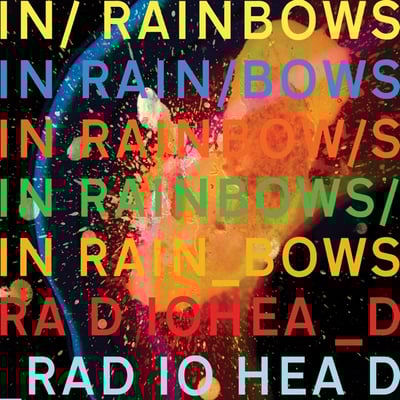
Radiohead In Rainbows
Released Oct 10, 2007 XL Recordings
Established consensus 31 professional reviews Updated Mar 23, 2026
Strong critical consensus
Radiohead's In Rainbows reasserts the band's gift for songcraft with a warm, textured collection that critics call both intimate and adventurous.
How ChoruScore worksCritics' Top Tracks
The songs critics returned to most
All I Need
12 critic mentions
“All I Need", meanwhile, concludes the album's first side by dressing up what begins as a skeletal rhythm section” — Pitchfork
Nude
11 critic mentions
“With its strings and swooning guitars, Nude sounds lushly romantic” — The Guardian
Reckoner
9 critic mentions
“Hell, I’m going back and tipping them another quarter just for the finger-cymbal solo on "Reckoner.” — Rolling Stone
Full critic consensus
Radiohead's In Rainbows reasserts the band's gift for songcraft with a warm, textured collection that critics call both intimate and adventurous. Across 31 professional reviews the record earned an 85.9/100 consensus score, and reviewers consistently point to a handful of standout tracks - “All I Need”, “Reckoner”, “Nude”, “Bodysnatchers”, and “15 Step” - as evidence of its melodic recovery and emotional focus.
The critical consensus emphasizes accessible warmth paired with sonic experimentation: critics praise the album's atmosphere, textured guitars, and restrained production choices that foreground melody and band dynamics. Many reviewers celebrate “All I Need” and “House of Cards” for their romantic directness and heartbreak, while “Reckoner” and “Nude” are singled out for their woozily beautiful, lingering emotional payoff. At the same time publications note a deliberate minimalism and subtlety - the record favors simmering texture over spectacle, letting Phil Selway's drums, Greenwood's touches, and Yorke's plaintive tenor create intimate, often elegiac moments.
Not all voices are unanimous, and critics balance praise with measured reservations about cohesion and occasional production choices, but the dominant narrative frames In Rainbows as a renewal: a band liberated from past pressures, returning to song-focused arrangements without abandoning sonic curiosity. For readers asking whether In Rainbows is good or what the best songs on In Rainbows are, the professional reviews point to those five tracks as entry points and the 85.9 consensus across 31 reviews as a clear critical endorsement. Below, detailed reviews map how each standout track contributes to the album's warm, inventive arc.
Track Ratings
How critics rated each track, relative to this album (0-100). Only tracks that made critics feel something are rated.
15 Step
Bodysnatchers
Nude
Weird Fishes / Arpeggi
All I Need
Faust Arp
Reckoner
House of Cards
Jigsaw Falling Into Place
Videotape
Get the next albums worth your time.
Critic-backed picks in one clean digest. No clutter.
What Critics Are Saying
Deep insights from 31 critics who reviewed this album

Critic's Take
Radiohead sound liberated on In Rainbows, a leaner, warmer record where Thom Yorke's voice is at its most soulful and the band finally seems happy in its own skin. The reviewist highlights the album's sumptuous, enveloping production and fluid guitars soaked in reverb, positioning tracks like “Nude” and “Reckoner” as exemplars of those qualities. It reads as Radiohead refined rather than reinvented, the best tracks on In Rainbows offering mid-tempo indie-rock dipped in synths, loops and beats. Ultimately the critic insists that whatever you pay for In Rainbows, it is worth every penny.
Key Points
-
The best song (e.g. "Nude") is best because it foregrounds Yorke's soulful vocals and the album's warm production.
-
In Rainbows' core strength is its liberated, accessible sound that blends synth textures with mid-tempo indie-rock.
Themes

Critic's Take
Radiohead's In Rainbows is praised for its strong songs and newfound warmth, and the reviewer repeatedly flags best tracks such as “15 Step”, “Bodysnatchers” and “Nude” as highlights. The voice is admiring and precise, noting that “15 Step” channels clattering beats into fantastic melodies while “Bodysnatchers” rocks with a propulsive bass riff. The review lauds “Nude” and “All I Need” for their lush romanticism and life-affirming crescendos, explaining why they rank among the best songs on In Rainbows. Overall the tone is celebratory, emphasising confident songwriting and melodic payoff as reasons these are the best tracks on the album.
Key Points
-
The best song(s) combine experimental textures with strong melodies, making “15 Step” and “Bodysnatchers” standout tracks.
-
The album's core strengths are confident songwriting, melodic payoff, and a newfound warmth and romanticism.
Themes
Gi
NO
En
Q

Critic's Take
Radiohead's In Rainbows feels like a band rediscovering the simple pleasures of songcraft, and the best songs on In Rainbows are those that foreground that warmth - “Nude” and “Reckoner” emerge as the album's emotional apexes. The reviewer luxuriates in the record's "immutable prettiness" and calls out “Nude” for Yorke's generosity and “Reckoner” for revealing itself as "woozily beautiful" over repeated listens. Meanwhile the propulsive “Jigsaw Falling Into Place” and the build-driven “Weird Fishes / Arpeggi” are praised for their urgent dynamics, making them among the best tracks on In Rainbows. The tone is affectionate and measured, insisting that Radiohead's return to accessible melody is nothing to fear.
Key Points
-
The best song is "Reckoner" because repeated listens reveal it as one of Radiohead's most woozily beautiful recordings.
-
The album's core strength is its newfound embrace of uncomplicated beauty and full-band interplay, favoring melody and warm arrangements.
Themes


Critic's Take
Radiohead sounds revitalized on In Rainbows, a record that funnels hard-rock energy into intimate moments and makes songs like “Bodysnatchers” and “Reckoner” feel essential. Rob Sheffield revels in the album's uptempo guitar attack and headphone-tweaking sonics, and he praises the romantic directness that lets “All I Need” ache while “House of Cards” drifts like a fragile lovers-rock ballad. The review reads like a fan’s triumphant field report - vivid, specific, and unabashedly thrilled by how these tracks sing in the live-to-studio transformation. Searchers asking for the best songs on In Rainbows will find Sheffield pointing to “Bodysnatchers”, “Reckoner”, and “All I Need” as high points, backed by clear musical reasons and affectionate praise.
Key Points
-
Sheffield singles out “Reckoner” for a tiny but telling musical flourish that embodies the album’s brilliance.
-
The album’s core strengths are its blend of uptempo guitar energy and intimately arranged balladry, realized through vivid studio touches.
Themes

Critic's Take
In his clear, analytical voice Matthew Fiander notes that Radiohead have returned with an album that feels like rebirth, and he points to the best tracks on In Rainbows as proof. He highlights opener “15 Step” and “Bodysnatchers” for their skin-shedding intensity, and praises “Reckoner” and “Videotape” for subtle power and jarring emotional turns. The review reads like a careful reappraisal, arguing the best songs on In Rainbows show the band enjoying being a band again, privileging Selway’s drums and restrained Greenwood touches. Fiander’s tone is admiring but measured, making the case that these tracks make the album possibly a masterpiece.
Key Points
-
Reckoner is best for its fragile, sublime falsetto and restrained structure that yields power.
-
The album’s core strengths are organic band interplay, Selway’s drumming, and subtle restraint over spectacle.
Themes
mu

Critic's Take
The first impressions here are emphatic and decidedly positive, and Radiohead's In Rainbows is praised as a cohesive, atmospheric statement rather than a singles record. The review lifts out “15 Step” as an indicative opener and singles out “Bodysnatchers” as the lone track that might pass for a single, while placing real weight on “Nude” and “All I Need” as the album's emotional centerpieces. The voice is celebratory but measured, noting small refinements since Kid A and calling “Nude” timeless and “All I Need” frighteningly brilliant. Overall the writer frames the best songs on In Rainbows as those that build atmosphere and reward repeated listens, rather than instant chart hits.
Key Points
-
The best song is judged by emotional impact and atmosphere, with "All I Need" crowned the centerpiece for its crescendo and brilliance.
-
The album's core strength is its cohesive atmosphere and refined evolution from earlier Radiohead work, rewarding repeated listens.
Themes

Critic's Take
Radiohead's In Rainbows is repeatedly framed as a romantic, song-centered record, which makes the best tracks - “All I Need” and “House of Cards” - land with unusual directness and heartbreak. At the same time, the plaintive opening of “House of Cards” is cited as a clear example of Radiohead marrying everyday love-ballad phrasing to their usual unsettling textures. The piece praises the album's synthesis of accessible songs and abstract sounds, which is why listeners seeking the best tracks on In Rainbows should start with those moments of direct lyricism.
Key Points
-
All I Need is the best song for its stark, heartbreaking metaphor and directness.
-
The album's core strength is marrying accessible, song-forward structures with abstract electronic textures.

Pr
Ho

Co
Ti
Sp
Critic's Take
Radiohead's In Rainbows feels like a welcome move back to songcraft, and the best tracks - “Bodysnatchers” and “House of Cards” - show why. Mikael Wood writes with a sly, conversational skepticism and delight, noting how “Bodysnatchers” is the hottest rocker while “House of Cards” becomes the album's most gorgeous quiet-storm ballad. The reviewer's wry metaphors and sly asides underscore that the best songs on In Rainbows balance texture with warmth, turning studio trickery into immediacy. This is not a sprawling experiment; it is Radiohead putting songs back together and, in moments like “Bodysnatchers” and “House of Cards”, succeeding emphatically.
Key Points
-
The best song is "Bodysnatchers" because the reviewer calls it "the hottest rocker" and praises its fuzz-bass aggression.
-
The album's core strength is marrying studio texture with warmth, returning Radiohead to song-focused immediacy.
Themes

Critic's Take
Radiohead arrive at In Rainbows with a curious restraint, and the review finds the best songs are the quietly devastating ones. The heart of the record, the review insists, is “House of Cards”, a gorgeous, flanged, oceanic ballad that captures the album's tender ache. It also singles out “Nude” as the moment the record settles into its spare, eerie balladry, and “Weird Fishes / Arpeggi” for scintillating guitars that sustain the suite. The voice throughout is measured and slightly conspiratorial, framing these best tracks as proof that Radiohead reclaimed a melodic purpose after their contract ended.
Key Points
-
The best song is "House of Cards" because the reviewer calls it the heart of the album and praises its oceanic, flanged beauty.
-
The album's core strengths are its restrained, melodic balladry and an uneasy, organic calm that re-centers the band.
Themes
Ir
Critic's Take
Radiohead return with In Rainbows, a bass-heavy, bleakly minimalistic record where the best tracks - “Nude”, “All I Need” and “Videotape” - reveal its moody rewards. The reviewer lingers on the sepulchral tones of “Nude” and Arpeggi, and the quite lovely shimmer of “All I Need” that softens the album's dour edges. There is praise for the closing “Videotape” as an elegiac, Eno-like finale, which helps explain why listeners ask about the best songs on In Rainbows. Overall the tone is admiring yet measured, noting quiet confidence rather than triumph.
Key Points
-
The best song moments are the sepulchral, atmosphere-driven tracks like "Nude" which epitomize the album's melancholic strength.
-
The album's core strengths are its minimalistic, bass-heavy production and quietly confident mood that rewards attentive listening.
Themes
Am

Critic's Take
Radiohead's In Rainbows refuses a single defining summit, preferring simmering atmosphere over bombast, and the reviewer's eye lingers on tracks like “15 Step” and “Videotape” as embodiments of that mood. The writer praises the album's rhythm - especially the odd, danceable groove of “15 Step” - and notes how “Videotape” closes the first disc peacefully, a quiet finality rather than a climax. Guitar textures and Phil Selway's drumming are repeatedly celebrated as central strengths that make the best tracks subtly memorable. Ultimately the best songs on In Rainbows are those that sustain its eerie, focused atmosphere rather than chase a single hit single.
Key Points
-
The best song(s) like "15 Step" excel by marrying odd metrical grooves with danceable energy.
-
The album's core strengths are its eerie atmosphere, varied guitar textures, and Phil Selway's rhythmic contributions.
Themes


Ev

Critic's Take
Radiohead sound more song-focused on In Rainbows, and the best songs here - “All I Need” and “Videotape” - justify that claim with spine-tingling moments and hypnotic restraint. Simon Rueben’s prose relishes the glittering climax of “All I Need” and the mantra-like simplicity of “Videotape”, arguing these are among the band’s finest works. He balances praise with specifics, pointing out electronic drums on “Bodysnatchers” and excess melody on “House of Cards”, which makes this a clear guide to the best tracks on In Rainbows.
Key Points
-
The best song is “All I Need” because of its superb songwriting and a glittering, spine-tingling climax.
-
The album’s core strengths are restored melody and song structure, balanced by eclecticism and distinctive production choices.
Themes

Critic's Take
Radiohead’s In Rainbows trades in uneasy beauty, and the best songs here stand out for marrying tenderness with invention. The exquisite “House of Cards” is unexpectedly soulful, its line about wanting to be a lover landing like a quiet confession. “15 Step” showcases their best hybrid of programmed beats and organic bass, while “Reckoner” unfurls into a lush, orchestral ending that feels like a glimpse of Radiohead’s future. These tracks make clear why listeners ask about the best songs on In Rainbows - they balance immediacy and surprise in ways the album often achieves but never quite overindulges.
Key Points
-
Reckoner is best for its lush orchestral climax and forward-looking arrangement.
-
The album’s strengths are its moments of invention, sparse beauty, and balanced production between electronics and organic instruments.
Themes
Ti
Re
Critic's Take
Radiohead's In Rainbows is praised for its sonic textures even as the songs sometimes fail to fully cohere. The review repeatedly elevates “Reckoner” as stunning and singles out “House of Cards” and “Videotape” for memorable production touches.
Key Points
-
The best song is "Reckoner" because the review calls it 'stunning' and highlights its rhythmic and production achievements.
-
The album's core strength is its rich sonic experimentation and Greenwood's production, even if full songs sometimes feel underwritten.