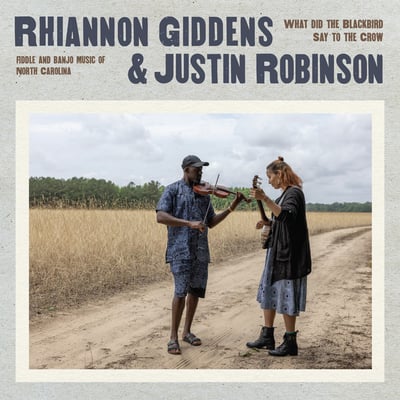
Rhiannon Giddens & Justin Robinson What Did The Blackbird Say To The Crow
Released Apr 18, 2025 Nonesuch
Consensus forming 3 professional reviews Updated Nov 30, 2025
Broadly positive consensus
Consensus is still forming across 3 professional reviews. Rhiannon Giddens and Justin Robinson's What Did The Blackbird Say To The Crow channels porch‑side vitality and oral history into a sunlit document of Black string‑band tradition, recorded with fieldlike intimacy and ambient birdsong.
How ChoruScore worksCritics' Top Tracks
The songs critics returned to most
Marching Jaybird
3 critic mentions
“Giddens’ cascading banjo picking and rolling mimics the rhythms of the title bird in the leisurely unfolding “Marching Jaybird.” — Folk Alley
Rain Crow
1 critic mention
“Justin "Demeanor" Harrington’s bones provide the rhythmic foundation for Robinson’s jaunty fiddling and vocals on animated “Rain Crow,” perfect for a hoedown.” — Folk Alley
Brown's Dream
1 critic mention
“Brown’s Dream,” a traditional tune arranged by Giddens and Robinson, features the two of them trading hot licks as they allow their notes to dart and dash around the central melodic theme.” — Folk Alley
Full critic consensus
Rhiannon Giddens and Justin Robinson's What Did The Blackbird Say To The Crow channels porch‑side vitality and oral history into a sunlit document of Black string‑band tradition, recorded with fieldlike intimacy and ambient birdsong. Critics agree the record captures mentorship and place: outdoor sessions, cicada choruses and restored fiddles make tracks such as “Marching Jaybird” and “John Henry” feel immediate, communal and rooted in lineage.
Across three professional reviews the collection earned an 81.33/100 consensus score, with reviewers consistently praising its preservation of heritage, rhythmic drive, and plainspoken reverence. Reviewers singled out “Marching Jaybird” repeatedly as the album's centerpiece, while “John Henry” and spirited cuts like “Rain Crow” and traditional fiddle‑banjo duets supply danceable momentum and emotional heft. Critics note the record's strengths reside in fidelity to source material, mentorship narratives honoring figures such as Joe Thompson and Etta Baker, and the successful blending of nature sounds with old‑time playing.
While uniformly respectful in tone, reviews emphasize different pleasures: some celebrate the album as a preservationist field notebook that records place and people, others welcome its hoedown energy and drive to make history sway and stomp. Taken together, the critical consensus suggests What Did The Blackbird Say To The Crow is both an archival statement and an affecting collection of standout songs worthy of attention within Giddens's ongoing work to revive and reframe Black string music.
Track Ratings
How critics rated each track, relative to this album (0-100). Only tracks that made critics feel something are rated.
Rain Crow
Brown's Dream
Hook and Line
Pumpkin Pie
Duck's Eyeball
Ryestraw
Little Brown Jug
Going to Raleigh
Country Waltz
Molly Put the Kettle On
Fly Around My Pretty Little Miss
John Henry
Love Somebody
Ebenezer
Old Joe Clark
Old Molly Hare
Marching Jaybird
Walkin' in the Parlor
Get the next albums worth your time.
Critic-backed picks in one clean digest. No clutter.
What Critics Are Saying
Deep insights from 4 critics who reviewed this album


Critic's Take
Rhiannon Giddens and Justin Robinson return to the roots on What Did The Blackbird Say To The Crow, a raw, down-home collection that makes a statement about heritage and freedom. Hynes writes with evident pride about how tracks like “Marching Jaybird” and “John Henry” reclaim Black string-band traditions while capturing sounds of nature. For listeners asking for the best songs on What Did The Blackbird Say To The Crow, the album’s highlights are the lovingly rendered “Marching Jaybird” and the familiar, powerful “John Henry” for their historical weight and emotional immediacy.
Key Points
-
“Marching Jaybird” stands out for its emotional link to Etta Baker and the authentic outdoor recording.
-
The album’s core strength is its preservation of Black string-band tradition through intimate, outdoor recordings that foreground heritage and community.
Themes

Critic's Take
The review reads like a field notebook, delighted by kismet, cicada choirs, and the restored fiddle that makes “Marching Jaybird” a particular standout. The record's strengths are its fidelity to source material and its intimacy - the outdoor recordings render songs such as “Marching Jaybird” and other traditional selections immediate and communal. Overall the album is praised as a timely, rooted document of southern Black string band music, recorded with humility and reverence.
Key Points
-
“Marching Jaybird” is best because it was recorded in Etta Baker’s yard and embodies the album’s living-heritage intimacy.
-
The album’s core strengths are its commitment to place, mentor lineage, and authentic outdoor field recordings.
Themes
Fo
Critic's Take
Rhiannon Giddens and Justin Robinson make What Did the Blackbird Say to the Crow feel like a front-porch invitation, full of banjo picking, jaunty fiddling and the songs that shaped them. The review celebrates spirited moments such as “Rain Crow” and “John Henry”, where animated fiddling and nimble banjo trade hot licks and push for dancing, clapping and revelry. The album’s use of birdsong and cicadas blends nature with tradition, and tracks like “Molly Put the Kettle On” and “Marching Jaybird” show rhythmic vitality that keeps toes tapping. Overall, the record honors mentors Joe Thompson and Etta Baker while delivering lively, earthy performances that spotlight the best tracks and invite listeners to join the hoedown.
Key Points
-
“Rain Crow” is best because its jaunty fiddling, rhythmic bones and vocals make it perfect for a hoedown.
-
The album’s core strengths are its rooted old-time authenticity, mentor-arranged material, and nature-infused, danceable performances.