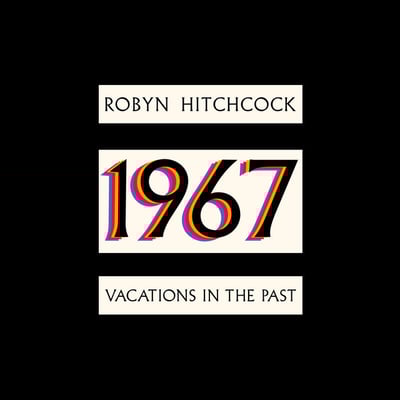
Robyn Hitchcock 1967: Vacations in the Past
Released Oct 4, 2024 TINY GHOST RECORDS
Established consensus 7 professional reviews Updated Dec 31, 2025
Split critical consensus
Robyn Hitchcock's 1967: Vacations in the Past refracts the psychedelic 1960s through a folk-tinted lens, balancing affectionate homage with plaintive reinvention.
How ChoruScore worksCritics' Top Tracks
The songs critics returned to most
A Day In The Life
5 critic mentions
“the Beatles’ A Day In The Life is performed almost identically to the original and therefore can hardly fail” — Buzz Magazine
Burning Of The Midnight Lamp
2 critic mentions
“Burning Of The Midnight Lamp has a more psychedelic aura about it with a vocal which has deep shades of John Lennon” — Louder Than War
See Emily Play
5 critic mentions
“A take on Pink Floyd’s See Emily Play works because Hitchcock is cut from a similar cloth as Syd Barrett” — Buzz Magazine
Full critic consensus
Robyn Hitchcock's 1967: Vacations in the Past refracts the psychedelic 1960s through a folk-tinted lens, balancing affectionate homage with plaintive reinvention. Critics generally agree that Hitchcock's strengths lie in low-key, faithful reinterpretations rather than bold reinventions, and the record's emotional center coalesces around a handful of covers and the lone original that bookend the sequence.
Across seven professional reviews the collection earned a 61.86/100 consensus score, with reviewers consistently pointing to “Vacations In The Past” and “A Day In The Life” as structural high points and to “A Whiter Shade Of Pale”, “Waterloo Sunset” and “Burning Of The Midnight Lamp” as the most discussed reinterpretations. Critics praise Hitchcock's turn toward neo-psychedelia and acoustic reimagining, noting themes of nostalgia, autobiography and melancholy; Record Collector and The Spill Magazine emphasize how the album preserves the spirit of 1967 while recasting pop classics as intimate folk scenes. Reviewers consistently say the best songs are those that align with Hitchcock's half-whispered timbre and pared-back arrangements, where homage and preservation outweigh attempts at radical transformation.
Not all responses are uniformly positive. Buzz Magazine cautions that Hitchcock's vocal limitation leaves some covers - notably “A Whiter Shade Of Pale” in their reading - feeling emotionally undercut, and a couple of reviews provide limited track analysis, tempering the consensus. Taken together, professional reviews suggest 1967: Vacations in the Past will most reward listeners intrigued by reflective reinterpretation and the question of homage versus reinvention, with several standout tracks emerging as reliable entry points.
This summary precedes detailed reviews below and situates the album as a contemplative, nostalgia-tinged detour in Hitchcock's catalogue.
Track Ratings
How critics rated each track, relative to this album (0-100). Only tracks that made critics feel something are rated.
A Whiter Shade Of Pale
Itchycoo Park
Burning Of The Midnight Lamp
I Can Hear The Grass Grow
San Francisco (Be Sure to Wear Flowers in Your Hair)
Waterloo Sunset
See Emily Play
My White Bicycle
No Face, No Name, No Number
Way Back In The 1960s
Vacations In The Past
A Day In The Life
Get the next albums worth your time.
Critic-backed picks in one clean digest. No clutter.
What Critics Are Saying
Deep insights from 7 critics who reviewed this album
Re
Critic's Take
Measured and bemused, Robyn Hitchcock frames 1967: Vacations in the Past as affectionate homage rather than radical remake, so the best songs are those that survive gentle, woozy reinterpretation. The opener and closer - “Vacations In The Past” and “A Day In The Life” - feel central, the former as the album's lone original and the latter as a climactic cover that anchors the sequence. He praises the sentimental logic behind choices like “See Emily Play” and “Waterloo Sunset” while warning that adding yourself risks losing the classic, which explains why faithful renditions register as the album's strongest moments.
Key Points
-
The original title track, as the album's lone original, is the clearest emotional center and best song.
-
The album's strength is affectionate, nostalgic homage to 1960s classics rather than reinvention.
Themes
Bu
Critic's Take
Robyn Hitchcock's 1967: Vacations In The Past finds its best moments in the sympathetic recalls of “See Emily Play” and the faithful “A Day In The Life”, where Hitchcock's affinity with Syd Barrett and reverence for the source material shine through. This is an album whose top songs succeed because they match Hitchcock's songwriting sensibility and tonal limits, rather than trying to recapture the originals note for note.
Key Points
-
The album's core strength is its choice of material that suits Hitchcock's songwriting, while its weakness is vocal delivery that strips depth from some originals.
Themes

Critic's Take
In a characteristically reflective voice Ljubinko Zivkovic observes that Robyn Hitchcock frames 1967: Vacations In The Past as a return to influences, noting how Hitchcock renders these classics as folk songs. The review highlights Hitchcock's ability to keep the soul of originals while layering his own trademark sound, especially on covers like “Vacations In The Past” and “A Day In The Life”. The author writes that the album rewards repeated listens, which points listeners searching for the best songs on 1967: Vacations In The Past toward these tender, faithful reinterpretations. Overall the tone is appreciative and measured, recommending the record to those interested in the best tracks on this homage to 1967.
Key Points
-
The title track best embodies Hitchcock's folk-centered reinterpretation and thematic intent.
-
The album's core strength is faithful, intimate reworkings that retain the soul of 1967 songs while filtering them through Hitchcock's voice.
Themes

Critic's Take
In his vivid, confessional way Robyn Hitchcock re-enters the past on 1967: Vacations in the Past, and the best tracks - like “A Whiter Shade Of Pale” and “Waterloo Sunset” - stand out as luminous, yearning anchors of the record. Hitchcock writes as if memory were a theatre, full of saturated colour and melancholy, so the best songs on 1967: Vacations in the Past feel like hummingbirds that flicker and refuse to leave. The tone is affectionate and slightly world-weary, so listeners hunting for the best tracks on this album will find those covers and evocations carry most of the emotional weight.
Key Points
-
A Whiter Shade Of Pale is the emotional centerpiece, described as a 'wan ghost' that haunts the narrator.
-
The album's core strength is nostalgic, vividly psychedelic imagery that ties covers into a personal coming-of-age narrative.
Themes

Critic's Take
Ian Corbridge luxuriates in nostalgia on 1967: Vacations in the Past, writing with the affectionate authority of someone who grew up in the era and still hears its colours. He singles out Robyn Hitchcock’s opening take on “A Whiter Shade Of Pale” as outstanding, and praises the darker, acoustic reworkings that make “A Whiter Shade Of Pale” and “Vacations In The Past” the album’s best tracks. The review’s tone is warm and admiring, noting how the stripped-back arrangements reveal fresh perspectives while keeping the songs’ original heart. Corbridge’s voice remains reverent and descriptive, framing these best songs as vivid, folk-rooted portraits of a formative musical year.
Key Points
-
The best song is Robyn’s acoustic reworking of "A Whiter Shade Of Pale" because it is called outstanding and uniquely darker while retaining its melody.
-
The album’s core strength is its nostalgic, stripped-back arrangements that reveal fresh perspectives on 1967 classics.
Themes

Critic's Take
This review contains no discussion of the tracks on 1967: Vacations in the Past, so there are no best songs to identify from the text provided. The writer instead focuses on Robyn's new single and recent collaborations, which leaves readers without commentary on which tracks stand out on the album.
Key Points
-
The review does not mention or evaluate any songs from this album, so no best song can be determined from the text.

Critic's Take
The review contains no track-by-track appraisal of Robyn Hitchcock's 1967: Vacations in the Past, so there is no clear list of best songs to extract. As a result, any ranking or pick of top songs such as “A Whiter Shade Of Pale” or “Vacations In The Past” would be speculative rather than evidence-based.
Key Points
-
No single best song can be identified because the review text offers no track-specific discussion.
-
The review's core strength is catalog and navigation content, not evaluative commentary on the album.