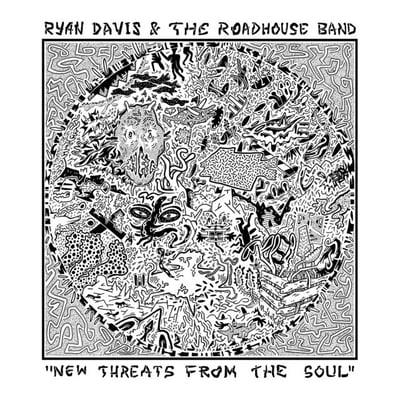
Ryan Davis & The Roadhouse Band New Threats From The Soul
Released Jul 25, 2025 SOPHOMORE LOUNGE
Established consensus 7 professional reviews Updated Nov 23, 2025
Strong critical consensus
Ryan Davis & the Roadhouse Band's New Threats From The Soul opens like a rambling, rueful American epic, and across seven professional reviews critics largely agree the record rewards patience and close attention.
How ChoruScore worksCritics' Top Tracks
The songs critics returned to most
New Threats From The Soul
7 critic mentions
“All three of those lyrics come from " New Threats From the Soul ," the album’s nine-plus-minute opener” — Pitchfork
Mutilation Springs
7 critic mentions
“the interconnected “Mutilation Springs” and “Mutilation Falls” sound similar to those best releases by Smog” — PopMatters
The Simple Joy
6 critic mentions
“I can barely tell the cattle roads from the chemtrails of our past lives," he sings on the melodically handsome, windswept "The Simple Joy” — Uncut
Full critic consensus
Ryan Davis & the Roadhouse Band's New Threats From The Soul opens like a rambling, rueful American epic, and across seven professional reviews critics largely agree the record rewards patience and close attention. Earning an 86.86/100 consensus score from seven reviews, the album's strengths coalesce around long-form storytelling, theatrical arrangements, and a wry mix of humor and melancholia that turns mundane tragedy into vivid character studies.
Critics consistently point to the title-track “New Threats From The Soul” and “Mutilation Springs” as the record's emotional center, praising nine-minute panoramas that thread heartbreak, workaday detail, and memorable lines into expansive, textural flights. Reviewers also single out “The Simple Joy” for its windswept chorus and direct narrative, while “Monte Carlo / No Limits” and the paired “Mutilation Falls” receive repeated praise for daring rhythmic shifts, tape-loop textures, and moments of avant-leaning bite. Across the reviews critics note a return-to-roots Americana revival tempered by alt-country experimentation, where pedal steel, flute, strings, and occasional drum'n'bass breaks push the band's folkish arrangements into unexpectedly cinematic territory.
While most critics celebrate the record's lyricism and theatrical sweep, some temper that praise by flagging its digressive lengths and indulgent passages; for every listener enthralled by sprawling monologues there may be another impatient with nine-minute tableaux. On balance the professional reviews present New Threats From The Soul as a richly detailed, often hilarious and melancholic collection whose standout tracks - especially “New Threats From The Soul”, “Mutilation Springs” and “The Simple Joy” - make a strong case for the album's place in contemporary Americana and for why it deserves repeated listens.
Track Ratings
How critics rated each track, relative to this album (0-100). Only tracks that made critics feel something are rated.
New Threats From The Soul
Monte Carlo / No Limits
Mutilation Springs
Better If You Make Me
The Simple Joy
Mutilation Falls
Crass Shadows (at Walden Pawn)
Get the next albums worth your time.
Critic-backed picks in one clean digest. No clutter.
What Critics Are Saying
Deep insights from 7 critics who reviewed this album

Critic's Take
In her ecstatic, detail-forward voice Anna Pichler makes it clear that on New Threats From The Soul the best songs are the ones that conflate humor and heartbreak, namely “New Threats From The Soul” and “Better If You Make Me”. She praises the title track's plainspoken thesis and jaunty production, and singles out “Better If You Make Me” as where Davis' fraying warble sells a rising panic perfectly. Pichler also highlights the approachable singalong charm of “The Simple Joy”, noting how melodies and twang make these tough songs linger. Her review frames these tracks as the album's most replayable and emotionally vivid moments, answers to queries about the best tracks on New Threats From The Soul without sacrificing her wry, image-rich prose.
Key Points
-
The title track is best for articulating the album's emotional thesis with jaunty production and plainspoken clarity.
-
The album's core strengths are Pichler-noted lyrical inventiveness, theatrical arrangements, and a blend of humor with devastating familiarity.
Themes

Critic's Take
Patrick Gill writes that Ryan Davis & the Roadhouse Band on New Threats From The Soul finds transcendence in the mundane, with songs like “Monte Carlo / No Limits” and “The Simple Joy” serving as standout examples. He praises Davis’s poetic, circular songwriting and irregular rhythmic delivery, noting that the arrangements - from pedal steel to flute and tape loops - push the record beyond simple alt-country. The review singles out the interconnected “Mutilation Springs” and “Mutilation Falls” as kin to Smog-era intimacy, while the title track lays bare the album’s battling-with-self theme. Overall Gill positions these best tracks as the clearest reasons people will seek this record, urging listeners to spend time with its layered rewards.
Key Points
-
The best song(s) like "Monte Carlo / No Limits" pair vivid, worldly lyrics with empathetic delivery, making them standouts.
-
The album’s core strengths are literary, circular songwriting and adventurous arrangements that expand alt-country boundaries.
Themes

Critic's Take
Ryan Davis sounds like a rueful poet throughout New Threats From The Soul, and the best songs - notably “New Threats From The Soul” and “Mutilation Springs” - are sprawling, elegiac narratives that mix jaunty humour with heartbreak. Jones’s sentences unwind in the same digressive, discursive way Davis’s music does, praising the nine-minute title track as a warm melodic wind while flagging the pair of “Mutilation Springs” and “Mutilation Falls” as the album’s bleak centre. The reviewer singles out “The Simple Joy” too, a windswept panorama whose sweeping strings and chorus amplify Davis’s panoramic retrospection. This is a record where long-form storytelling rewards patience, and those seeking the best tracks on New Threats From The Soul will find them in these expansive, haunted songs.
Key Points
-
The nine-minute title track is best for its warm melodic sweep and elegiac storytelling.
-
The album’s core strengths are long-form narratives that blend jaunty humour with deep existential sorrow.
Themes

Critic's Take
Ryan Davis and the Roadhouse Band make New Threats From The Soul feel like an irreverent American epic, with the best songs - “New Threats From The Soul” and “Mutilation Springs” - doubling as character studies and showpieces. The reviewer lingers most on the opener, praising lines from “New Threats From The Soul” that thread heartbreak, workaday details, and mortality into nine-plus-minute panoramas. He singles out “The Simple Joy” as a narrative triumph, a song where a survivor’s complacent peace feels both luminous and precarious. Musically, the band’s willingness to stretch into eight- and nine-minute arrangements lets moments like the closing jam on “Mutilation Springs” land with inventive warmth and uncanny charm.
Key Points
-
The opener "New Threats From The Soul" is best for its nine-plus-minute scope and representative, striking lyrics.
-
The album’s core strengths are Davis’s vivid lyricism and the band’s ability to stretch songs into inventive, inhabitable passages.
Themes

Critic's Take
Ryan Davis leans into big, rambling pleasures on New Threats From The Soul, and the best songs - notably “New Threats From The Soul” and “Mutilation Springs” - justify that boldness with vivid lyricism and tonal shifts. Amenable to both honky-tonk and avant-garde impulses, Davis makes tracks like “Monte Carlo / No Limits” and “The Simple Joy” feel like equal parts barroom confession and miniature philosophy lecture. His voice is at once sardonic and elegiac, so the best tracks on New Threats From The Soul read as intimate reports that swell into orchestral statements. The result is an Americana record that deepens the genre while leaving its hooks lodged in the listener's teeth.
Key Points
-
The title track is best for its nine-plus minute sweep of surreal lyricism and impeccably balanced instrumentation.
-
The album's core strengths are vivid, literate lyrics, deft swings between starkness and cacophony, and an ability to refresh Americana with wry melancholy.
Themes

Critic's Take
Listening to Ryan Davis & the Roadhouse Band feels like visiting a rambling old country town, and on New Threats from the Soul the best songs - notably “Mutilation Springs” and “Monte Carlo / No Limits” - reveal the album's strengths. Clarke lingers on texture and melody, praising the sinuous title-track passage and the bizarre drum'n'bass breakdown that gives “Monte Carlo / No Limits” bite. Above all, “Mutilation Springs” is singled out as the album highlight, where Davis unfurls some of his most beautiful, memorable lyrics and the band stretches toward the horizon. The record rewards close attention, its colors brighter and performances more confident than before, which is why these songs stand out as the best tracks on New Threats from the Soul.
Key Points
-
“Mutilation Springs” is best for its beautiful, memorable lyrics and expansive, slowed-down arrangement.
-
The album's core strengths are its textural instrumentation, confident performances, and seamless country-experimental blend.
Themes

Critic's Take
Ryan Davis sounds proudly digressive across New Threats From The Soul, and the best songs - notably “New Threats From The Soul” and “The Simple Joy” - prove why that wandering pays off. Janne Oinonen leans into the album's sprawling, poetic monologues and finds the title track's big-hat bar-band swagger and irresistible synth hook earnestly singalong-ready. The reviewer's voice privileges richly detailed storytelling, praising how the concise, keening sway of “The Simple Joy” (with Will Oldham) cuts through the excess to become one of the best tracks on the album. Even riskier pieces like “Mutilation Springs” are framed as uneasy, epic experiments rather than failures, positioning these songs as the album's strongest moments and reasons to seek out the best tracks on New Threats From The Soul.
Key Points
-
The title track is best for its epic storytelling, big-hat swagger, and an irresistible synth hook that makes it singalong-ready.