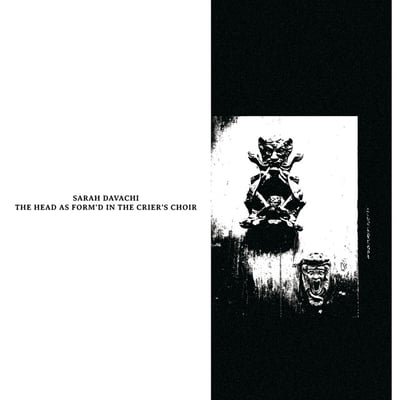
Sarah Davachi Head as Form'd in the Crier's Choir
Released Sep 13, 2024 Late Music
Consensus forming 3 professional reviews Updated Jan 1, 2026
Broadly positive consensus
Consensus is still forming across 3 professional reviews. Sarah Davachi's Head as Form'd in the Crier's Choir frames grief and early Baroque sonority through slow-building organ and brass ensembles, offering a measured, immersive listening experience that critics largely admire.
How ChoruScore worksCritics' Top Tracks
The songs critics returned to most
The Crier's Choir
3 critic mentions
“There's a short pause at about the two-minute mark of "The Crier's Choir" that is breathtaking” — Exclaim
Possente Spirto
3 critic mentions
“the composition's first 90 seconds... articulates a clear, sombre melody that frames the ensuing ten minutes of drone” — Resident Advisor
Res Sub Rosa
3 critic mentions
“the harmonic interaction of the bass flutes and bass clarinets in the latter piece is a beautiful reminder” — Exclaim
Full critic consensus
Sarah Davachi's Head as Form'd in the Crier's Choir frames grief and early Baroque sonority through slow-building organ and brass ensembles, offering a measured, immersive listening experience that critics largely admire. Across three professional reviews the record earned an 80/100 consensus score, with writers praising how long-form composition and textural restraint create moments of real emotional force.
Critics consistently single out “The Crier's Choir”, “Possente Spirto” and “Res Sub Rosa” as standout tracks. Reviewers note “The Crier's Choir” for its pivot from spritely organ figures to hushed restraint, while “Possente Spirto” and “Res Sub Rosa” are celebrated for trombone and brass lines that pierce through sustained drone. The Line of Best Fit highlights the organ-centred centerpiece and “Trio For A Ground” for their continuo, Mellotron and viola d'amore textures, evidencing the album's bridge between studio craft and live immediacy.
While praise centers on atmosphere, texture and Davachi's synthesis of early Baroque influences with contemporary timbral detail, critics also emphasize unpredictability and an improvisatory feel that can demand patient listening. Across three professional reviews the critical consensus suggests Head as Form'd in the Crier's Choir is a rewarding, if restrained, addition to Davachi's catalog, particularly for those interested in organ-and-drone-driven lamentation and ensemble interplay. Below, the reviews unpack why these tracks emerge as the best songs on the album and how the record fits within her broader work.
Track Ratings
How critics rated each track, relative to this album (0-100). Only tracks that made critics feel something are rated.
Prologo
Possente Spirto
The Crier's Choir
Trio For A Ground
Res Sub Rosa
Constants
Night Horns
Get the next albums worth your time.
Critic-backed picks in one clean digest. No clutter.
What Critics Are Saying
Deep insights from 3 critics who reviewed this album

Critic's Take
Likewise, “Possente Spirto” (and the kin “Res Sub Rosa”) are singled out for trombone performances that pierce warmly, marking them among the best songs on the album. Overall the tone is admiring and measured, crediting Davachi with synthesizing studio intention and live happenstance into a compelling new direction.
Key Points
-
The Crier's Choir is best for its breathtaking two-minute organ transition that crystallizes the album's balance of sprightliness and restraint.
-
The album's core strengths are its fusion of studio intention and live unpredictability, and its rich instrumental textures, especially organ and trombone.
Themes
Re
Critic's Take
The album's standout moments - “Possente Spirto” and the closer “Night Horns” - pair austere melody and vast drone to make the best tracks on Head as Form'd in the Crier's Choir truly unforgettable. On “Possente Spirto” a sombre melody in the first 90 seconds frames ten minutes of surging drone, while “Night Horns” breathes like Radigue-esque organ grief. The record lives, shapeshifts and grieves, and those compositional peaks are why listeners will search for the best songs on this album.
Key Points
-
The best song is "Night Horns" for its Radigue-like organ drone that delivers the album's deepest grief.
-
The album's core strengths are its long-form drone, varied instrumentation (pipe organs, trombones, violas) and mythic emotional resonance.
Themes

Critic's Take
The reviewer's ear is caught most by the organ-centred centerpiece “The Crier's Choir” and the following, delicately woven “Trio For A Ground”, both singled out for their resonant solo organ and sustained renaissance viola d'amore lines. Davachi's restraint and attention to individual textures - the continuo, Mellotron, Korgs and tape delay - make these tracks the best songs on the album because they balance historical reference with persuasive, contemporary atmosphere. The album rewards both close listening and surrender to its ravishing atmospherics, making those two tracks essential listens for anyone seeking the best tracks on this record.
Key Points
-
The Crier's Choir stands out for its solo organ centerpiece and pivotal sequencing into Trio For A Ground.
-
The album's core strengths are its textural focus, historical reference balanced with restraint, and persuasive ensemble atmospherics.