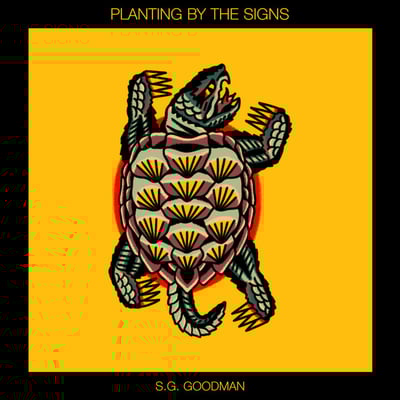
S.G. Goodman Planting By The Signs
Released Jun 20, 2025 Slough Water Records
Established consensus 6 professional reviews Updated Nov 29, 2025
Mostly positive consensus
S.G.
How ChoruScore worksCritics' Top Tracks
The songs critics returned to most
Snapping Turtle
4 critic mentions
“God could have thought up a better way / To teach me just how small I am” — Paste Magazine
Planting by the Signs
1 critic mention
“the title track, a sublime two-part harmony between Goodman and Rowan” — Glide Magazine
Good Riddance
1 critic mention
“she manages a perky as well as gorgeously floaty, cathartic, if still bittersweet final track - Good Riddance” — Song Bar
Full critic consensus
S.G. Goodman's Planting By The Signs unfolds as a Southern Gothic ledger of memory, loss, and stubborn resilience, earning a mixed-but-respectful critical reception. Across six professional reviews the record collected a 68.83/100 consensus score, and critics repeatedly point to center-track revelations and quiet, weathered storytelling as its strengths. "Snapping Turtle" recurs as the album's emotional fulcrum, while the title song "Planting by the Signs", "Fire Sign", and tracks like "I Can See the Devil" and "Good Riddance" are often flagged as standout moments.
Track Ratings
How critics rated each track, relative to this album (0-100). Only tracks that made critics feel something are rated.
Satellite
Fire Sign
I Can See the Devil
Snapping Turtle
Michael Told Me
Solitaire
I'm in Love
Nature's Child
Heat Lightning
Planting by the Signs
Heaven Song
Get the next albums worth your time.
Critic-backed picks in one clean digest. No clutter.
What Critics Are Saying
Deep insights from 5 critics who reviewed this album

Critic's Take
David Pike hears the best songs on Planting by the Signs as anchored in memory, loss, and odd tenderness: “Snapping Turtle” and “Heaven Song” loom largest, and the wry, lapidary “I’m in Love” is another high point. Pike writes in a lived-in, anecdotal register that mixes rural specificity with literary reach, insisting these tracks are where Goodman’s voice and the album’s themes cohere. He praises Goodman’s ability to make songs that are equal parts scary and thrilling, and by naming those songs he answers what are the best tracks on Planting by the Signs without artifice. The reviewer’s tone is affectionate and authoritative, and he repeatedly returns to those standout moments as the record’s emotional center.
Key Points
-
The best song is “Snapping Turtle” because it crystallizes the album’s mix of dangerous imagery and tender memory.
-
The album’s core strengths are its rooted sense of place, storytelling voice, and the way nature and loss are braided into song.
Themes

Critic's Take
In his warm, conversational tone Andy Crump places S.G. Goodman's Planting By The Signs squarely among songs about loss and endurance, and he singles out “Fire Sign” and “I Can See the Devil” as the album's most immediate high points. He writes with patient, observant sentences that linger on imagery - the strut of “Fire Sign” and the violent confidence of “I Can See the Devil” become the clearest examples of the record's emotional architecture. Crump also highlights quieter reckonings like “Snapping Turtle” and “Michael Told Me” for their intimate portrayals of survivor's guilt and tribute, making them essential listens for anyone asking what the best songs on Planting By The Signs are. The narrative he advances is one of sober, restrained power: these tracks reveal why this is Goodman's most heart-revealing record yet.
Key Points
-
The best song(s) like "I Can See the Devil" stand out for violent imagery and confident attitude that cut through the album's mournful restraint.
-
The album's core strengths are its unhurried pacing, intimate lyricism about grief, and the emotional authenticity rooted in Goodman's Kentucky background.
Themes

Critic's Take
S.G. Goodman frames Planting by the Signs as a Kentucky document, where the best songs - especially “Snapping Turtle” and “Fire Sign” - live in the middle of the song, not the opening. The reviewer's ear lingers on Goodman’s chesty, grounded voice and the way sparse arrangements let lyrics land, so when “Snapping Turtle” flips a cruelty into righteous fury it becomes the album's outstanding midpoint. Likewise, “Fire Sign” is singled out for a standout lyric that crystallizes Goodman’s crooked, proverb-like wisdom, explaining why listeners ask which are the best songs on Planting by the Signs. The record's power comes from tactile, heat-soaked scenes and balanced production that let those best tracks breathe and reveal themselves in the center.
Key Points
-
“Snapping Turtle” is the album’s standout for its vivid midpoint scene and moral flip that crystallizes Goodman’s voice.
-
The album’s core strengths are tactile, heat-soaked imagery and balanced, sparse arrangements that foreground lyrics.
Themes

Critic's Take
S.G. Goodman keeps serving Southern Gothic intimacy on Planting By The Signs, and the best songs on Planting By The Signs make that plain. The punchy, seesaw-like “Satellite” skewers our tech obsession, while the standout “Snapping Turtle” burrows into childhood memory with a chorus that sticks. Yet it is the title track, “Planting by the Signs”, that feels like the album's spiritual apex, a sublime two-part gospel-hued hymn that you may find yourself singing long after the record ends. This is an album of loss and reconciliation rendered with vivid detail, empathy, and a voice that refuses to sound like anyone else.
Key Points
-
The title track is the album's emotional and spiritual apex, sung as a sublime two-part gospel-like hymn.
-
The album's core strengths are vivid Southern Gothic songwriting, intimate vocals, and themes of loss, reconciliation, and nature versus technology.
Themes

Critic's Take
In this review Ljubinko Zivkovic writes that S.G. Goodman's Planting by the Signs is not a sophomore slump but a record where songwriting and arrangements have risen. He points to the album's 11 songs as proof that Goodman has "gathered some musical steam," pushing her vocals and lyrics forward. For listeners asking what the best tracks on Planting by the Signs are, the review emphasizes the collection overall rather than singling out one song, but highlights that the songwriting and arrangements make several cuts stand out. The tone is admiring and anticipatory, framing the album as a clear step up and a sign of more to come.
Key Points
-
The best aspects are the improved songwriting and arrangements, which make multiple tracks stand out collectively.
-
The album's core strengths are stronger lyrics, foregrounded vocals, and tightened arrangements born from extensive touring.