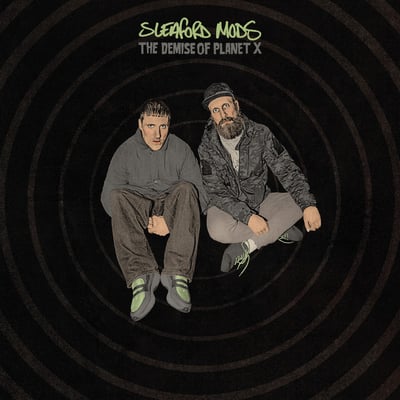
Sleaford Mods The Demise Of Planet X
Released Jan 16, 2026 Rough Trade
Established consensus 5 professional reviews Updated Oct 1, 2026
Split critical consensus
Sleaford Mods's The Demise Of Planet X lands as a jagged, frequently funny catalog of modern decay, one that critics find equal parts sharpened satire and occasional stagnation.
How ChoruScore worksCritics' Top Tracks
The songs critics returned to most
The Unwrap
2 critic mentions
“Buy stuff now ," Williamson offers on the darkweb ska of closer ‘The Unwrap” — New Musical Express (NME)
Megaton
4 critic mentions
“Elitest G.O.A.T.” and “Megaton” are sturdy drum-and-bass compositions” — Pitchfork
Flood the Zone
3 critic mentions
“If not already a fan, what would one get out of 'The Demise of Planet X' that doesn't already feature in their back catalogue” — DIY Magazine
Full critic consensus
Sleaford Mods's The Demise Of Planet X lands as a jagged, frequently funny catalog of modern decay, one that critics find equal parts sharpened satire and occasional stagnation. Across professional reviews the record earned a 63.4/100 consensus score from five reviews, and the critical consensus points to potent standouts even as some collaborators and recurring motifs dilute the overall momentum. "The Good Life", "Double Diamond", "Flood the Zone", "Megaton" and "The Unwrap" repeatedly surface as the best songs on The Demise Of Planet X, with critics citing guest features and tighter frames as the moments when Jason Williamson's venomous persona becomes most compelling.
Reviewers consistently praise the album's minimalist electro-punk production, looped beats and drum-and-bass propulsion, crediting Andrew Fearn's expanded textures for giving bite to tracks like "Elitest G.O.A.T." and "Megaton". Critics note recurring themes of working-class disillusionment, consumerism, social media loneliness and post-apocalyptic Britain, and many applaud how guest vocals convert diatribe into dialogue on songs such as "Double Diamond" and "Flood the Zone". Praise centers on the record's raw humour, vivid imagery and occasional vulnerability - "The Unwrap" and certain verses on "The Good Life" are singled out for surprising intimacy.
That said, several reviews register mixed impressions: some view the record as a productive refinement, others call parts self-parodic or repetitive, and a few point to mismatched collaborators that unsettle pacing and imagery. The consensus suggests The Demise Of Planet X is worth attention for its standout tracks and heightened production, even if its uneven moments prevent it from being the band's most consistent triumph. Read on for full reviews and track-by-track reactions to decide whether the record's best songs make it essential listening.
Track Ratings
How critics rated each track, relative to this album (0-100). Only tracks that made critics feel something are rated.
The Good Life
Double Diamond
Elitest G.O.A.T.
Megaton
No Touch
Bad Santa
The Demise of Planet X
Don Draper
Gina Was
Shoving the Images
Flood the Zone
Kill List
The Unwrap
Get the next albums worth your time.
Critic-backed picks in one clean digest. No clutter.
What Critics Are Saying
Deep insights from 10 critics who reviewed this album

Critic's Take
In a bruising, vividly pictured set, Sleaford Mods make The Demise Of Planet X feel like a furious town crier - the best songs, such as “The Good Life” and “Double Diamond”, land with raw, comic bile and vivid imagery. Williamson's voice prowls the record, turning rancour into humour and inventive turns of phrase while Andrew Fearn's production stretches the duo into surprising textures. The pop-flirting sting of “Elitest G.O.A.T.” and the garage-dance of “No Touch” show why these are the best tracks on The Demise Of Planet X, balancing anger with musical ambition. This is the band at their most musically diverse and still uncompromising, a record that pushes their polemic into sharper, stranger territory.
Key Points
-
The Good Life is best for its vivid, angry opening lines and Williamson’s commanding delivery.
-
The album’s core strength is its blend of brutal social critique with surprising musical variety and dark humour.
Themes
Ho
Critic's Take
In his blunt, conversational register Riccardo Dwyer finds the best tracks on The Demise Of Planet X to be terse, mordant snapshots of modern life, notably “Megaton” and “Flood the Zone”. Dwyer's voice remains mordant and direct, praising the pair for mining modern rubbish for vivid, often hilarious payoff.
Key Points
-
“Megaton” is the best track for its vivid portrayal of social-media-driven loneliness.
-
The album's core strength is turning fragmented online detritus into sharp, minimalist electro-punk commentary.
Themes

Critic's Take
Sleaford Mods keep sharpening their attack on The Demise of Planet X, and the review finds the best songs when Williamson is checked by a second voice or a tighter musical frame. The reviewer singles out “Double Diamond” for its spoken-word clarity and the way it makes grievances feel like theater, and praises “Flood the Zone” and “Kill List” as examples where guest vocalists turn diatribes into dialogue. Production highlights in “Elitest G.O.A.T.” and “Megaton” give sturdy drum-and-bass propulsion, but mismatched collaborators on “The Good Life” expose some pacing and imagery clashes.
Key Points
-
The best song moments come when Williamson is paired with a second vocalist who reins in his tirades.
-
The album’s core strengths are its blunt social commentary and tight, drum-and-bass–inflected production.
Themes

Critic's Take
The review finds that Sleaford Mods stick to their known template on The Demise of Planet X, but the best moments - particularly “The Good Life” and closer “The Unwrap” - cut through with unusual intimacy and melodic hooks. The critic praises the hypnotic chorus and Gwendoline Christie’s third-verse turn on “The Good Life”, and calls “The Unwrap” the clearest window into Jason’s mellowed mindset. Elsewhere the album often feels like more of the same, with word-collage tracks such as “Don Draper” and the title track offering texture but little progression.
Key Points
-
The Good Life is best for its hypnotic chorus, guest turns, and a surprising melodic intimacy.
-
The album’s strengths are occasional luminous collaborations and moments of personal confession, but overall it risks repeating past formulas.
Themes

Critic's Take
Sleaford Mods sound incandescent yet stuck on The Demise of Planet X, where the best tracks - notably “The Good Life” and “Bad Santa” - expose both their strengths and failings. David Coleman praises moments of vulnerability and effective guest spots, but indicts the record for sounding self-parodic and miserable. The review singles out “The Good Life” as a decent opener dragged down by Gwendoline Christie, and calls “Bad Santa” lethargic, making clear why listeners question the band’s evolution.
Key Points
-
The Good Life is the best track for its vulnerable moments despite a misjudged guest monologue.
-
The album’s core strength is raw, incandescent anger, but its stasis and self-parody undermine impact.
Themes

Critic's Take
Sleaford Mods continue their furious social-voice on The Demise Of Planet X, but it is the hits like “The Good Life” and “No Touch” that stick hardest. The reviewer praises Williamson's potty-mouthed bystander persona while noting new vulnerability on “Gina Was”, and highlights Fearn's broadened production on “Double Diamond”. The result feels both gut-punchingly bleak and unexpectedly charming, which makes these best songs on The Demise Of Planet X stand out amid familiar fury.
Key Points
-
The Good Life is best for its haunting catchiness and high-profile collaborators.
-
The album’s strengths are sharp social commentary, added vulnerability, and expanded production choices.
Themes

Critic's Take
In his characteristically trenchant tone Jimi Arundell presents Sleaford Mods' The Demise of Planet X as another scorched, observant record where the best songs - notably “The Good Life” and “Elitest G.O.A.T.” - seize the album's satirical heart. He luxuriates in the duo's lo-fi brutality and guest flourishes, calling out how Aldous Harding softens “Elitest G.O.A.T.” while the OTT intro of “The Good Life” sets the scene. The review frames these tracks as standout moments that crystallize the album's mission to reflect a broken Britain, making them the obvious answers to queries about the best tracks on The Demise of Planet X.
Key Points
-
The Good Life is best for its OTT intro and guest turns that immediately foreground the album's satirical project.
-
The album's core strength is its unflinching social critique delivered through minimalist beats, sharp vocals, and strategic collaborations.
Themes

Critic's Take
Sleaford Mods keep up their uncompromising, raw schtick on The Demise of Planet X, where the best songs - “Flood the Zone”, “Gina Was” and “The Good Life” - crystallise the album's power. Williamson's semi-political, absurdist jawing is front and centre, while Andrew Fearn's minimalist beats make tracks like “Flood the Zone” a standout. The record flicks the Vs at a world gone mad, sometimes roaring to life and sometimes settling into a flat wall of noise, but its homegrown collaborations lend surprising warmth. Fans will absolutely love these best tracks, even if casual listeners will have to lean in to hear the method in the mess.
Key Points
-
The album's core strengths are minimalist beats, raw humour, political bite, and effective local collaborations.
Themes

Critic's Take
Sleaford Mods keep sharpening their attack on modern rot on The Demise Of Planet X, and the best songs - notably “Elitest G.O.A.T.” and “The Good Life” - show them at their most venomously melodic. Robert Plummer revels in how guest voices enliven tracks like “No Touch” and “Elitest G.O.A.T.”, giving Williamson’s rants a sharper, stranger counterpoint. The title cut and “Megaton” deepen the record’s sense of doom, but it is the catchier moments that lodge themselves in the skull. This is a record that goes global while staying furious and fiendishly compelling.
Key Points
-
The best song is "Elitest G.O.A.T." because its contrast between Aldous Harding’s singing and Williamson’s rant makes it irresistibly catchy.
-
The album’s core strengths are sharpened social critique, abrasive electro-minimalist rhythms, and effective use of guest vocalists to add colour.
Themes
Re
Critic's Take
Sleaford Mods take a sharper, more expansive turn on The Demise Of Planet X, and the best songs on the record underline that shift. “The Good Life” stands out as a powerhouse opener with Gwendoline Christie’s cameo and jagged mood swings, while “Elitest G.O.A.T.” and “No Touch” show softer, surprising centres that sting in the tail. The record’s humour, inventive production and pointed social critique make these tracks the best songs on The Demise Of Planet X, each revealing new textures in Williamson’s ire and Fearn’s beats. This is Sleaford Mods refreshed, still acidic but more resourcefully evocative than ever.
Key Points
-
The Good Life is best for its dramatic cameo, mood swings and inventive surprises.
-
The album’s core strengths are sharp social critique, inventive production and fruitful collaborations.