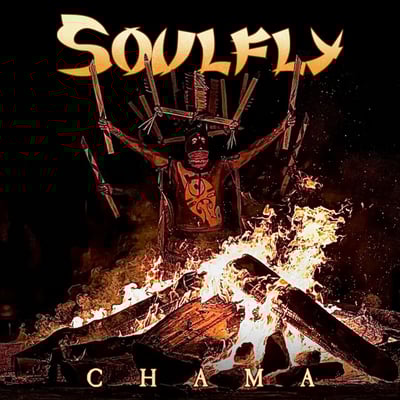
Soulfly Chama
Released Oct 24, 2025 Nuclear Blast
Established consensus 5 professional reviews Updated Sep 4, 2026
Broadly positive consensus
Soulfly's Chama arrives as a defiantly bruising statement from Max Cavalera and company, a record that channels tribal pulse into industrial grit and renewed ferocity.
How ChoruScore worksCritics' Top Tracks
The songs critics returned to most
Storm the Gates
5 critic mentions
“They then explode into Storm The Gates, which merges the most punishing of groove metal riffs with a raging death metal clamour.” — Classic Rock Magazine
Ghenna
4 critic mentions
“Ghenna is two minutes of grindcore tumult with a melodic solo breaking through courtesy of Arch Enemy’s Michael Amott.” — Classic Rock Magazine
No Pain = No Power
5 critic mentions
“Gabriel Franco of Unto Others adds a gothic sensibility to No Pain = No Power, which also features precision industrial-metal riffing from Fear Factory’s Dino Cazares.” — Classic Rock Magazine
Full critic consensus
Soulfly's Chama arrives as a defiantly bruising statement from Max Cavalera and company, a record that channels tribal pulse into industrial grit and renewed ferocity. Critics point to immediate highlights when asking "best songs on Chama": “Storm the Gates”, “Ghenna” and “Nihilist” recur as the album's most arresting moments, while title track “Chama” and the two-part “Favela / Dystopia” add texture to a set built on abrasion and momentum.
Across five professional reviews the critical consensus lands at a 76/100, with reviewers consistently praising the album's return-to-roots energy, ritualistic rhythms and brutal heaviness. Distorted Sound and Kerrang! celebrate the record's revitalized tribal aesthetic and anthemic choruses, Classic Rock emphasizes a flayed, grinding tone that recalls Godflesh and Nailbomb, and Blabbermouth hails it as some of Soulfly's most combustible work in years. At the same time Angry Metal Guy and others flag a compressed, controlled runtime that makes the standout tracks feel more vital than the surrounding material, underscoring a debate about authenticity versus occasional filler.
Taken together the reviews form a clear picture: Chama is a triumphant return for listeners drawn to percussion-driven aggression, industrial riffing and visceral groove, with “Storm the Gates”, “Ghenna” and “Nihilist” emerging as must-listen cuts. The album's abrasive production and ritualistic atmosphere split opinion just enough to make its successes feel earned, setting the stage for deeper listening and the detailed reviews that follow.
Track Ratings
How critics rated each track, relative to this album (0-100). Only tracks that made critics feel something are rated.
Indigenous Inquisition
Storm the Gates
Nihilist
No Pain = No Power
Ghenna
Black Hole Scum
Favela / Dystopia
Always Was, Always Will Be...
Soulfly XIII
Chama
Get the next albums worth your time.
Critic-backed picks in one clean digest. No clutter.
What Critics Are Saying
Deep insights from 5 critics who reviewed this album
Bl
Critic's Take
Soulfly's Chama reclaims the tribal roar and pure aggression that made early records vital, with tracks like “Indigenous Inquisition” and “Storm The Gates” standing out as prime examples. The reviewer's voice revels in the album's monstrous hybrid of groove and death/thrash, praising songs such as “Nihilist” and “No Pain = No Power” for their furious focus and headbanging immediacy. This is billed as the best Soulfly work in years, where menace, percussion and seismic riffs collide to produce the album's most combustible moments.
Key Points
-
The album's core strengths are its hybrid of tribal groove and uncompromising death/thrash brutality, delivered with renewed menace.
Themes
Di
Critic's Take
Soulfly’s Chama feels like a fired-up return, full of tribal beats, catchy choruses and teeth-baring aggression that rewards longtime fans. The review leans on the punchy classics - “Storm the Gates” and “Chama” - as clear highlights, with “Ghenna” called out as the heaviest, most ace blast. Tim Bolitho-Jones writes in an energetic, affectionate tone, praising the record’s atmosphere and ritualistic touches while reminding readers this is a band still capable of surprises. This makes it easy to answer queries about the best tracks on Chama by pointing to those standout cuts and the instrumental calm of “Soulfly XIII” as a counterbalance.
Key Points
-
The title track stands out for its dense riffage, GOJIRA-like influence and climactic, fire-spitting finale.
-
The album’s core strengths are tribal rhythms, aggressive heaviness and evocative ritualistic atmosphere that reward longtime fans.
Themes

Critic's Take
In a tone that crackles with affectionate awe, Soulfly's Chama is presented as a blast of rejuvenated fury, with the review singling out “Storm The Gates” and “Nihilist” as the record's best tracks for sheer, unrelenting force. The writer relishes the album's blend of pulverising riffage and tribal pulse, labelling the opening salvo “Storm The Gates” as startling and likening its impact to a hell-raising video-game soundtrack. Praise for “Nihilist” positions it as an escalation of planet-eating power, while “No Pain = No Power” is credited for marrying Roots-era tribalism with modern industrial serration. The result is an argument that the band's 13th offering burns hotter than ever, a concise answer to queries about the best songs on Chama and why they matter.
Key Points
-
The best song is “Storm The Gates” because its explosive opening delivers primeval force and startling impact.
-
The album's core strengths are renewed aggression, tribal rhythms, and successful fusion of classic and industrial influences.
Themes
Cl
Critic's Take
Soulfly have never sounded so consistently abrasive as they do on Chama, Max’s lacerated barks and Zyon’s caustic production giving the record a flayed, grinding tone. The best tracks on Chama arrive early: “Indigenous Inquisition” opens with a slow-burn evocation of extinguished peoples, then “Storm the Gates” explodes into punishing groove and raging death-metal clamour. The short, brutal blast of “Ghenna” is notable for its grindcore tumult and a surprising melodic solo, while “No Pain = No Power” adds gothic colour and industrial precision. Together these songs show why the album’s corrosive finish—equal parts Godflesh and Nailbomb—makes them the standout moments here.
Key Points
-
“Storm the Gates” is best for its punishing groove riffs and death-metal clamour, making it the album’s most explosive moment.
-
Chama’s core strengths are abrasive production, eclectic guest turns, and a corrosive finish that unifies tribal, grindcore and industrial elements.
Themes
An
Critic's Take
On Chama Max Cavalera and company still deliver rousing moments, and the best songs - namely “Storm the Gates” and “Ghenna” - show the band’s fire and conviction. The record funnels Soulfly’s signature tribal howl through a darker, industrial filter, where “Storm the Gates” opens with Max in fighting form and “Ghenna” tightens that righteous indignation. The rest of the album feels compressed into a compact, controlled burn, which makes those highlights feel all the more vital.
Key Points
-
“Storm the Gates” is best for its opening fury and Zyon-enhanced drumming, making it the album’s clearest anthem.
-
Chama’s core strength is distilling Soulfly’s tribal and industrial elements into short, vital songs, though filler and brief runtime hold it back.