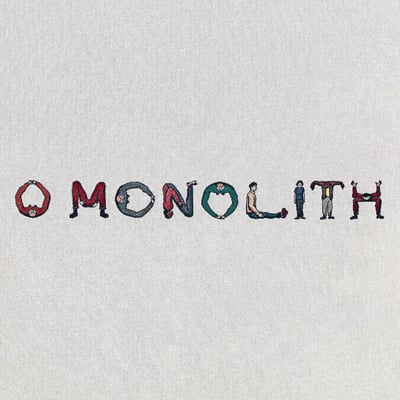
Squid O Monolith
Released Jun 9, 2023 Warp Records
Consensus forming 3 professional reviews Updated Nov 27, 2026
Strong critical consensus
Consensus is still forming across 3 professional reviews. Squid's O Monolith turns the band's post-punk urgency toward stranger, more expansive terrain, earning a strong critical consensus for its adventurous, tightly connected sound.
How ChoruScore worksCritics' Top Tracks
The songs critics returned to most
If You Had Seen the Bull’s Swimming Attempts You Would Have Stayed Away
2 critic mentions
“If You Had Seen The Bull’s Swimming Attempts You Would Have Stayed Away" features wiry guitar fills” — The Line of Best Fit
Swing (In a Dream)
2 critic mentions
“The ecstatic electro-terror of Swing (In A Dream) should (but does not) jar in its preceding of Devil’s Den” — The Skinny
Undergrowth
2 critic mentions
“Undergrowth" is familiarly bouncy, replete with funk-leaning guitar and bass licks” — The Line of Best Fit
Full critic consensus
Squid's O Monolith turns the band's post-punk urgency toward stranger, more expansive terrain, earning a strong critical consensus for its adventurous, tightly connected sound. Across three professional reviews, the album scores 86.67/100; critics praise its ability to balance muscular rhythms with pastoral and folk-inflected textures, while shifting between intimacy, unease, and explosive release.
The best songs on O Monolith make that contrast vivid. “If You Had Seen the Bull’s Swimming Attempts You Would Have Stayed Away” is repeatedly singled out for its scale, layered vocals, and wiry guitar work. “Swing (In a Dream)” opens with restrained cacophony and an unsettling electronic charge, while “Undergrowth” draws power from chant-like, occult folk elements. Critics also highlight the eruptive guitars and agile rhythms of “Green Light”, and the way “The Blades” grows from a minimal glitch-beat into a dense, fuzzed-out swell.
Reviewers find the record’s varied ideas surprisingly cohesive: dreamy passages and rock revelations sit alongside askew rhythms, woodwind, and a persistent sense of tension. Ollie Judge’s move from yelps toward pained melodic yearning adds a more exposed vocal register, while the writing retains a polemical edge. The result asks for attentive listening rather than offering easy, immediate answers, but its climaxes reward that patience. For anyone wondering whether O Monolith is worth hearing, the critical reception points to a distinctive, forceful record whose most compelling moments make its reinvention feel purposeful.
Track Ratings
How critics rated each track, relative to this album (0-100). Only tracks that made critics feel something are rated.
Swing (In a Dream)
Devil’s Den
Siphon Song
Undergrowth
The Blades
After the Flash
Green Light
If You Had Seen the Bull’s Swimming Attempts You Would Have Stayed Away
Get the next albums worth your time.
Critic-backed picks in one clean digest. No clutter.
What Critics Are Saying
Deep insights from 3 critics who reviewed this album

Critic's Take
Squid’s O Monolith feels like an escape into the countryside where claustrophobic city anxiety is transmuted into ritualistic folk breath. Elvis Thirlwell’s review relishes how tracks such as “Undergrowth” and “Devil’s Den” carry that occultic, chant-driven charge, and how Ollie Judge trades yelps for pained melodic yearning. The record keeps the band’s post-punk mechanics but allows songs to drift from dreamy ascension to rock revelation, making listeners hunt for the best songs on O Monolith in its surging climaxes. This is an album of immense power and conviction, and its best tracks are those that marry pastoral textures with muscular, askew rhythms.
Key Points
-
The best song is "Undergrowth" because its tortured refrain crystallizes the album's cultish pastoral identity.
-
The album's core strengths are marrying post-punk mechanics with folkish chants and expanded, atmospheric arrangements.
Themes

Critic's Take
Squid’s O Monolith finds its best tracks in the ways they expand the band’s palette while retaining bite. The opener, “Swing (In a Dream)”, unfolds with restrained cacophony and songwriting that frames the album’s thematic reach, making it one of the best songs on O Monolith. Likewise, “Green Light” is a top track for its eruptive guitars and agile rhythm section, and the sprawling “If You Had Seen the Bull’s Swimming Attempts You Would Have Stayed Away” stands out for its layered vocals and wiry guitar fills. Amen’s ear for texture and polemic keeps the discussion anchored to these standout moments, which together map the strongest moments and best tracks on O Monolith.
Key Points
-
The best song is the opener, "Swing (In a Dream)", because it sets the album’s expansive yet controlled tone.
-
The album’s core strengths are textural variety and streamlined polyrhythms that balance maximalism and minimalism.
Themes

Critic's Take
Squid’s O Monolith begs for attentive listening, stitching diverse concepts into one brooding work. The ecstatic electro-terror of “Swing (In a Dream)” should jar before the woodwind-heavy, characteristically explosive “Devil’s Den”, but does not. “The Blades” grows from a minimalist glitch-beat into a fuzzing swirl, while “If You Had Seen the Bull’s Swimming Attempts You Would Have Stayed Away” is the most worthy of being considered monolithic in its own right. These are the best tracks on O Monolith: the final song encapsulates it, and elevates it.
Key Points
-
The final track stands out for its three sonic variations and for encapsulating and elevating the album.
-
The album’s strength is how contrasting musical ideas are stitched into one brooding work.