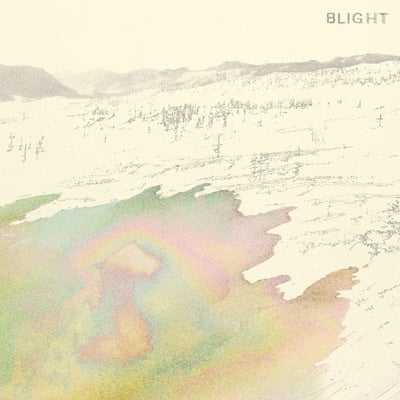
The Antlers Blight
Released Oct 10, 2025 Transgressive Records
Established consensus 7 professional reviews Updated Nov 28, 2025
Broadly positive consensus
The Antlers's Blight cuts a quietly urgent path through eco-grief and collective guilt, a restrained record that critics describe as a subdued wake-up call rather than a full-throated manifesto.
How ChoruScore worksCritics' Top Tracks
The songs critics returned to most
Good Riddance
1 critic mention
“she manages a perky as well as gorgeously floaty, cathartic, if still bittersweet final track - Good Riddance” — Song Bar
Carnage
5 critic mentions
“On “Carnage,” Silberman tallies the damage that human shaping of the world around us has done to animals,” — Paste Magazine
Math Equation
1 critic mention
“On Math Equation, for example: "You said I needed my own friends / So I found them / Then you fucked them.” — Song Bar
Full critic consensus
The Antlers's Blight cuts a quietly urgent path through eco-grief and collective guilt, a restrained record that critics describe as a subdued wake-up call rather than a full-throated manifesto. Across seven professional reviews the consensus score lands at 76/100, and reviewers consistently point to a handful of songs that crystallize the album's themes: “Carnage”, “Deactivate”, and “Something in the Air” emerge as the clearest high points.
Professional reviews praise the album's restraint and sparse production, noting how muted electronics, piano, and occasional gnarly guitar serve a slow unraveling that emphasizes environmental degradation, remorse, and melancholy. Critics from AllMusic, Sputnikmusic, Paste, Glide, and Pitchfork repeatedly highlight “Carnage” for its haunted organ and eruptive climax, while “Deactivate” is cited as the seven-minute centerpiece that channels communal fragility into dramatic release. Several reviewers single out “Something in the Air” for marrying topical lyrics about pollution and air quality with doomy cinematic electronics, making it one of the record's most affecting moments.
Not all responses are unreservedly positive. Pitchfork and a few others suggest the urgency occasionally falls flat, and some tracks register as underdeveloped amid the album's deliberate sparseness. Still, the critical consensus across seven reviews frames Blight as an adventurous, often haunting addition to The Antlers' catalog that rewards patient listening and rewards those searching for the best songs on Blight with a handful of arresting, thematically focused standouts. The collection moves between wry irony and genuine sorrow, leaving a lingering sense of ecological unease as its chief achievement.
Track Ratings
How critics rated each track, relative to this album (0-100). Only tracks that made critics feel something are rated.
Consider the Source
Pour
Carnage
Blight
Something in the Air
Deactivate
Calamity
A Great Flood
They Lost All of Us
Get the next albums worth your time.
Critic-backed picks in one clean digest. No clutter.
What Critics Are Saying
Deep insights from 6 critics who reviewed this album

Critic's Take
For best songs on Blight, the review highlights “Something in the Air”, “Carnage”, and “Deactivate” as standout tracks for their orchestral drama, epic guitar work, and unsettling repetition. The reviewer praises these best tracks on Blight for deepening the album’s themes of environmental guilt and bleak isolation. If you’re searching for the best tracks on Blight, start with “Something in the Air” and “Carnage” for musical peaks and “Deactivate” for emotional intensity.
Key Points
-
“Something in the Air” is best for its dramatic orchestral swell and evocative imagery.
-
The album’s core strengths are its thematic unity around environmental guilt and haunting, restrained arrangements.
Themes
mu

Critic's Take
The best tracks on Blight are centered around the title track “Blight,” the expansive “Pour,” and the cathartic centerpiece “Deactivate,” which together showcase The Antlers’ shift toward ecological unease and collective fragility. Blight’s sparse arrangements and intimate production make songs like “Consider the Source” and “A Great Flood” standout moments for listeners seeking subtle, emotionally charged songwriting. Fans searching for the best songs on Blight will find that the record rewards patient listening, with “Deactivate” serving as the album’s dramatic unraveling and “Blight” as its quiet, resigned core.
Key Points
-
“Blight” is the album’s emotional center, its acoustic sparseness and lyrics making it the standout.
-
The album’s core strengths are its restrained production and thematic focus on ecological unease and collective fragility.
Themes

Critic's Take
The best songs on Blight are those that foreground Peter Silberman’s mournful environmental concern, notably "Consider the Source," "Carnage," and the expansive "Deactivate." The review highlights "Consider the Source" for its piercing lyrics and piano that land "with thunderous force," and praises "Carnage" for its building tension into a noisy rupture. "Deactivate" is singled out as a seven-minute centerpiece that feels like a communiqué from an apocalyptic near future and offers a rare moment of redemptive texture. Together these tracks exemplify why listeners search for the best tracks on Blight: subtle arrangements, slow builds, and lyrics that make the album a subdued wake-up call.
Key Points
-
“Consider the Source” is the best song for its piercing lyrics and piano that land with thunderous force.
-
The album’s core strengths are its subtle, slowly building arrangements and focused environmental theme conveyed with restraint.
Themes

Critic's Take
The best songs on Blight are "Carnage" and "Something in the Air," which showcase the album's strongest hooks and production contrasts. Carnage's haunted organ, distant drums, and swelling walls of guitar make it one of the best tracks on Blight. Something in the Air functions as the nexus of the record's political and musical themes, pairing lyrics about air quality with doomy cinematic electronics. Overall, Blight's combination of depressive songwriting and adventurous production makes these tracks stand out as the best on the album.
Key Points
-
Carnage is best for its haunting organ, intense production build and rapturous guitar walls.
-
The album's core strengths are melancholic songwriting balanced by adventurous, experimental production and political themes.
Themes

Critic's Take
The Antlers make a record that simmers with dread, but the urgency often falls flat on Blight. The review singles out “Carnage” and “Blight” as the moments that actually feel immediate, while tracks like “Something in the Air” and “Deactivate” wallow in banality. Zach Schonfeld praises the grit and gnarly guitar release in “Carnage” and the skittering electronic mutation in “Blight”, yet notes the album rarely summons the catharsis the subject demands. For listeners asking about the best tracks on Blight, the review points to “Carnage” and “Blight” as the clearest standouts.
Key Points
-
“Carnage” is best for its full-band meltdown and satisfying gnarly guitar release.
-
The album’s core strength is vivid ecological imagery and occasional gritty urgency, though it often lacks required emotional catharsis.