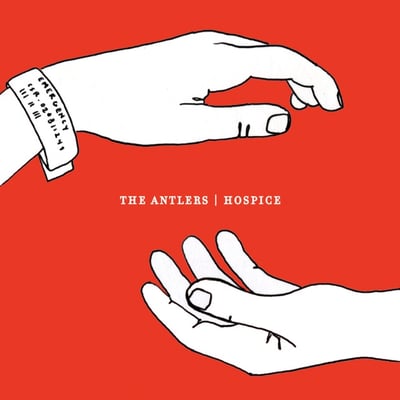
The Antlers Hospice
Released Jun 23, 2009 Frenchkiss Records
Established consensus 26 professional reviews Updated Mar 23, 2026
Broadly positive consensus
The Antlers's Hospice confronts caregiving, illness, and grief with a novelistic intensity that made the record an instant touchstone on release.
How ChoruScore worksCritics' Top Tracks
The songs critics returned to most
Kettering
8 critic mentions
“Kettering’ meanwhile, is a knotty tangle of feelings, with Silberman guiltily realising, "I should have quit, but instead I took care of you".” — Hot Press
Prologue
1 critic mention
“The opening song of the album “Prologue”, for example, proves this sentiment.” — Beats Per Minute
Shiva
1 critic mention
“It isn’t easy to hear Silberman populate the self-explanatory “Shiva,” — Under The Radar
Full critic consensus
The Antlers's Hospice confronts caregiving, illness, and grief with a novelistic intensity that made the record an instant touchstone on release. Across 26 professional reviews the album earned an 81.23/100 consensus score, and critics consistently point to its quiet-loud dynamics, atmospheric feedback and emotionally harrowing storytelling as the source of its power. For many reviewers the best songs on Hospice crystallize that tension: “Kettering”, “Sylvia” and “Bear” recur as standout tracks, while “Prologue” and “Atrophy” are praised for setting the record's claustrophobic, confessional tone.
Professional reviews emphasize how The Antlers balance delicate intimacy with fuller arrangements, using shoegaze textures and dynamic crescendos to register guilt, loneliness and inevitability. Critics praise the album's concept - a carer crushed by tending a terminally ill figure - for its moral complexity and immersive hospital imagery, noting that songs such as “Kettering” and “Sylvia” move from fragile confession to cathartic release. While some reviews temper enthusiasm by pointing out indebted influences and occasional overblown moments, the consensus celebrates the record's ability to translate personal trauma into communal catharsis.
Taken together, the reviews frame Hospice as a deeply affecting, sometimes painful achievement in modern indie rock: a concept album whose best tracks deliver the emotional peaks critics cite again and again. For readers searching for a Hospice review or wondering whether the album is worth listening to, the professional consensus suggests it remains a must-listen for anyone drawn to intense narrative albums and expansive, sorrowful soundscapes.
Track Ratings
How critics rated each track, relative to this album (0-100). Only tracks that made critics feel something are rated.
Prologue
Kettering
Sylvia
Atrophy
Bear
Thirteen
Two
Shiva
Wake
Epilogue
Sylvia, An Introduction (Bonus Track)
Get the next albums worth your time.
Critic-backed picks in one clean digest. No clutter.
What Critics Are Saying
Deep insights from 26 critics who reviewed this album

Critic's Take
The Antlers deliver on Hospice with a merciless empathy that pries open numbness and makes feeling unavoidable. The reviewer's voice lingers on tracks like “Bear” and “Wake” as moments that confront social dismissal and then erupt into wrenching clarity, and those songs are framed as the best tracks on Hospice because they distill the record's painful honesty. The writing is intimate and confessional, folding personal doubt into admiration - this is music that breaks you so you can remember how to feel. Ultimately, the best songs on Hospice are praised for their capacity to restore emotion, not comfort it, and that brutal purpose is made plain throughout the review.
Key Points
-
The best song, particularly "Wake", is best for its devastating, memory-flooding climax that breaks emotional numbness.
-
The album's core strength is its unflinching portrayal of grief and its ability to restore feeling through intimate, painful storytelling.
Themes

Ho
Critic's Take
The Antlers conjure an aching, intimate panorama on Hospice, and the best songs on Hospice - notably “Atrophy” and “Kettering” - carry that weight with brutal tenderness. The reviewer's voice dwells on how “Atrophy” unfolds eight unbearably intense minutes of pitter-patter rhythms and frazzled keys, while “Kettering” knots guilt and confession into a tense, cathartic centerpiece. Elsewhere “Sylvia” and “Bear” provide release, the former trading electronic static for guitar blowouts and the latter offering a gorgeous, Buckley-esque croon. Taken together, these tracks map the record's tug between oppressive sorrow and bittersweet nostalgia, marking them as the album's standout moments.
Key Points
-
“Atrophy” is the best song because its eight unbearably intense minutes crystallize the album's emotional core.
-
The album's core strengths are its candid, bleak narrative of terminal illness and moments of bittersweet, cathartic guitar release.
Themes
mu
Pr
Co
Sp

Critic's Take
The Antlers make Hospice a study in tenderness and torment, and the best tracks - notably “Prologue” and “Kettering” - insistently push that tension. Elizabeth Holden writes with a measured, analytical sympathy, noting how “Prologue” encapsulates the record's themes and how the band juxtaposes childhood memory with adult defenselessness. The review frames the album's power as its ability to destroy hope while remaining calm and therapeutic, which makes the standout songs resonate all the more. In short, the best songs on Hospice are those that balance intimate lyricism with quiet musical force, pulling the listener toward hard moral reckonings.
Key Points
-
“Prologue” is best because it perfectly encapsulates the album's themes and proves its central sentiment.
-
The album’s core strength is balancing tender, therapeutic music with stark, moral themes of mortality and grief.
Themes

Critic's Take
The Antlers deliver on Hospice with a widescreen sentimentality that makes the best tracks feel like small prayers and big explosions at once. The reviewer's language lingers on “Kettering” as a despairing persistence and on “Bear” as a desperate joy, arguing these are among the best songs on Hospice because they fuse intimate lyricism with stadium-sized release. He praises “Sylvia” for alternating frailty and Queen-caliber bravado, which helps explain why listeners search for the best tracks on Hospice. The record's crescendos and unwinding passages make those standout songs feel integral to the album's emotional sweep, turning private trauma into something mythic and communal.
Key Points
-
Kettering is the best song because it embodies the album's 'despairing persistence' and emotional focus.
-
The album's strengths are its widescreen sentimentality, integrated crescendos, and the transformation of private trauma into universal feeling.
Themes

Critic's Take
The Antlers make an album that trades in hushed confessions and explosive surges, and on Hospice the best tracks are those that flip from clatter to silence with theatrical effect. The reviewer's ear latches onto the quiet moments that follow noise as the record's real triumph, so the best songs on Hospice are the ones that deliver those sudden, startling weightlessnesses. That praise points listeners toward album highlights like “Kettering” and “Sylvia”, which crystallize the quieter payoffs after noisy interludes. The writing stresses texture and atmosphere, making these songs feel like the core of what makes Hospice remarkable.
Key Points
-
The best song(s) are those that execute the quiet-to-loud switch, delivering sudden weightlessness that feels emotionally powerful.
-
The album's core strengths are its shoegaze textures, drifting atmosphere, and dramatic contrasts between noisy and quiet passages.
Themes
Dr
Critic's Take
The Antlers craft on Hospice a bleak, intimate tale where the best tracks - “Sylvia” and “Wake” - deliver the album's most shattering moments. Tudor's prose lingers on how “Sylvia” supplies gallows humour and measured lines, while “Wake” surprises with ambient fug and sampled breath-sounds. The review highlights these songs as emotional fulcrums, the best tracks on Hospice because they combine lyric invention with crushing, distorted climaxes. Overall, the reviewer treats the album as indebted but original, praising the band for reworking influences into stark, affecting pieces.
Key Points
-
“Sylvia” is the best song for its gallows humour and sharply observed lyrics.
-
The album's core strength is its ability to rework influences into crackling, ambient soundscapes that culminate in powerful crescendos.
Themes

Critic's Take
The Antlers's Hospice reads like an exercise in necessary confession, and the best tracks on Hospice are the ones that make that pain audible. The devastating opener “Kettering” announces the record's intentions with a Jeff Buckley-like quaver, while “Two” channels a deceptively bouncy patience into an inescapable epic crescendo. The slow-burning “Shiva” and the truly epic “Wake” complete the emotional arc, each turning Silberman's compulsion to write into something cathartic for the listener.
Key Points
-
“Kettering” is the best song because its devastating opening and Jeff Buckley-like quaver establish the album's emotional stakes.
-
The album's core strengths are its unflinching exploration of grief and its effective quiet-loud-quiet dynamics that turn personal compulsion into catharsis.
Themes

Critic's Take
The Antlers’s Hospice reads like a bruised masterpiece, and the reviewer's voice zeroes in on the record’s most wrenching moments: “Bear” for its memorable, fucked-and-not-getting-unfucked line and “Sylvia” for the way it explodes into anthemic intensity. Matt Gonzales praises Silberman’s sorrow-soaked narrative and Cicci and Lerner’s atmospherics and drums, arguing that the album’s songs lose power when cherry-picked, which proves why the best tracks live inside the whole. The tone remains admiring and emphatic, insisting that these tracks - and the album as a unit - change lives rather than merely entertain.
Key Points
-
The best song is "Bear" for its unforgettable lyric and unexpected rollicking chorus within a devastating concept.
-
The album’s core strength is its sorrow-soaked narrative realized through atmospherics and anchoring drums that make the full-concept experience essential.
Themes
Pr
Ir
Critic's Take
Carroll's sentences are intimate and precise, noting how added players give flesh to those songs without blunting their impact, which is why listeners searching for the best tracks on Hospice should start with “Sylvia” and “Kettering”. The review reads like a careful close-listen, praising nuance over bombast and steering fans toward the album's most thrilling moments. Carroll's voice makes clear that the best songs are those that expand Silberman's sketches into fuller, still-delicate arrangements.
Key Points
-
The best song is “Sylvia” because it most thrillingly expands Silberman's delicate sketches with added instrumentation.
-
The album's core strength is turning quiet, intimate songs about isolation and illness into fuller arrangements without losing emotional impact.
Themes
Q

Ma
Ti

Critic's Take
The Antlers's Hospice arrives as a crushing, beautifully arranged concept album that trades in love and loss, and the reviewer's focus lands on the record's emotional peaks rather than isolated singles. The writing praises Silberman’s narrative control and dynamics, implying the best tracks are those that build to monumental crescendos and carry the novel-like story—songs such as “Kettering” and “Sylvia” emerge as central because of their emotional weight and compositional sweep. The reviewer repeatedly returns to the album's balance of morbid lyricism and uplifting music, suggesting the best songs are the ones that pair bleak lines with swelling instrumentation. In short, when people search for the best songs on Hospice they should listen for the tracks that marry narrative intensity with orchestral climax, the hallmark of this album as described here.
Key Points
-
Kettering is presented as the best song by implication, embodying the album's emotional and dynamic peaks.
-
The album's core strengths are its novel-like narrative, masterful dynamics, and the balance of morbid lyrics with uplifting arrangements.
Themes
NO
Ar
Sp
Co

Critic's Take
In a refreshingly candid voice Nick Annan presents The Antlers and their album Hospice as a quantum leap from Peter Silberman’s solo work, and he points to the record’s ebbing and flowing symphony as its greatest strength. The review highlights tender vocals and shoegazing guitar washes that make songs like “Kettering” and “Sylvia” feel like the best tracks on Hospice, conveying narrative tension with admirable empathy. He frames the theme - a carer destroyed by tending a terminally ill relative - as daunting yet powerfully rendered, so listeners searching for the best songs on Hospice will likely be drawn to those emotionally intense centrepieces. The tone is appreciative but measured, noting blasts of reverb-drenched choruses alongside moments of restraint.
Key Points
-
The best song is exemplified by tracks like "Kettering", which captures the record's narrative tension and tender vocals.
-
The album’s core strengths are its empathetic storytelling, shoegazing guitar washes, and dynamically reverb-drenched choruses.
Themes
