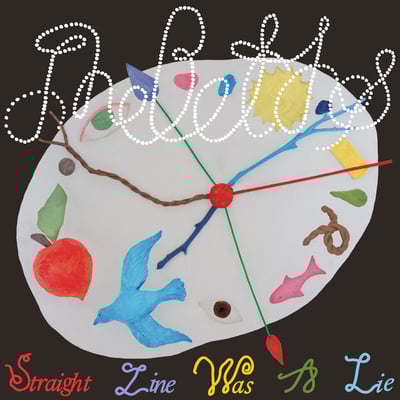
The Beths Straight Line Was A Lie
Released Aug 29, 2025 Anti/Epitaph
Established consensus 9 professional reviews Updated Nov 24, 2025
Broadly positive consensus
The Beths's Straight Line Was A Lie arrives as a bright-yet-bruised collection that turns existential questions into singalong hooks, and critics largely agree it succeeds more often than not.
How ChoruScore worksCritics' Top Tracks
The songs critics returned to most
Straight Line Was A Lie
9 critic mentions
“The title track has a post-punk feel to it, mixed with a pop chorus.” — Clash Music
No Joy
9 critic mentions
“No Joy’ bringing this to the forefront. It is a real dose of adrenaline that feels like hurtling off the deep end.” — Clash Music
Mother, Pray For Me
9 critic mentions
“It is one of the most beautiful tracks the group has put out across their entire discography.” — Clash Music
Full critic consensus
The Beths's Straight Line Was A Lie arrives as a bright-yet-bruised collection that turns existential questions into singalong hooks, and critics largely agree it succeeds more often than not. Across 9 professional reviews the record earned a 75.33/100 consensus score, with reviewers repeatedly citing the title cut “Straight Line Was A Lie” and “No Joy” as definitive moments and “Til My Heart Stops”, “Mother, Pray For Me”, and “Mosquitoes” emerging as additional standouts. Those songs encapsulate the album's prime tension: buoyant, jangly guitars and stacked harmonies set against introspective lyrics about family, medication, depression, and creative renewal.
Track Ratings
How critics rated each track, relative to this album (0-100). Only tracks that made critics feel something are rated.
Straight Line Was A Lie
Mosquitoes
No Joy
Metal
Mother, Pray For Me
Til My Heart Stops
Take
Roundabout
Ark Of The Covenant
Best Laid Plans
Get the next albums worth your time.
Critic-backed picks in one clean digest. No clutter.
What Critics Are Saying
Deep insights from 9 critics who reviewed this album

Critic's Take
The Beths continue to sharpen their instincts on Straight Line Was A Lie, and the best songs - notably “Til My Heart Stops” and “Best Laid Plans” - show how the band turns small missteps into catharsis. Alex McLevy writes with amused authority, celebrating how a thrown-off apology at the start of “Straight Line Was A Lie” becomes emblematic of an album about embracing mistakes. He highlights the record's newfound expansiveness and headphone-friendly layers, arguing that tracks like “Til My Heart Stops” build slowly into real release, while “Best Laid Plans” glides with unexpected flourishes. The result is a dependable band leveled up, songs that alternate hope and despair, and clear evidence of Stokes' songwriting growth.
Key Points
-
The best song is "Til My Heart Stops" because it is the album centerpiece that builds layer upon layer into a cathartic release.
Themes

Critic's Take
The Beths sound at once bright and bruised on Straight Line Was A Lie, and the best songs - notably “Straight Line Was A Lie” and “No Joy” - crystallize that tension. Kelly’s sentences revel in contrasts: jumping-up-and-down energy beside minor-key melancholy, raucous drums against elaborately harmonized choruses. The title track is hailed as possibly one of the best Beths songs ever, while “No Joy” is called a rampaging bop stuffed with the emotions Stokes could not feel. For fans asking for the best tracks on Straight Line Was A Lie, those two stand out, with “Take” and “Mosquitoes” providing muscular and elegiac counterpoints respectively.
Key Points
-
The title track stands out as the best for fusing ecstatic energy with lyrical depth about coming of age.
-
Album strengths are sharp hooks, shimmering harmonies, emotional complexity, and a balance of bangers and ballads.
Themes


Critic's Take
The Beths present on Straight Line Was A Lie a record where the best songs - notably “Straight Line Was A Lie” and “Til My Heart Stops” - double as thesis statements and earworms, equal parts hook and heart. Caleb Campbell’s voice here is admiring and precise, noting that the title track is "zippy and impressively hooky" while “Til My Heart Stops” tugs at the heartstrings with swooning harmonies. He foregrounds quieter triumphs as well, calling “Mother, Pray For Me” a stripped-back centerpiece that feels confessional and earned. Overall the review frames the best tracks as examples of the band’s deceptive simplicity and consistent mastery rather than radical reinvention.
Key Points
-
The title track is best for its hooky, thesis-like quality and status as an earworm.
-
The album’s core strengths are deceptive simplicity, strong hooks, vocal harmonies, and emotionally honest songwriting.
Themes

Critic's Take
The Beths return with Straight Line Was A Lie, an eclectic record where the title track and “Mother, Pray For Me” stand out most. The reviewer’s voice leans into admiration, praising the post-punk bite of “Straight Line Was A Lie” and the intimacy of “Mother, Pray For Me” while noting how brawny cuts like “No Joy” and “Take” translate to live thrills. The piece highlights the band’s knack for balancing disparate styles, from fuzzed guitars to ethereal moments, making these the best tracks on Straight Line Was A Lie for fans seeking both punch and tenderness.
Key Points
-
‘Mother, Pray For Me’ is the album’s emotional center, singled out as one of the group’s most beautiful and vulnerable songs.
-
The album’s core strengths are its eclectic influences and ability to balance energetic post-punk rippers with stripped back, ethereal moments.
Themes

Critic's Take
The Beths sound in peak form on Straight Line Was A Lie, where the title track and “No Joy” stand out as the best songs on the record. The reviewer's eye is on the power-pop immediacy of “Straight Line Was A Lie”, its sing-along melody and layered vocals, and the barreling monotone menace of “No Joy”. Lighter moments like “Mosquitoes” and “Mother, Pray For Me” show the band can pull back and still deliver hooks. Overall, the album pairs big guitar moments with introspective lyrics to great effect, making the best tracks especially memorable.
Key Points
-
The title track is best for its power-pop melody, layered vocals, and mission-statement lyrics.
-
The album’s core strengths are catchy hooks, big guitar riffs, and Elizabeth Stokes’ inventive, introspective lyrics with strong harmonies.
Themes

Critic's Take
Attila Peter writes with conversational clarity, noting Stokes’s knack for witty, self-aware lyrics and hook-filled refrains that make “No Joy” and the title track linger. The result is an empathetic, melodic record that rewards close listening and sticks with you.
Key Points
-
“No Joy” is the best song because it pairs blunt lyrical honesty about depression with punchy, punk-infused instrumentation.
-
The album’s core strengths are Stokes’s witty, self-aware lyrics, strong hooks, and tasteful use of strings and varied arrangements.
Themes

Critic's Take
The Beths lean into reflective energy on Straight Line Was a Lie, and the review makes it clear the best songs - notably “Straight Line Was a Lie” and “Mother, Pray for Me” - carry the album. Gabrielle Macafee praises Elizabeth Stokes' knack for melody and intimate lyricism, pointing to “No Joy” as a standout for its candid numbness and to “Best Laid Plans” for its sweeping, anthemic resignation. The narrative argues the best tracks balance clever hooks with emotional clarity, which is why listeners searching for the best songs on Straight Line Was a Lie will land on those moments. Overall, the album's strongest tracks reveal the band’s formula - ear-worm choruses, sharp guitars, and stacked harmonies - now filtered through quieter, more introspective arrangements.
Key Points
-
The best song is 'Mother, Pray for Me' for its tender, highest-quality songwriting and emotional gut punch.
-
The album’s core strengths are ear-worm choruses, insightful lyrics, Stokes’ vocals, stacked harmonies, and sharp guitars applied in a more introspective register.
Themes

Critic's Take
The review lands in a patient, analytical register, praising moments but noting unevenness. The Beths's Straight Line Was A Lie finds its best songs in the intimate, hook-forward “Metal” and the stripped-back “Mother, Pray For Me”, the former a Johnny Marr-style jangle standout and the latter a sensitive solo turn. The critic repeatedly returns to circularity - title track “Straight Line Was A Lie” and “Roundabout” - as a motif that gestures at depth but often lacks immediacy. Overall the album is valued as a public reckoning with mental health, even if it misses the fun and hooks of earlier work.
Key Points
-
The single "Metal" is best for its Johnny Marr-style arpeggios, jangle and unmistakable melody.
-
The album's core strengths are candid engagement with mental health and strong moments of melodic craft amid uneven execution.