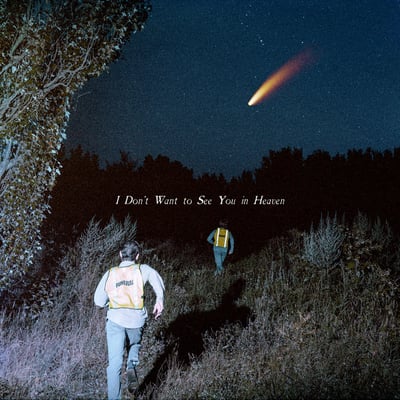
The Callous Daoboys I Don't Want to See You in Heaven
Released May 16, 2025 MNRK Music
Early read 2 professional reviews Updated Feb 21, 2026
Strong critical consensus
Early read based on 2 professional reviews. The Callous Daoboys' I Don't Want to See You in Heaven detonates with an audacious collision of genres, trading tidy songcraft for unpredictable, high-intensity curiosities that critics call both bewildering and brilliant.
How ChoruScore worksCritics' Top Tracks
The songs critics returned to most
Schizophrenia Legacy
2 critic mentions
“Schizophrenia Legacy spends just shy of five minutes barreling from chaotic metalcore to off-kilter melodic passages” — Distored Sound Magazine
Full Moon Guidance
2 critic mentions
“Where Full Moon Guidance takes Celebrity Therapist’s mathcore and twists it up with poppy choruses” — Distored Sound Magazine
III. Country Song in Reverse
2 critic mentions
“the finale of the album is easily one of their finest ever moments” — Distored Sound Magazine
Full critic consensus
The Callous Daoboys' I Don't Want to See You in Heaven detonates with an audacious collision of genres, trading tidy songcraft for unpredictable, high-intensity curiosities that critics call both bewildering and brilliant. Across professional reviews, the record's theatrical volatility and conceptual focus on failure and immortality mark it as a daring statement - an album that challenges expectations while rewarding repeated listens.
Critics consistently praise tracks such as “Schizophrenia Legacy”, “III. Country Song in Reverse” and “Two-Headed Trout” as the best songs on I Don't Want to See You in Heaven, citing their blend of melody and controlled chaos. Reviewers note the band's genre fusion - mathcore skews into pop, jazz and post-metal - and highlight moments like “Lemon” and the sprawling finale for marrying hooks with sprawling, conceptual ambition. The record earned a 90/100 consensus score across 2 professional reviews, with critics agreeing that its eclectic intensity and thematic contradictions are deliberate strengths rather than excesses.
While both reviews celebrate the band's skill at sustaining spectacle and emotional specificity, they also acknowledge the album's refusal to comfort listeners - passages that promise resolution frequently detonate into new textures. That tension between personal emotion and conceptual futurism gives the collection its weird endurance: a record that foregrounds failure even as it cements the band's artistic success. For readers seeking an incisive I Don't Want to See You in Heaven review or wanting to know whether the album is worth hearing, the critical consensus suggests emphatic praise tempered by the acknowledgment that this is challenging, essential listening rather than easy crowd-pleasing fare.
Track Ratings
How critics rated each track, relative to this album (0-100). Only tracks that made critics feel something are rated.
I. Collection of Forgotten Dreams
Schizophrenia Legacy
Full Moon Guidance
Two-Headed Trout
Tears on Lambo Leather
Lemon
Body Horror for Birds
The Demon of Unreality Limping Like a Dog
Idiot Temptation Force
Douchebag Safari
Distracted by The Mona Lisa
II. Opt Out
III. Country Song in Reverse
Get the next albums worth your time.
Critic-backed picks in one clean digest. No clutter.
What Critics Are Saying
Deep insights from 6 critics who reviewed this album
Di
Critic's Take
The reviewer's voice revels in the album's audacious shifts - praising “Lemon” and “Distracted By The Mona Lisa” for their pop hooks while lauding the sprawling, almost twelve-minute finale as one of their finest. It frames the record as a concept about failure that paradoxically proves the band’s success, guiding listeners through sensory chaos with clear enthusiasm. This reads as an endorsement aimed at readers asking which are the best tracks on I Don't Want to See You in Heaven, emphasizing the adventurous highs and unforgettable moments.
Key Points
-
The best song is the near-twelve-minute finale “III. Country Song in Reverse” because the reviewer calls it one of their finest moments and highlights its post-metal sweep and saxophone.
-
The album’s core strengths are its fearless genre fusion, conceptual throughline about failure, and strong pop hooks that make even chaotic songs feel accessible.
Themes
Sp


Critic's Take
The Callous Daoboys arrive with I Don't Want to See You in Heaven, an album that trades neat trajectories for a blast radius of ideas and noise. The reviewer's voice relishes how tracks like “Schizophrenia Legacy” and “Two-Headed Trout” embody that incandescent unpredictability, the former taking you on a strange journey and the latter promising melody before detonating. It reads as praise for an opus that compels from start to finish, answering the query about the best songs on I Don't Want to See You in Heaven by pointing to those centerpieces of bewildering invention. This is an album where endurance and spectacle make certain songs stand out as the best tracks on the record, and the review insists they earn that status by refusing comfort.
Key Points
-
The best song is Schizophrenia Legacy because the reviewer singles it out as a journey that validates the band's ahead-of-time eclecticism.
-
The album's core strengths are its relentless intensity, conceptual framing about endurance, and unpredictable, bewildering musical turns.

