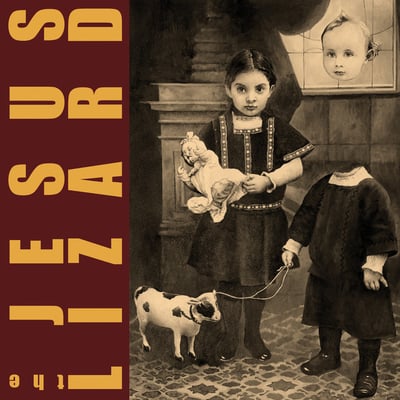
The Jesus Lizard Rack
Released Sep 13, 2024 Ipecac Recordings
Established consensus 10 professional reviews Updated Jan 1, 2026
Broadly positive consensus
The Jesus Lizard's Rack returns as a bruising, bass-driven statement that answers the question of whether the reunion was necessary with emphatic, often messy joy.
How ChoruScore worksCritics' Top Tracks
The songs critics returned to most
Hide & Seek
9 critic mentions
“He battles a witch (' battleaxe with no sense of humour ') on the groove-laden thrill ride of Hide & Seek” — Classic Rock Magazine
What If?
8 critic mentions
“on the unsettling ‘What If?’, his stiff riffs underscore the softly spoken investigation into a psychopath’s psyche” — The Quietus
Falling Down
7 critic mentions
“the back half of the record is where the band really catch fire, though, ripping through a slew of high-octane rockers from “Falling Down” through “Is That Your Hand?” — Under The Radar
Full critic consensus
The Jesus Lizard's Rack returns as a bruising, bass-driven statement that answers the question of whether the reunion was necessary with emphatic, often messy joy. Critics agree the record channels the band's signature sound while updating its venom: tight instrumentation and lurching bass anchor jagged guitars and David Yow's performative, psychopathic vocal assaults, making tracks like “Hide & Seek”, “Grind” and “What If?” immediate highlights.
Across nine professional reviews the consensus score sits at 78.44/100, and reviewers consistently point to a handful of standout songs when asked about the best songs on Rack. “Hide & Seek” is repeatedly praised for its propulsive riff and hook-laden violence, “Grind” for a strange singalong payoff and guitar theatrics, and “What If?” for unnerving atmosphere and vocal menace. Critics note controlled chaos as the album's chief achievement - the band balances age and continuity with raw live energy, channeling nostalgia without lapsing into pastiche.
Not all perspectives are identical: some reviews flag production that smooths a bit of the old tooth and a lone misstep in pacing, while others celebrate technical musicianship and lyrical sharpness that feel like unfinished business finally resolved. Taken together, professional reviews frame Rack as a vital noise-rock comeback that keeps The Jesus Lizard's ferocity intact and offers several must-listen tracks for longtime fans and newcomers deciding if Rack is worth their time.
Track Ratings
How critics rated each track, relative to this album (0-100). Only tracks that made critics feel something are rated.
Hide & Seek
Armistice Day
Grind
What If?
Lord Godiva
Alexis Feels Sick
Falling Down
Dunning Kruger
Moto(R)
Is That Your Hand?
Swan The Dog
Get the next albums worth your time.
Critic-backed picks in one clean digest. No clutter.
What Critics Are Saying
Deep insights from 11 critics who reviewed this album
mu

Critic's Take
The Jesus Lizard return with Rack, and it’s hard not to point straight to “Grind” and “Alexis Feels Sick” as two of the best songs on Rack, where David Wm. Sim’s bass pulses and the band’s old menace remains intact. Closer listens find highlights in “What If?” for its unnerving whisper and “Moto(R)” for its rueful refrain, together explaining why the best tracks on Rack feel like unfinished business finally resolved. The tone is emphatic but measured, insisting this is a riposte and a rightful continuation rather than a nostalgic retread.
Key Points
-
The best song(s) (notably "Grind" and "Alexis Feels Sick") showcase Sim’s propulsive bass and Yow’s visceral delivery, crystallizing the band’s enduring strengths.
-
The album’s core strengths are its mixture of pummelling punk fury and an undercurrent of melancholy, framed as a purposeful return rather than a nostalgia play.
Themes
Cl
Critic's Take
There is no softening here: The Jesus Lizard return with Rack as an incendiary device, equal parts controlled noise and vocal bedlam, and the best songs - notably “Swan The Dog” and “Hide & Seek” - showcase David Yow at his most unhinged and prophetic. The groove-laden “Hide & Seek” proves the band still craft thrilling riffs, while album-closer “Swan The Dog” crystallises the record's feral grandeur. If you want the best tracks on Rack, those moments where mania meets precision are where the album truly burns brightest.
Key Points
-
The album's core strength is its blend of controlled noise and precise musicianship, where chaos and craft coexist.
Themes

Critic's Take
The Jesus Lizard return with Rack, a record that trades on their old live fury while showing off sharper musicianship. Tom Morgan highlights Duane Dennison’s inventive guitar work as the album’s engine, singling out “What If?”, “Grind” and “Armistice Day” as moments where technique and menace meet. The review argues that the best songs on Rack pair giddy energy with crafty songwriting, from “What If?”’s eerie arpeggios to “Grind”’s sensational solo. It reads like a celebration: muscular, slightly unhinged, and convincingly triumphant for a band back after a long absence.
Key Points
-
The best song(s) excel because Duane Dennison’s inventive guitar work creates atmosphere and memorable solos.
-
The album’s core strengths are a marriage of giddy live energy and tightened technical songwriting.
Themes

Critic's Take
The Jesus Lizard sound reinvigorated on Rack, a reunion album that trades mere nostalgia for angular noise and vindictive wit. The reviewer revels in how “Hide & Seek” arrives with Duane Denison’s "delicious and disturbing" guitar and how “Grind” paradoxically contains a singalong that cracks the band open. He praises the slower shocks too, noting “Armistice Day” and “What If?” for their meandering, serpentine menace and panic-inducing monologue respectively. Ultimately, the best tracks on Rack prove the band have not become a pastiche but remain gloriously uncompromising and vital.
Key Points
-
“Hide & Seek” is best for Denison’s "delicious and disturbing" guitar and Yow’s escalating unhinged delivery.
-
The album’s core strengths are reinvigorated angular noise, dark humour, and controlled menace across both fast and slow tempos.
Themes


Critic's Take
The Jesus Lizard return with Rack, and the record announces itself with the hook-laden opener “Hide & Seek”, a proof that the band’s rough, rowdy noise-rock instincts remain intact. The review revels in the back half catching fire, singling out the run from “Falling Down” through “Is That Your Hand?” as the album’s high-octane heart. Even when taking aim at a lone misstep like “Armistice Day”, the critic frames Rack as four veteran weirdos still thrashing like teenagers, compositionally sharp and viscerally immediate. The verdict is clear: for listeners asking which are the best songs on Rack, start with “Hide & Seek” and the furious back-half run that includes “Falling Down” and “Is That Your Hand?”
Key Points
-
“Hide & Seek” is the best song because it functions as a hook-laden lead single that proves the band’s classic noise-rock energy remains intact.
-
The album’s core strength is its unhinged live energy and compositional sharpness, especially across the high-octane back half.
Themes
Fa
Critic's Take
The Jesus Lizard sound revitalised on Rack, and the best songs - notably “Hide & Seek” and “Falling Down” - prove they still write irresistible, mosh-ready noise rock. Ferrier's voice is convivial and sharp, praising the band’s signature bass-driven grit while admiring Yow’s theatrical delivery. The review emphasizes high energy riffs and basslines as the album’s triumphant throughlines, making clear why listeners ask about the best tracks on Rack. Overall, the record reads like a confident comeback, full of momentum and well-earned menace.
Key Points
-
The opener “Hide & Seek” converts listeners with full-throttle riffs and theatrical vocals.
-
The album’s core strength is its bass-driven, high-energy noise rock that balances menace with melody.
Themes

Critic's Take
The Jesus Lizard sound vindicated on Rack, a record that proves the band has lost nothing and then some. The review revels in the feral immediacy of “Hide & Seek” and the slow-burning menace of “Armistice Day”, arguing these best tracks show the group running circles around contemporaries. The voice here is plainly celebratory, noting Duane Denison riffs and David Yow’s demented poetics as the album’s chief pleasures. In short, for fans seeking the best songs on Rack, “Hide & Seek” and “Armistice Day” are exemplary of why the band still matters.
Key Points
-
“Hide & Seek” is the best song because it confidently reintroduces the band with a driving riff and explosive finish.
-
The album’s core strengths are its preserved signature sound, inventive Denison riffs, and David Yow’s unhinged, poetic vocals.
Themes

Critic's Take
The Jesus Lizard return with Rack, and the best songs - those that most recapture the old venom - sit comfortably alongside the band’s classic DNA. The reviewer repeatedly singles out Yow’s performance and the band interplay as highlights, making tracks that foreground Yow’s howls and Sims’ lurching bass the album’s chief wins. Production dampens some of the old toothsome depth, yet songs that feel like B-sides from their heyday emerge as the standout moments on Rack.
Key Points
-
The best song(s) are those that recapture Yow’s charismatic howls and Sims’ lurching bass, delivering standout moments that feel like heyday B-sides.
-
The album’s core strengths are band interplay, enduring character of vocals and bass, and consistent vigor despite tamer production.
Themes
Th
Critic's Take
The Jesus Lizard sound uncannily like their late Touch and Go self on Rack, and the reviewer's ear keeps landing on the best tracks: opener “Hide & Seek” for its propulsive fury, the streamlined menace of “Falling Down”, and the standout riff-driven “Moto(R)”. The record revels in tightly controlled chaos - Sims and McNeilly supply telepathic rhythm while Duane Denison’s riffs remain imaginatively compelling, and David Yow’s panicked vocals still command attention. For fans asking which are the best songs on Rack, it’s those three cuts that most clearly reclaim the band’s old thrill while offering occasional respite in songs like “What If?”.
Key Points
-
Moto(R) is the best track because the reviewer explicitly calls it the standout and ties it to the album’s reclaimed thrill.
-
The album’s core strengths are telepathic rhythm section, imaginative guitar riffs, and David Yow’s unique, panicked vocals producing controlled chaos.