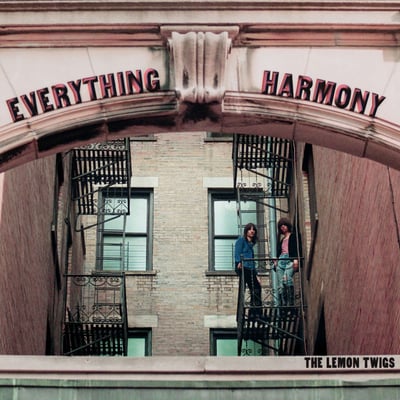
The Lemon Twigs Everything Harmony
Released May 5, 2023 Captured Tracks
Consensus forming 3 professional reviews Updated Oct 6, 2026
Broadly positive consensus
Consensus is still forming across 3 professional reviews. The Lemon Twigs's Everything Harmony refines their retro-pop ambitions into a warmer, more restrained statement that critics say both celebrates and reconsiders 1960s and 1970s influences.
How ChoruScore worksCritics' Top Tracks
The songs critics returned to most
Every Day Is The Worst Day Of My Life
1 critic mention
“they process the depths of depression with gorgeous melodic sensibility on ‘Every Day Is the Worst Day of My Life” — DIY Magazine
Ghost Run Free
2 critic mentions
“the chiming guitars and infectious melodies of ‘What You Were Doing’ and ‘Ghost Run Free’ call to mind the pristine power-pop of Big Star” — Hot Press
What You Were Doing
2 critic mentions
“the chiming guitars and infectious melodies of ‘What You Were Doing’ ... call to mind the pristine power-pop of Big Star” — Hot Press
Full critic consensus
The Lemon Twigs's Everything Harmony refines their retro-pop ambitions into a warmer, more restrained statement that critics say both celebrates and reconsiders 1960s and 1970s influences. Across professional reviews the record earned a 76.67/100 consensus score from three reviews, a tally that frames the album as a largely successful maturation marked by immaculate harmonies and occasional overreach.
Critics consistently praise the album's vocal interplay and craft, pointing to songs that best capture the band's strengths. “What You Were Doing” and “Ghost Run Free” emerge as repeated highlights for their jangly guitars and power-pop propulsion, while “Every Day Is The Worst Day Of My Life” receives acclaim for processing depression with melodic grace. Reviewers note a deliberate stripping back of production in places, yielding acoustic turns and swooning strings - moments that evoke Simon & Garfunkel and Big Star without descending into mere pastiche.
Yet opinions are balanced: some critics find the album's restraint leads to safe mid-album choices or sprawling title-track indulgence, while others celebrate those quieter passages as evidence of growing maturity and timeless songwriting. The critical consensus suggests Everything Harmony is worth hearing for its standout tracks and harmonies, even if its scope occasionally falters. Below, detailed reviews unpack where the record triumphs and where it retreats.
Track Ratings
How critics rated each track, relative to this album (0-100). Only tracks that made critics feel something are rated.
When Winter Comes Around
In My Head
Corner Of My Eye
Any Time Of Day
What You Were Doing
I Don't Belong To Me
Every Day Is The Worst Day Of My Life
What Happens To A Heart
Still It's Not Enough
Born To Be Lonely
Ghost Run Free
Everything Harmony
New To Me
Get the next albums worth your time.
Critic-backed picks in one clean digest. No clutter.
What Critics Are Saying
Deep insights from 3 critics who reviewed this album

Critic's Take
The Lemon Twigs sound more like seasoned classicists than revivalists on Everything Harmony, and the best tracks underline that claim. The standout “What Happens To A Heart” pairs swooning strings with soaring vocals in a breakup lament that feels timeless, while “Every Day Is The Worst Day Of My Life” processes depression with gorgeous melodic sensibility. The looser jangly guitars of “What You Were Doing” show their range, making these songs the best tracks on Everything Harmony because they balance vulnerability with craft.
Key Points
-
The best song, “What Happens To A Heart”, is singled out for swooning strings and soaring vocals that make it timeless.
-
The album's core strengths are mature songwriting, emotional vulnerability, and tasteful 1960s-inflected arrangements.
Themes
Ho
Critic's Take
The Lemon Twigs’s Everything Harmony is a sprawling, clearly 1970s-inflected odyssey, and the best songs are where their love of classic harmony and pristine pop coalesce. Tracks like “When Winter Comes Around” and “What You Were Doing” show those divine harmonies and infectious melodies that make them feel like heirs to Simon & Garfunkel and Big Star, respectively. Even the polished charm of “Corner Of My Eye” reads as timeless pop, while the title track sprawls a little too far to fully engage. In short, if you search for the best songs on Everything Harmony, start with “When Winter Comes Around” and “What You Were Doing” for the album at its most winning.
Key Points
-
The best song, notably “When Winter Comes Around”, stands out for its divine harmonies and Simon & Garfunkel echoes.
-
The album’s core strengths are era-evoking 1970s influences, tight harmonies, and clean power-pop melodies.
Themes

Critic's Take
The Lemon Twigs arrive on Everything Harmony with a strangely mature restraint that splits the album between missteps and triumphs. The reviewer praises the exuberant single “In My Head” as the moment the record finds its footing, while calling opener “When Winter Comes Around” a shaky, mostly acoustic start that strains the ears. Mid-album acoustic turns like “I Don’t Belong To Me” and “What Happens To A Heart” are acknowledged as well-crafted but too safe, draining excitement. Hope is reserved for “Ghost Run Free”, an exuberant power-pop highlight that blends familiar strengths with new propulsion and sparkle.
Key Points
-
The best song is "In My Head" because it is the exuberant moment where the album finds its footing.
-
The album’s core strength is refined, restrained production that highlights retro pop craftsmanship but sometimes drains excitement.