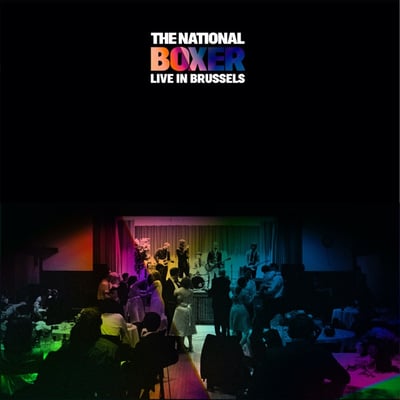
The National Boxer
Released Jul 13, 2018 4AD
Established consensus 25 professional reviews Updated Mar 23, 2026
Broadly positive consensus
The National's Boxer stakes a late-night claim to melancholic grandeur, a record of baritone confession and ritual drums that critics largely agree rewards patient listening.
How ChoruScore worksCritics' Top Tracks
The songs critics returned to most
Slow Show (Live in Brussels)
8 critic mentions
“Slow Show is as positive a song as The National will write, a beautiful swirl of a love song” — The Line of Best Fit
Brainy (Live in Brussels)
7 critic mentions
“The sinister Brainy is the real heart of darkness here.” — The Line of Best Fit
Apartment Story (Live in Brussels)
7 critic mentions
“Apartment Story is another wonderfully twisted love song, "Stay inside till someone finds us / Do whatever the TV tells us” — The Line of Best Fit
Full critic consensus
The National's Boxer stakes a late-night claim to melancholic grandeur, a record of baritone confession and ritual drums that critics largely agree rewards patient listening. Across 25 professional reviews the collection earned an 83.2/100 consensus score, and reviewers consistently point to the album's mood-piece cohesion, restrained arrangements, and literary lyricism as its defining strengths.
Reviewers praise the album's blend of country-gothic and minor-key rock, where brass and strings textures sit against Bryan Devendorf's drumming to create rhythmic tension and orchestral subtlety. Critics repeatedly single out performance versions such as “Slow Show (Live in Brussels)” and “Apartment Story (Live in Brussels)” as standout tracks, while “Fake Empire (Live in Brussels)”, “Brainy (Live in Brussels)” and “Ada (Live in Brussels)” emerge in several reviews for their melancholic beauty and emotional lift. Professional reviews note the record's intimacy, melancholic vocals and themes of disillusionment, loneliness and romantic longing as the emotional core that binds the best songs on Boxer.
Not all critics are unanimous. Some reviews highlight muffled production and vocal obscuration that occasionally blunt emotional payoffs, suggesting the restraint and minimalism that define the record can verge on claustrophobia. Yet the prevailing critical consensus frames Boxer as a carefully crafted, affecting statement in The National's catalog—a moody, literate work whose pleasures reveal themselves over repeated plays.
Below the fold, detailed reviews unpack why the record's slow reveals and dramatic instrumentation make it a memorable, if occasionally divisive, milestone for the band.
Track Ratings
How critics rated each track, relative to this album (0-100). Only tracks that made critics feel something are rated.
Fake Empire (Live in Brussels)
Mistaken for Strangers (Live in Brussels)
Brainy (Live in Brussels)
Squalor Victoria (Live in Brussels)
Green Gloves (Live in Brussels)
Slow Show (Live in Brussels)
Apartment Story (Live in Brussels)
Start a War (Live in Brussels)
Guest Room (Live in Brussels)
Racing Like a Pro (Live in Brussels)
Ada (Live in Brussels)
Gospel (Live in Brussels)
Get the next albums worth your time.
Critic-backed picks in one clean digest. No clutter.
What Critics Are Saying
Deep insights from 25 critics who reviewed this album
mu

Critic's Take
The reviewer keeps a cool, comparative tone, likening the album to Crooked Fingers and noting how Devendorf's machine-gun beats and Tony Williams-worthy rolls make these tracks the album's highlights. The piece ends by insisting Boxer works best as a mood piece, and that cohesion is part of what makes these tracks stand out.
Key Points
-
Boxer’s core strength is its cohesive, unnerving mood and tight rhythmic focus.
Themes

Critic's Take
The National's Boxer feels like a chronicle of growing up, smoldering with restrained intensity and aching lyricism. In this reading, songs such as “Slow Show (Live in Brussels)” and “Apartment Story (Live in Brussels)” exemplify the record's crushing tension and small orchestral flourishes, the moments where less becomes more. The result is an elegiac, elegiacally urgent album that ranks those tracks as the record's emotional centers.
Key Points
-
The best song is best because it crystallizes Berninger's wounded baritone and the album's smoldering tension into a single emotional core.
-
The album's core strengths are restraint, precise drumming, and small orchestral touches that amplify lyrical despair.
Themes


Critic's Take
The National's Boxer is brooding, dark and hopelessly romantic, the sort of record you learn to love track-by-track. Kelly's voice celebrates how the album is superlatively rock when it wants to be and almost baroquely classical when it tires of that, which is why queries about the best songs on Boxer point to its emotionally seismic center. The review foregrounds the warmth, humanity and musical complexity that make the best tracks on Boxer feel transcendent, and insists this is one of the finest indie rock albums of the year.
Key Points
-
The best songs shine because they fuse rock immediacy with classical embellishment and emotional heft.
-
The album's core strengths are its brooding atmosphere, musical complexity, and heartbreaking emotional impact.
Themes

Critic's Take
The voice is measured and admiring, insisting that these best tracks reward repeated listening even if the darkness risks monotony.
Key Points
-
The best song is "Brainy (Live in Brussels)" because the reviewer calls it the album's "real heart of darkness" with vivid lyric detail.
-
The album's core strengths are its consistent brooding atmosphere, precise production, and small instrumental touches that reveal more on repeat listens.
Themes
Dr
Critic's Take
Overall, the album’s resigned tone and subtle orchestration make these songs the clearest examples of Boxer’s affecting, subdued power.
Key Points
-
Boxer’s core strengths are its resigned tone, subtle orchestration, and effecting exploration of relationship downfall.
Themes

Gi

Critic's Take
Praise is measured, noting how these songs reveal themselves gradually and reward patient listening, which is why the best songs on Boxer feel like slow reveals rather than immediate hits. This is an album that hits you in the gut after time, making those mid-album tracks the standout moments.
Key Points
-
The album's core strengths are restrained arrangements, evocative rhythms, and lyrics that reveal themselves with repeated listens.
Themes
Co
Sp
Critic's Take
Hunter’s sentences sweep and precise, and he foregrounds Matt Berninger’s baritone as the album’s moral compass, so the best tracks on Boxer are those that marry lyric immediacy with taut arrangements. The reviewer’s voice calls these moments both horrible and magnificent, an appraisal that makes the best tracks feel lived-in and vivid.
Key Points
-
Boxer’s core strengths are taut arrangements, cinematic drama, and lyrics that mix class commentary with intimate anguish.
Themes
Ir
Critic's Take
The National's Boxer feels like a quiet triumph, the best tracks revealing the band's gift for hushed grandeur. There is praise for the tone that moves from country gothic to dark balladry, and for the understated blend of brass, strings, piano and drums that stop you in your tracks.
Key Points
-
Boxer’s core strengths are Matt Berninger's doleful voice and the understated blend of brass, strings, piano and drums.
Themes

Key Points
-
The album’s core strengths are intimate arrangements, lyrical disillusionment, and careful production that avoids overproduction.
Themes

Critic's Take
The National sound like a darker, statelier rock band on Boxer, and Rob Sheffield zeroes in on the songs that carry that mood. The narrative keeps circling back to Bryan Devendorf's pounding drums as the engine that makes these best tracks on Boxer land so hard.
Key Points
-
The best song is driven by Devendorf's pounding drums which elevate melodies into stately standouts.
Themes

Ar

Ti

Critic's Take
The National's Boxer arrives fully formed, and Heather Phares writes with a measured admiration that homes in on its best songs. The tone is admiring and analytical, noting the album's intimacy, widescreen arrangements, and narrative lyricism as reasons these songs rise above the rest.
Key Points
-
The album's strengths are its intimate orchestration, literary lyrics, and consistent sequence of standout songs.
Themes
NO


Critic's Take
The National's Boxer is painted in a weary, minor-key palette, and the review consistently returns to that sense of muffled disappointment. The critic notes Matt Berninger's "mahogany-toned" voice but complains it is "mumbling deep in the mix," which undercuts the record's emotional payoffs. While the reviewer concedes "flashes of prettiness," they frame the best tracks on Boxer as being overshadowed by claustrophobic production and an overly muted sound. The piece positions the album's strengths - lyricism and moments of prettiness - against a production approach that makes those highs feel deadened rather than revelatory.
Key Points
-
The best songs are undermined by production that buries Matt Berninger's voice.
-
The album's core strengths are lyricism and occasional prettiness, but the overall sound is claustrophobic and muted.
Themes
