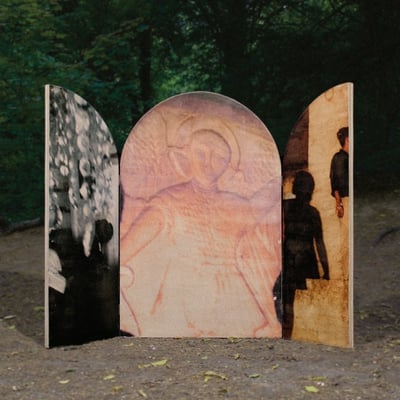
The Orielles Only You Left
Released Mar 13, 2026 Heavenly Recordings
Established consensus 5 professional reviews Updated Mar 20, 2026
Broadly positive consensus
The Orielles's Only You Left returns the band to song-led terrain while keeping their appetite for texture and surprise, an emotionally direct collection that balances shoegaze rush with fragile melody.
How ChoruScore worksCritics' Top Tracks
The songs critics returned to most
Whenever (I May Not Feel So Close)
1 critic mention
“a song like "Whenever (I May Not Feel So Close)" is musically fascinating” — AllMusic
Three Halves
3 critic mentions
“opener "Three Halves" goes full throttle back into the shoegaze-tinged indie rock sound of their debut” — Beats Per Minute
All in Metal
1 critic mention
“All in Metal" the most obvious here, where Esmé’s vocals are hypnotic and soaring violin cuts in” — Beats Per Minute
Full critic consensus
The Orielles's Only You Left returns the band to song-led terrain while keeping their appetite for texture and surprise, an emotionally direct collection that balances shoegaze rush with fragile melody. Across five professional reviews critics note a contrast of calm and chaos throughout the record, and they single out “Three Halves”, “Shadow of You Appears”, “Tears Are”, “Whenever (I May Not Feel So Close)” and “All in Metal” as standout tracks that best illustrate the album's wood versus metal aesthetic and genre-blending ambitions.
The critical consensus is favorable: Only You Left earned an 83/100 consensus score across 5 professional reviews, with reviewers consistently praising how experimentation and texture serve songs rather than overwhelm them. AllMusic and Beats Per Minute both highlight opener “Three Halves” for its motoric pulse and cathartic outro, while AllMusic and Beats Per Minute respectively point to “Whenever (I May Not Feel So Close)” and “All in Metal” as moments where detuned noise, violin and dubby bass coalesce into unexpectedly intimate statements. Critics repeatedly emphasize emotional directness and the album's return to shoegaze-infused indie rock tempered by studio contrasts - organic strings and harsh pedals, quiet arpeggios and abrasive riffs.
Not all voices are uniformly celebratory: DIY and Beats Per Minute note occasional overreach, where anxious, knife-edge arrangements flirt with clutter before melody rescues them. Still, the prevailing view among music critics is that Only You Left represents a mature evolution for the band - a record where sonic experimentation and songcraft finally coexist. For readers searching for an Only You Left review or wondering what the best songs on the record are, the consensus points to the five tracks above as the album's clearest triumphs, and the collection as worth repeated listens.
Track Ratings
How critics rated each track, relative to this album (0-100). Only tracks that made critics feel something are rated.
Three Halves
Shadow of You Appears
Tears Are
Embers
Tiny Beads Reflecting Light
The Woodland Has Returned
All in Metal
You are Eating a Part of Yourself
Whenever (I May Not Feel So Close)
Wasp
To Undo the World Itself
Get the next albums worth your time.
Critic-backed picks in one clean digest. No clutter.
What Critics Are Saying
Deep insights from 4 critics who reviewed this album

Critic's Take
The Orielles sound like a band who have finally turned their experiments into songs on Only You Left, and the best songs here - notably “Three Halves” and “Whenever (I May Not Feel So Close)” - show why. The reviewer's voice revels in how detuned guitar noise and motoric pulse in “Three Halves” collide with dubby violin bits, while “Whenever (I May Not Feel So Close)” welds indie-folk arpeggios to post-punk dub bass and tenderized vocals. This is music that flirts with the avant-garde but keeps its heart exposed, so the best tracks on Only You Left feel both adventurous and emotionally immediate. The album rewards repeated listens because those juxtapositions - the wonky blends and the sudden lyrical home-runs - are what make its standout songs sing.
Key Points
-
The best song, “Whenever (I May Not Feel So Close)”, pairs adventurous production with intensely heartfelt vocals.
-
The album's core strength is its juxtapositions: experimental textures balanced by melodic clarity and emotional directness.
Themes

Critic's Take
The Orielles return with Only You Left, a record that keeps flirting with genre boundaries while privileging melody and momentum. The reviewer's eye lingers on opener “Three Halves” for its swaggering opening and thunderous outro, and on “Shadow of You Appears” as a perfect showcase for the trio's synergy. Notes on “Tears Are” and “The Woodland Has Returned” underline the album's appetite for departure and contrast, and the overall tone insists this is another fine, worthwhile record.
Key Points
-
“Three Halves” is the best track for encapsulating the album’s melange and delivering a thunderous, multifaceted outro.
-
The album’s core strength is its genre-blending experimentation and the trio’s evident musical growth and cohesion.
Themes

Critic's Take
The Orielles make a compelling full-circle return on Only You Left, where opener “Three Halves” and the hypnotic “All in Metal” stand out as the best tracks, marrying shoegaze rush with polished detail. The review voice revels in the album’s dualities - wood and metal - and highlights how strings, violin and distorted pedals push songs like “Shadow of You Appears” and “Embers” into urgent, uneasy territory. Overall the best songs on Only You Left feel both familiar and more meticulously crafted, rewarding repeat listens without losing their adventurous edge.
Key Points
-
The best song is driven by familiar shoegaze energy refined into a more detailed and urgent production.
-
The album’s core strengths are its textural contrasts and the wood versus metal studio influences shaping mood and instrumentation.
Themes

Critic's Take
The Orielles revisit a form of concision on Only You Left, and the best songs on Only You Left are where their dual motifs collide. “Shadow of You Appears” crackles with Psycho-like strings that threaten to snap before a propulsive guitar hook steadies it, while “Tears Are” pairs Esmé Hand-Halford’s breathy vocals with grungy riffs then unfurls into an acoustic exhale. The record’s texture is often most vivid in those convergences, and tracks like “Embers” find beauty in anxious, knife-edge arrangements even as later cuts loosen the album’s tighter shape.
Key Points
-
The best song moments occur where the album’s wood versus metal motifs converge, producing tension and release.
-
The album’s core strength is its textural contrast and a return to song-led structures, even as later tracks loosen focus.