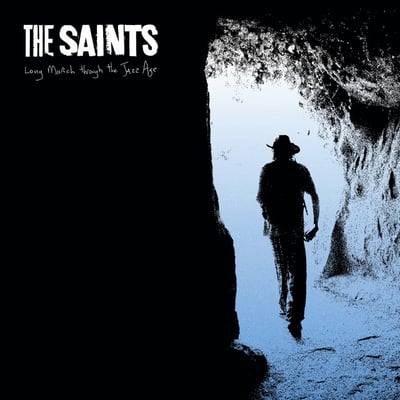
The Saints Long March Through The Jazz Age
Released Nov 28, 2025 Fire Records
Early read 2 professional reviews Updated Dec 1, 2025
Strong critical consensus
Early read based on 2 professional reviews. The Saints's Long March Through The Jazz Age arrives as a measured, elegiac coda to Chris Bailey's career, earned praise for its melodic clarity and reflective heft.
How ChoruScore worksCritics' Top Tracks
The songs critics returned to most
Empires (Sometimes We Fall)
2 critic mentions
“the wonderful, western tinged song "Empires (Sometimes We Fall)" is a brilliant song that is an instant classic” — The Spill Magazine
Will You Still Be There
1 critic mention
“The final song on the final Saints album, Will You Still Be There, has Latin guitars and mariachi horns” — Louder Than War
Break Away
1 critic mention
“There are great classic rock songs, like Break Away with a razor-sharp rhythm guitar” — Louder Than War
Full critic consensus
The Saints's Long March Through The Jazz Age arrives as a measured, elegiac coda to Chris Bailey's career, earned praise for its melodic clarity and reflective heft. Across professional reviews the record earned an 85/100 consensus score from two reviews, with critics consistently citing a balance of nostalgia, mortality and rock n roll legacy that makes the collection feel like a deliberate farewell.
Reviewers agree that the best songs on Long March Through The Jazz Age lean into narrative weight and restrained power. “Empires (Sometimes We Fall)” emerges as the standout, described by critics as anthemic and western-tinged, while “Will You Still Be There” receives particular notice for its mournful, brass-laced close. Other frequently praised moments include “Bruises”, which distills Bailey's life into a rocking vignette, plus muscular highlights like “Break Away” and the Stones-tinged “Gasoline” that nod to the band's rock roots.
While both reviews are warm and respectful, they highlight different strengths - one emphasizes the record's melodic restraint and confronting of loss without despair, the other celebrates its anthemic sweep and genre exploration. That consensus suggests Long March Through The Jazz Age is a thoughtful, affecting final statement: not merely a greatest-hits sendoff, but a varied, reflective record that honors mortality, memory and the long arc of a rock n roll life. Read on for full reviews and track-by-track notes on the standout songs and thematic threads.
Track Ratings
How critics rated each track, relative to this album (0-100). Only tracks that made critics feel something are rated.
Empires (Sometimes We Fall)
Break Away
Judas
Vikings
Gasoline
The Key
A Vision of Grace
Imaginary Fields Forever
Bruises
Resurrection Day
Carnivore (Long March Through the Jazz Age)
Will You Still Be There
Get the next albums worth your time.
Critic-backed picks in one clean digest. No clutter.
What Critics Are Saying
Deep insights from 2 critics who reviewed this album

Critic's Take
The Saints deliver on Long March Through The Jazz Age as a measured, moving coda to Chris Bailey’s career, with the best songs grounded in melody and memory. The reviewer's tone is warm and respectful, highlighting “Empires (Sometimes We Fall)” as a wonderful, western-tinged instant classic and “Imaginary Fields Forever” and “Resurrection Day” as songs that confront mortality without descending into despair. He praises the restrained rock and strong melodies across the record, noting that songs like “Bruises” distill Bailey’s life into a rocking vignette. Overall, the best tracks on Long March Through The Jazz Age are those that balance narrative weight and melodic clarity, making them the standout moments of Bailey’s final statement.
Key Points
-
The best song is "Empires (Sometimes We Fall)" for its western tinges, strong melody, and being called an instant classic.
-
The album’s core strengths are mature songwriting, strong melodies, and a reflective examination of mortality without excess gloom.
Themes

Critic's Take
Chris Bailey's final record, Long March Through The Jazz Age, reads like a valediction and the best tracks - notably “Empires (Sometimes We Fall)” and “Will You Still Be There” - carry that elegiac, anthemic charge. Mark Ray writes in an affectionate, measured tone, celebrating the anthemic sweep of “Empires (Sometimes We Fall)” and the mournful, brass-laced close of “Will You Still Be There” as fitting last farewells. He singles out rock classics like “Break Away” and Stones-tinged “Gasoline” as muscular highlights, while quieter pieces such as “A Vision of Grace” and “Carnivore (Long March Through the Jazz Age)” supply haunting gravity. The narrative stays wistful and rousing, positioning these best songs as a final lift for anyone with rock n roll in their soul.
Key Points
-
The best song is the opening “Empires (Sometimes We Fall)” because it is explicitly called anthemic and sets the album's reflective tone.
-
The album's core strengths are its elegiac, wistful songwriting, diverse rock styles, and Bailey's aged, expressive voice lending gravitas.