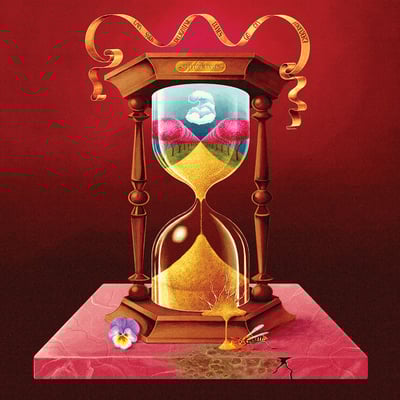
The Soft Pink Truth Can Such Delightful Times Go On Forever?
Released Jan 30, 2026 Thrill Jockey
Established consensus 6 professional reviews Updated Feb 15, 2026
Mixed-to-negative consensus
The Soft Pink Truth's Can Such Delightful Times Go On Forever?
How ChoruScore worksCritics' Top Tracks
The songs critics returned to most
Phrygian Ganymede
5 critic mentions
“It’s most potent on ‘Phrygian Ganymede’ where angelic flurries lead into keening violins before a downpour of chaotic piano” — The Quietus
Orchard
5 critic mentions
“Orchard’, anchored by Bill Orcutt’s earthly acoustic guitar, has strings that rove and twist in bucolic wonder.” — The Quietus
Mere Survival Is Not Enough
5 critic mentions
“The opening track is a bounding maze of soaring violins and jovial bass, played with acoustic instruments but seemingly mapped to an electronic framework.” — The Quietus
Full critic consensus
The Soft Pink Truth's Can Such Delightful Times Go On Forever? reconceives Drew Daniel's practice as a chamber-electronic project that privileges acoustic timbres, intimate ensemble playing, and political tenderness over the dancefloor immediacy of earlier work. Across six professional reviews the record earned a 51.5/100 consensus score, and critics consistently point to a handful of tracks that crystallize its aims: “Phrygian Ganymede”, “Orchard”, and “Mere Survival Is Not Enough” emerge as the album's clearest highlights. These songs showcase the album's collision of cinematic strings, harp and piano, and restrained synth gestures that create moments of beauty amid unease.
Reviewers praise the album's chamber-music influence and its attempt to carve out a queer sanctuary - a sense of refuge and collectivism that runs through the arrangements and collaborations. Critics repeatedly note the record's tonal oscillation between serene pastoralism and sudden turbulence, describing episodes of "calm beauty interrupted by panic" and composerly experiments that reward repeated listening. While several reviews celebrate the ambitious 10-minute centerpiece “Phrygian Ganymede” for its dissonant pizzicato and shifting textures, others register frustration: the move away from dance-oriented immediacy can make portions of the record feel hushed or recede into background hush.
In sum, the critical consensus suggests Can Such Delightful Times Go On Forever? is a thoughtful, occasionally uneven detour into avant chamber music that yields essential moments but tests patience between them. For listeners searching for the best songs on the record, begin with “Phrygian Ganymede”, “Orchard” and “Mere Survival Is Not Enough”; for those wondering if the album is worth seeking out, professional reviews acknowledge its rewards though they caution it will not satisfy those wanting a straight return to dancefloor immediacy.
Track Ratings
How critics rated each track, relative to this album (0-100). Only tracks that made critics feel something are rated.
Mere Survival Is Not Enough
And By and By A Cloud Takes All Away
Phrygian Ganymede
Underneath (I)
L'Esprit de L'Escalier
Time Inside the Violet
Orchard
Underneath (II)
Get the next albums worth your time.
Critic-backed picks in one clean digest. No clutter.
What Critics Are Saying
Deep insights from 6 critics who reviewed this album

Critic's Take
The Soft Pink Truth’s Can Such Delightful Times Go On Forever? finds Drew Daniel probing community with a doubtful undertone, favoring acoustic timbres over electronics. The reviewer singles out “Mere Survival Is Not Enough” for its unabashed sentimentality and cinematic strings, and “Orchard” as a particular highlight for its pastoral guitar. “Phrygian Ganymede” is praised as a compositional centerpiece, a 10-minute epic of harp, piano, and dissonant pizzicato. Overall the best tracks on Can Such Delightful Times Go On Forever? are those that blend chamber textures with Daniel’s questioning intelligence, especially “Mere Survival Is Not Enough”, “Phrygian Ganymede”, and “Orchard”.
Key Points
-
The best song work blends chamber textures with cinematic sentiment, particularly on “Phrygian Ganymede” and “Mere Survival Is Not Enough”.
-
The album's core strength is its acoustic, community-minded approach that foregrounds composition and collective timbres over electronics.
Themes

Critic's Take
The Soft Pink Truth’s Can Such Delightful Times Go On Forever? finds its best tracks in the luminous “Phrygian Ganymede” and the golden shimmer of “Orchard”, where Herrmannian strings and Bill Orcutt’s guitar furnish moments that stop you in your tracks. The record also rewards repeat listens for the harp-led calm of “Time Inside the Violet” and the buoyant opener “Mere Survival Is Not Enough”, even if Daniel’s curious detour into chamber textures sometimes lets the album recede into background hush. In short, the best songs on Can Such Delightful Times Go On Forever? are those that balance cinematic grandeur with intimate detail, producing the record’s clearest pleasures and small sanctuaries.
Key Points
-
“Phrygian Ganymede” is best for its ambitious, Hitchcockian strings and sustained cinematic ambition.
-
The album’s core strength is creating intimate, queer sanctuary through avant chamber arrangements and moments of luxuriant stillness.
Themes

Critic's Take
The Soft Pink Truth’s Can Such Delightful Times Go On Forever? feels like a makeshift queer refuge, and the review stakes that claim through its best tracks. The writer singles out “Phrygian Ganymede” as most potent, where angelic flurries give way to chaotic piano and growling bass, making it one of the best songs on Can Such Delightful Times Go On Forever?. The opening track and “Orchard” are also highlighted for their soaring strings and bucolic guitar, marking them as other best tracks on the record. The tone is celebratory and slightly wary, praising the album’s lush chamber textures while noting it teeters between sanctuary and rearguard action.
Key Points
-
The best song is “Phrygian Ganymede” for its dramatic shifts from angelic flurries to chaotic piano and growling bass.
-
The album’s core strengths are its lush chamber arrangements and ability to create sanctuary-like music away from dancefloors.
Themes

Critic's Take
The Soft Pink Truth’s Can Such Delightful Times Go On Forever? feels like a deliberate promenade from dancefloor to concert hall, and its best songs underline that shift. The record opens with “Mere Survival Is Not Enough”, which swells from silence into strings and jittery synths, making it one of the best tracks on the album. The 10-minute “Phrygian Ganymede” emerges as a centerpiece - dense, epic and subtly foreshadowed by saxophone - and stands among the best tracks on Can Such Delightful Times Go On Forever?. Meanwhile, lighter moments like “L’Esprit de L’Escalier” and “Orchard” showcase sprightly percussion and intimate acoustic flourishes that keep the album feeling human and unacademic.
Key Points
-
The best song is the expansive "Phrygian Ganymede" because it is presented as a dense, 10-minute epic and centerpiece.
-
The album's core strengths are its orchestral adaptation of electronic textures and its exploration of temporality rendered with pretty, human detail.
Themes
KL
Critic's Take
The Soft Pink Truth’s Can Such Delightful Times Go On Forever? is presented as a chamber-electronic meditation whose best tracks reveal its strange, tender logic. Chief among them is “Time Inside the Violet”, the lead single whose central piano and strings crystallize the album’s "calm beauty interrupted by panic" sensibility. The record’s collaborative textures—from harp and strings to woodwinds—make songs like “Time Inside the Violet” the standout for listeners seeking the best tracks on Can Such Delightful Times Go On Forever?. Daniel’s move toward intimacy and a makeshift queer refuge gives those best songs their emotional force and political purpose.
Key Points
-
The lead single "Time Inside the Violet" is best because its piano-and-strings centerpiece crystallizes the album’s chamber-electronic hybrid and emotional tension.
-
The album’s core strengths are its collaborative chamber textures and its framing of beauty and intimacy as defiant political gestures.
Themes

Critic's Take
In his wry, observant voice Grant Sharples frames The Soft Pink Truth’s Can Such Delightful Times Go on Forever? around a handful of vivid highlights, naming “Mere Survival Is Not Enough” and “Phrygian Ganymede” as touchstones. He lingers on Daniel’s orchestral swells and jittery synths in “Mere Survival Is Not Enough” and the accumulating, dense ambition of the 10-minute “Phrygian Ganymede”, making it easy to answer queries about the best songs on Can Such Delightful Times Go on Forever?. The review reads like a guided tour - admiring the chamber-choir intimacy of “And By And By a Cloud Takes All Away” and the intimate, flickering gestures of “Orchard” - all couched in Daniel’s thoughtful blend of electronics and conservatory textures.
Key Points
-
The best song is "Phrygian Ganymede" because the reviewer calls it a dense, 10-minute epic and highlights its ambitious dual tribute.
-
The album's core strengths are its fusion of classical textures and electronic elements, and thoughtful collaboration that probes temporality.