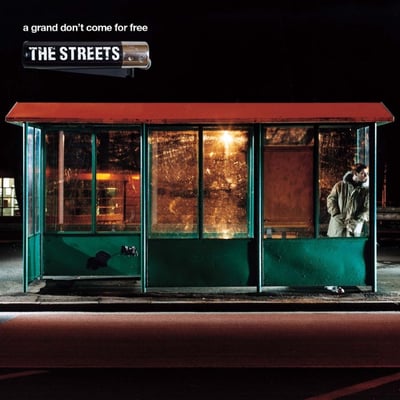
The Streets A Grand Don't Come For Free
Released May 11, 2004 679 Recordings UK. Ltd.
Established consensus 19 professional reviews Updated Mar 23, 2026
Strong critical consensus
The Streets's A Grand Don't Come For Free unfolds like a gritty, laugh-tinged short film of south-London life, an affecting narrative concept record that earned an 86.53/100 consensus score across 19 professional reviews.
How ChoruScore worksCritics' Top Tracks
The songs critics returned to most
Dry Your Eyes
7 critic mentions
“Sounding like he’s close to breaking point, never has any song encapsulated every last emotion of a break up quite like this.” — DIY Magazine
Empty Cans
4 critic mentions
“Turning from a brooding, claustrophobic bitchfest into an uplifting tale with a plot twist to die for, it takes the entire album and puts it in a league of its own.” — DIY Magazine
Get Out of My House
4 critic mentions
“every combative tirade exchanged between man and woman pitch-perfectly matched by a gyrating, oh-no-you-didn’t beat” — Slant Magazine
Full critic consensus
The Streets's A Grand Don't Come For Free unfolds like a gritty, laugh-tinged short film of south-London life, an affecting narrative concept record that earned an 86.53/100 consensus score across 19 professional reviews. Critics agree the record's power lies in its storytelling and emotional honesty: Mike Skinner's conversational delivery turns everyday detail, working-class jeopardy and domestic collapse into sharply observed scenes that reward whole-album listens rather than mere single-led consumption.
Reviewers consistently point to a handful of standout tracks as the album's emotional anchors. “Dry Your Eyes” repeatedly emerges as the devastating centrepiece, praised for its solitary acoustic heartbreak and dramatic payoff, while “Empty Cans”, “Get Out of My House” and “Blinded By the Lights” are cited for their cinematic storytelling and vivid atmosphere. Several critics also highlight “It Was Supposed to Be So Easy” and the guilty-pleasure stomp of “Fit But You Know It” as crucial plot points that advance the record's themes of failed relationships, intoxication, gambling and loneliness.
While the consensus is strongly positive, reviews note a deliberate mix of humour and tragedy that can make the work feel alternately raw and theatrical; some praise the stripped-back moments that let the lyrics breathe, others flag the temptation of catchy singles that slightly break the narrative immersion. Across 19 professional reviews the critical consensus suggests A Grand Don't Come For Free stands as a distinct, memorable entry in The Streets' catalog - narratively ambitious, often heartbreaking, and populated by several of the best songs in Mike Skinner's repertoire. Read on for deeper takes and track-by-track reactions.
Track Ratings
How critics rated each track, relative to this album (0-100). Only tracks that made critics feel something are rated.
It Was Supposed to Be So Easy
Could Well Be In
Not Addicted
Blinded By the Lights
Wouldn't Have It Any Other Way
Get Out of My House
Fit But You Know It
Such a T**t
What Is He Thinking?
Dry Your Eyes
Empty Cans
Get the next albums worth your time.
Critic-backed picks in one clean digest. No clutter.
What Critics Are Saying
Deep insights from 19 critics who reviewed this album

Critic's Take
The Streets frontman Mike Skinner turns the small tragedies of everyday life into an almost epic story on A Grand Don't Come For Free. Track ten, “Dry Your Eyes”, is the record's heart, sounding like he is close to breaking point and tugging on your heartstrings. The album's close, “Empty Cans”, cleverly flips from brooding claustrophobia to an uplifting plot twist, proving the best tracks on A Grand Don't Come For Free are its emotional centrepieces. Read together, these songs explain why the album's narrative carries so much weight and why those two tracks stand out as the best songs on the record.
Key Points
-
The best song is “Dry Your Eyes” because it perfectly captures breakup emotion and changes perceptions of Mike Skinner.
-
The album's core strengths are its vivid, relatable narrative and emotional highs and lows that make the concept tangible.
Themes

Critic's Take
The Streets sounds like a friend telling you a story on A Grand Don't Come For Free, and the best songs on the album - notably “Get Out of My House” and “Dry Your Eyes” - do that trick brilliantly. Alexis Petridis writes with amused admiration, praising Skinner's deadpan Brummie delivery and uncanny ear for everyday speech, which makes these standout tracks feel immediate and painfully recognisable. The review stresses how the album's choruses render nearly every song irresistible, so the best tracks on A Grand Don't Come For Free are those where lyric and melody conspire to pull the listener in. Petridis's voice is wry, conversational and observant, and he singles out the emotional clarity of “Dry Your Eyes” and the domestic immediacy of “Get Out of My House” as central achievements of the record.
Key Points
-
Dry Your Eyes is best for its stark depiction of a breakup paired with a plangent, lovely melody.
Themes

Q

Critic's Take
The Streets delivers a cinematic, laugh-tinged tragedy on A Grand Don't Come For Free, where the best tracks unfold the story rather than merely charm as singles. In the reviewer's voice, “Dry Your Eyes” is singled out as one of the most striking standouts for its solitary acoustic heartbreak, while “Get Out of My House” dramatizes communication collapse with a fiery exchange that reveals the protagonist's flaws. The record rewards listening as a whole, yet those searching for the best songs on A Grand Don't Come For Free will find that “Dry Your Eyes” and “Get Out of My House” carry the emotional weight and narrative payoff. The reviewer’s dry humour and vivid detail make these tracks the clearest highlights in a masterful concept album.
Key Points
-
The best song, “Dry Your Eyes”, is best for its stark acoustic setting and gutwrenching portrayal of post-breakup loneliness.
-
The album’s core strength is its cohesive, cinematic storytelling that binds spare, purposeful production to sharp, humour-laced observation of urban life.
Themes

Critic's Take
In his dry, anecdotal way Scott Plagenhoef finds the best tracks on A Grand Don't Come For Free in scenes of small, human failure and aching sentiment. The reviewer's tone is measured but admiring, insisting that these best songs on A Grand Don't Come For Free repay close listening because they turn cliché into something truthful and painfully familiar.
Key Points
-
The best song, "Dry Your Eyes", succeeds because it crystallizes the album's emotional dissolution with painful truth.
-
The album's core strength is mining quotidian detail and communication failures to produce intimate, revisit-worthy narratives.
Themes

Critic's Take
The Streets return with A Grand Don't Come For Free, an intermittently celebratory, often rueful song-cycle that finds its best tracks in character-driven vignettes. The reviewer singles out “Fit But You Know It” as the obvious first single - a joyous, Beatles-tinged stomp - and praises the heartbreak balm of “Dry Your Eyes” alongside the theatrical climax of “Empty Cans”. Skinner’s knack for elevating mundanity into drama makes these the best songs on A Grand Don't Come For Free, tracks that reward repeated listens and reveal the album’s emotional core. The album works because his everyman narration and sharp observational detail turn small incidents into vividly felt moments.
Key Points
-
The best song is “Fit But You Know It” because it marries immediate hook with characterful lyrics and Beatles-like naivety.
-
The album’s core strength is turning mundane, everyday episodes into vivid, emotionally resonant mini-dramas.
Themes
Dr
Critic's Take
The Streets’s A Grand Don't Come For Free is presented as a bleak, comic, cinematic narrative and the best tracks - notably “Dry Your Eyes” and “Empty Cans” - are the emotional centrepieces that justify searching for the best songs on A Grand Don't Come For Free. The reviewer’s voice stays sardonic and affectionate, celebrating how stripped-back numbers like “Could Well Be In” and “Wouldn't Have It Any Other Way” let the lyrics breathe, while calling out the temptation of singles such as “Fit But You Know It” as an easy switch. The piece reads like a south-London film script, praising the crossover ambition and naming those ballads and storytelling moments as the best tracks on the album.
Key Points
-
The best song is “Dry Your Eyes” because it is the most universal, emotional centerpiece.
-
The album’s strength is its stripped-back, cinematic storytelling that lets lyrics and character moments breathe.
Themes

Critic's Take
The Streets’s A Grand Don’t Come For Free reads like a shaggy, cinematic diary where the best songs - “It Was Supposed to Be So Easy” and “Dry Your Eyes” - double as plot points and emotional blows. Ed Gonzalez delivers scenes with a filmic eye, praising Skinner’s anthropological rhymes and comic timing while letting the heartbreak of “Dry Your Eyes” land as the album’s devastating centerpiece. The opener “It Was Supposed to Be So Easy” is rightly called a tour-de-force, setting the narrative stakes with orchestral flourish and godzilla-esque entrance. In Gonzalez’s voice the record’s strength is clear: storytelling that is at once petty, hilarious, and heartbreakingly human, making these the best tracks on A Grand Don’t Come For Free for listeners seeking character-driven songs.
Key Points
-
The best song is “It Was Supposed to Be So Easy” because its orchestral opener and comic storytelling set the album’s narrative tone.
-
The album’s core strengths are cinematic, character-driven storytelling and emotionally direct breakup songwriting.
Themes

Critic's Take
Mike Skinner tells a small-scale, ambitious story on A Grand Don't Come For Free, and the best tracks - notably “Blinded By the Lights” and “Fit But You Know It” - show why. He writes like a confessor, part tragic and part comic, and “Blinded By the Lights” transmits that club loneliness with a shadowy trance line while “Fit But You Know It” supplies the record's lone rockabilly single. The album's concept lets songs serve character and scene rather than just singles, which is why the best songs on A Grand Don't Come For Free feel both plainspoken and precise.
Key Points
-
The best song, “Blinded By the Lights”, is the album's emotional centerpiece, capturing club loneliness and disenchantment.
-
The album's core strength is its paradoxical concept: intimate, unambitious character study rendered with ambition and narrative cohesion.
Themes
Pr
Co

NO

En
Ev
Re
Critic's Take
The review text provided does not discuss any songs from A Grand Don't Come For Free by The Streets, so there are no mentions of the best songs or best tracks on the record to evaluate. Because the reviewer content supplied focuses on unrelated event promotion, I cannot extract the reviewer’s voice about standout tracks like “Dry Your Eyes” or “Blinded By the Lights” from this text. For genuine answers to "best tracks on A Grand Don't Come For Free" consult a review that explicitly addresses the album's songs.
Key Points
-
No specific tracks are discussed in the supplied review text, so no best song can be identified from this source.
-
The supplied content is event promotional material and does not provide commentary on the album's strengths.
