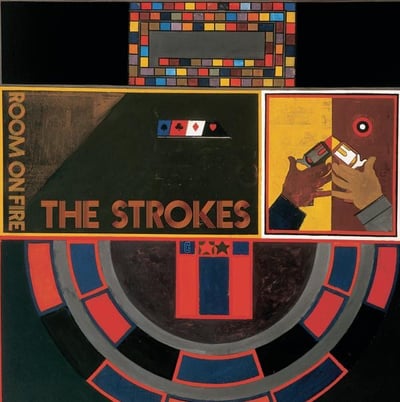
The Strokes Room on Fire
Released Oct 21, 2003 RCA Records Label
Established consensus 18 professional reviews Updated Mar 23, 2026
Broadly positive consensus
The Strokes's Room on Fire returns to the taut, guitar-driven template that defined their debut, and across 18 professional reviews the consensus score sits at 83.89/100, signalling a broadly positive reception.
How ChoruScore worksCritics' Top Tracks
The songs critics returned to most
Under Control
6 critic mentions
“It’s a classic feelgood/feelbad love song - and the best thing they’ve ever done.” — New Musical Express (NME)
12:51
6 critic mentions
“hints of what the Strokes must have hoped for ... in the whistling-synthesizer guitar lick in “12:51,” a cheerful shot of ’78 Cars” — Rolling Stone
What Ever Happened?
5 critic mentions
“In the album’s opening damage report, “What Ever Happened?,” Casablancas’ voice is so disfigured by fuzz” — Rolling Stone
Full critic consensus
The Strokes's Room on Fire returns to the taut, guitar-driven template that defined their debut, and across 18 professional reviews the consensus score sits at 83.89/100, signalling a broadly positive reception. Critics consistently point to a handful of standouts - “Under Control”, “Reptilia” and “12:51” - as the songs that sharpen the band’s sleaze-meets-pop instincts into genuine thrills. Those tracks are praised for marrying Julian Casablancas' weary, soulful delivery with propulsive guitar thrust and concise, memorable hooks, so searches for the best songs on Room on Fire reliably surface these cuts.
Reviewers agree that the record favors refinement over reinvention: production austerity and lean songwriting give the album momentum but also highlight moments of filler. Several critics note themes of modern malaise, romance and cynicism, and a sense of stylistic continuity with the debut that some read as welcome consolidation and others call safe repetition. Praise centers on crafted production and brisk, mono-pop energy in tracks like “What Ever Happened?” and “I Can't Win”, while measured criticisms single out undernourished mid-album cuts.
Taken together, the critical consensus suggests Room on Fire is worth listening to for its standout tracks and its disciplined focus - a record that refines the band's signature sound even as it prompts questions about growth after the debut. Below, professional reviews unpack where the album's momentum carries it and where its restraint leaves listeners wanting more.
Track Ratings
How critics rated each track, relative to this album (0-100). Only tracks that made critics feel something are rated.
What Ever Happened?
Reptilia
Automatic Stop
12:51
You Talk Way Too Much
Between Love & Hate
Meet Me in the Bathroom
Under Control
The Way It Is
The End Has No End
I Can't Win
Get the next albums worth your time.
Critic-backed picks in one clean digest. No clutter.
What Critics Are Saying
Deep insights from 18 critics who reviewed this album
Ob
Q
Co
Sp

Critic's Take
The Strokes return with Room on Fire, a sleeker, tighter record where the best songs - notably “Under Control” and “Reptilia” - do most of the heavy lifting. The reviewer's tone stays admiring and slightly amused, praising how “Under Control” turns The Strokes into doers of soul while “Reptilia” supplies that irresistible, seductive chorus. The album is described as a refinement rather than a reinvention, so the best tracks stand out for sharpening familiar strengths rather than reinventing them. Overall, the critic positions these standout songs as why listeners seeking the best tracks on Room on Fire will be rewarded.
Key Points
-
The best song, "Under Control", is praised as a soul-inflected stunner that feels like the band’s finest work.
-
The album’s core strength is refining and sharpening The Strokes’ signature sleazy-pop into tightly focused, hook-driven songs.
Themes
Dr
Critic's Take
The Strokes return with Room on Fire, a record that refines rather than reinvents, and the best songs - “What Ever Happened?” and “Under Control” - show why. Robertson's prose savours the band's sleaze-pop craft, praising the coke-addict energy of “What Ever Happened?” and calling “Under Control” an "astounding" slow-dance that adds real emotional weight. He names the joyous romp-pop of “12:51” and the mod stomp of “I Can't Win” as further highlights, arguing the tunes are precision-perfect pop about modern life. Read as a whole, the review says Room on Fire may not break boundaries, but its best tracks are brilliant at making the bad stuff feel less real.
Key Points
-
The best song, “Under Control”, is singled out as the album's emotional centerpiece and undoubted highlight.
-
Room on Fire's core strength is refining sleaze-pop into precise, joyous tunes that make modern malaise feel weightless.
Themes
Ti
Co

Critic's Take
The Strokes’ Room on Fire feels like a careful honing of a winning blueprint rather than a radical leap, and the best tracks — “Reptilia” and “Under Control” — show why. The reviewer’s tone stays admiringly measured, noting that Julian Casablancas’ soulful timbre lifts even weaker songs, so the best songs on Room on Fire are those where his voice cracks with pleading melancholy. While some cuts such as “Automatic Stop” and “Between Love & Hate” are described as undernourished, the highlights retain the band’s knack for delivering concise, thrilling hooks. Overall the album is praised as a bedroom-fire kind of record that consolidates their strengths without conquering new ground.
Key Points
-
Reptilia stands out for its energetic lineage and Casablancas' pleading vocal that elevates it above the rest.
-
The album's core strengths are concise, thrilling songwriting and Julian Casablancas' soulful, emotive delivery.
Themes

Critic's Take
I kept thinking about how The Strokes have basically given us an identical twin with Room on Fire, and that makes the best tracks - “Reptilia”, “Meet Me in the Bathroom” and “Under Control” - feel almost inevitable. Mitchum's voice is wry and slightly exasperated, admitting he was wrong about the band while insisting the record is more sleepy than revolutionary. The review keeps returning to their contagious mono-pop and taut guitar work as the main reasons those tracks sing.
Key Points
-
Reptilia stands out for its choreographed bass breakdown and placement among the record's highlights.
-
Room on Fire's strengths are catchy, mono-pop songwriting, taut guitar work, and Valensi's melodic leads.
Themes

Critic's Take
The Strokes sound deliberately unchanged on Room on Fire, and that is presented as a virtue in this review. David Fricke praises the record for retaining the jittery, terse rush that made its predecessor vital, singling out “What Ever Happened?”, “Reptilia” and “12:51” as prime examples of the album's tight, unforgiving thrill. He frames the best tracks on Room on Fire as compact, high-speed statements - guitars that cut, bass that pumps, and Casablancas' corrosive drawl delivering wired, unsparing hooks. The result, he argues, is an album built for speed and thrills rather than radio polish, which is precisely its appeal.
Key Points
-
“Reptilia” is the standout for its blitzing instruments and furious, thrilling execution.
-
The album's core strength is its taut, unforgiving production and Julian Casablancas' corrosive vocal delivery.
Themes


Critic's Take
The Strokes sound like they have a lot to prove on Room on Fire, and Heather Phares leans into that tension when naming the best tracks. She praises “12:51” as a stealth pop single whose whistling guitars and handclaps become sneakily addictive, and hails “Under Control” as possibly the best Strokes song yet for its awkwardly gorgeous '60s-soul homage. At the same time she highlights the more jagged, urgent moments - “Reptilia” and “Automatic Stop” - as evidence that the band is both polished and restless, which is why these are often cited as the best tracks on Room on Fire.
Key Points
-
Heather Phares names "Under Control" the standout, calling it possibly the best Strokes song yet for its '60s-soul beauty.
-
The album's strengths are its crafted, brighter production and concise, urgent songwriting that balances polish with restlessness.
Themes
Pr
Ne
NO
En

Critic's Take
The Strokes sound less like punk prophets and more like a company worried about figures on Room on Fire, yet the best tracks still bite. Opener “What Ever Happened?” bursts rudely into life and stakes a claim, while “12:51” proves the album's most subtly addictive melody. “Under Control” is an exquisite ballad that hints at Motown, and “Meet Me in the Bathroom” and “Automatic Stop” would make perfect follow-ups, making these the best songs on Room on Fire because they supply the album's few moments of genuine flair. The rest too often feels like weary filler, but those tracks keep the record afloat.
Key Points
-
12:51 is the album's standout due to its subtly addictive melody and being called a masterstroke.
-
The album's core strength is a handful of sharply crafted singles and an exquisite ballad that mask considerable filler.