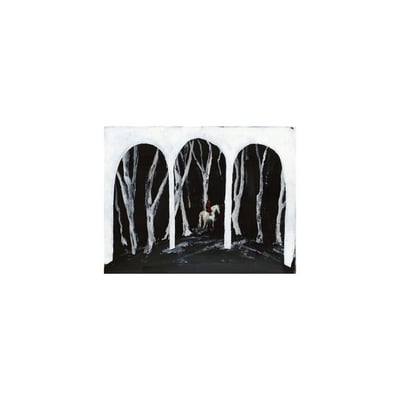
These New Puritans Crooked Wing
Released May 23, 2025 Domino Recording Co
Established consensus 11 professional reviews Updated Oct 1, 2026
Broadly positive consensus
These New Puritans's Crooked Wing announces itself as a meticulously wrought, often haunting statement that critics largely regard as a triumph of restraint and texture.
How ChoruScore worksCritics' Top Tracks
The songs critics returned to most
Bells
9 critic mentions
“The softer tone is reinforced on “Bells”, twinkling piano chords, chilly organ drones, phased rhythms that shimmer like heat haze” — The Line of Best Fit
Industrial Love Song
9 critic mentions
“such as when on "Industrial Love Song", two cranes on a building site are doomed to never touch” — Beats Per Minute
Crooked Wing
6 critic mentions
“gives Crooked Wing a psychedelically ecclesiastical feel, a collision of the sacred and the profane” — The Quietus
Full critic consensus
These New Puritans's Crooked Wing announces itself as a meticulously wrought, often haunting statement that critics largely regard as a triumph of restraint and texture. Across professional reviews, the record earned an 81.45/100 consensus score from 11 reviews, and reviewers consistently point to a handful of centerpiece songs as the clearest evidence of the album's ambition and emotional reach.
Critics praise the album's neoclassical elements, organ textures and ritualistic percussion, and they repeatedly single out “Bells”, “Industrial Love Song”, “Crooked Wing” and “The Old World” as standout tracks. Reviews from Pitchfork and Beats Per Minute highlight the minimalist grandeur of “Bells” and the soprano-swelled beauty in moments like “I’m Already Here”, while Dusted Magazine, The Quietus and The Skinny point to the title track and “The Old World” as fulcrums where composition and texture meet. Multiple critics note Caroline Polachek's guest turn on “Industrial Love Song” as providing crucial lift amid the album's austere, industrial-versus-ecclesiastical palette.
While admiration is widespread, some reviewers temper their praise by describing passages as too translucent or lacking climactic payoff, and a few tracks such as “Wild Fields” register as less certain in tone. Overall the critical consensus frames Crooked Wing as an album-as-statement—part modernist chamber music, part dystopian film score—whose rewards accrue to patient listening and to those seeking the best songs on Crooked Wing in carefully constructed, emotionally precise moments.
For readers searching for a definitive Crooked Wing review or wondering whether the album is worth hearing, the answer from critics is largely yes: across 11 professional reviews the record's refinement, cinematic textures and standout tracks earn it a strong critical reception and place it firmly among These New Puritans' most arresting work.
Track Ratings
How critics rated each track, relative to this album (0-100). Only tracks that made critics feel something are rated.
Waiting
Bells
A Season In Hell
Industrial Love Song
I'm Already Here
Wild Fields
The Old World
Crooked Wing
Goodnight
Return
Get the next albums worth your time.
Critic-backed picks in one clean digest. No clutter.
What Critics Are Saying
Deep insights from 11 critics who reviewed this album

Critic's Take
In this review I find These New Puritans refining a familial alchemy on Crooked Wing, where the records best tracks like “Industrial Love Song” and “Wild Fields” reveal the album's emotional centre. Turner’s voice admires how Jack Barnett’s expressive vulnerability and George’s battering drums make songs such as “Wild Fields” and “The Old World” feel both intimate and vast. He repeatedly returns to the bells and organ as defining motifs that lift the best songs into something almost ecclesiastical, and he calls the collection a masterpiece that deserves to soar. The narrative stakes are plain - the best songs on Crooked Wing are those that fuse domestic lineage and grandeur into singular, unforgettable moments.
Key Points
-
The best song is the one that fuses intimate vocals with dramatic arrangement, exemplified by "Industrial Love Song".
-
The album’s core strengths are its choral and organ textures, familial focus, and lyrical Romanticism.
Themes
Fa
Critic's Take
In his characteristically admiring and slightly bemused voice, Reuben Cross presents These New Puritans's Crooked Wing as an unsettling, filmic triumph where the best songs - notably “Industrial Love Song” and “A Season In Hell” - crystallise the album's strengths. He lingers on how Caroline Polachek's crystalline tones make “Industrial Love Song” one of the record's highlights, and how the manic organs and bombastic drumming of “A Season In Hell” push the band back into their most haunting territory. Cross keeps a measured, expert tone throughout, calling moments like “The Old World” and the title track emotionally arresting while stressing that the record is best absorbed as a whole. The narrative reads like a victory lap for the Barnett brothers, admiring their compositional daring without shying away from the album's gloom.
Key Points
-
The best song is “Industrial Love Song” because Caroline Polachek's feature and sumptuous interplay make it a standout highlight.
-
The album's core strengths are its cinematic, neoclassical-influenced arrangements and its willingness to blend industrial and chamber elements into a cohesive, unsettling whole.
Themes

Critic's Take
These New Puritans approach Crooked Wing as an album-length proposition, and the review singles out the more commanding moments, especially “Crooked Wing” and “The Old World”. The reviewer praises the record's seriousness and meticulous construction, naming those tracks as fulcrums where intent and texture meet. Read as advice on the best songs on Crooked Wing, the piece directs listeners toward the album's centerpiece moments, rather than its subtler connective tissue. Overall the tone is admiring and measured, pointing readers to the handful of tracks that most clearly realize the band's ambitions.
Key Points
-
The title track, “Crooked Wing”, is framed as the album's centerpiece and best song.
-
The album's core strength is its seriousness and meticulous, album-as-statement construction.
Themes

Ho
Critic's Take
These New Puritans return on Crooked Wing with a record that feels purposefully skewed yet immediately alluring, and the best tracks on Crooked Wing make that clear. The opening pair “Waiting” and “Bells” are gorgeous avant-pop numbers, their dreamscape textures evoking Aphex Twin and Brian Eno while inviting listeners in. Elsewhere “A Season In Hell” and “Wild Fields” prove the brothers still relish abrasive detours, ensuring the best songs on the album balance beauty with daring experimentation.
Key Points
-
The best song is "Industrial Love Song" for its haunting vocals and hypnotic production.
-
The album's strengths are its blend of gorgeous avant-pop textures and daring, abrasive experimentation.
Themes
mu

Critic's Take
These New Puritans are at their most refined on Crooked Wing, where the best songs - notably “Waiting” and “Industrial Love Song” - reveal a cold, devotional beauty beneath metallic fracture. The opener “Waiting” sets the tone with sparse falsetto and delicate vibes, while “Industrial Love Song” is perhaps the record's most disarming moment, a ballad of yearning wrapped in iron. Elsewhere, tracks like “Bells” and “A Season In Hell” expand the album's resonant palette, so the best tracks on Crooked Wing are those that balance intimacy with its austere machinery. This is not an easy listen, but those seeking the best songs on Crooked Wing will find reward in its unsettling textures and restrained melodicism.
Key Points
-
The best song, notably "Industrial Love Song", stands out as a disarming, yearning ballad wrapped in industrial textures.
-
The album's core strengths are its tightly focused, textural palette and the balance of restraint with unsettling, melodic fragments.
Themes

Critic's Take
These New Puritans return with Crooked Wing, a record that trades in the filthy and the heavenly and finds its best moments in contrasts. Darker highlights such as “A Season In Hell” and “Wild Fields” show how ominous organs and harsh textures can transform accessible synth-pop into something engrossing. It is an elegant, engrossing return that marries industrial grit and ecclesiastical splendour while remaining emotionally easy to grasp.
Key Points
-
The best song is best because it transforms simple elements into rapturous, instrumentally gorgeous moments.
-
The album's core strengths are its fusion of industrial grit and ecclesiastical grandeur, and its balance of accessible melodies with dark textures.
Themes

Critic's Take
These New Puritans sound sharpened rather than reinvented on Crooked Wing, and the best songs repay patient listening. The title track “Crooked Wing” is elevated by organ sounds that emerge like beams of divine light, making it one of the best tracks on Crooked Wing. The Old World is singled out as another top pick, while “Bells” benefits from stripped-down sparseness that suits the record. Only “Wild Fields” falters, feeling like a dulled memory rather than a companion to the album's subterranean beauty.
Key Points
-
The title track “Crooked Wing” is best for its organ-led, rousing emotional payoff.
-
The album’s core strength is a refined, sparse production that balances scientific precision with emotive timing.
Themes

Critic's Take
Listening to These New Puritans on Crooked Wing, the reviewer's ear keeps returning to “Goodnight” and “Bells” as the album's high points, because they best display the record's neo-classical sweep and adventurous melodies. The praise is tempered - the writer still finds much of the album too translucent and weightless compared with the duo's previous grandeur, noting that “Industrial Love Song” and “I’m Already Here” lack climactic lift. Yet the reviewer celebrates the Barnetts' mastery of sound design and atmosphere, arguing that moments like “Wild Fields” and the title track achieve a cavernous, futuristic magnificence. Overall, the narrative answers which are the best songs on Crooked Wing by pointing to those that most convincingly conjure mood and compositional ambition.
Key Points
-
Goodnight is best because it is the most significant, adventurous song with multiple melodies and a jazz finale.
-
The album's core strengths are its masterful sound design, neo-classical instrumentation, and evocative atmospheres.

Critic's Take
In his refined, observant voice Louis Pattison finds the best songs on Crooked Wing in moments of stark, modernist beauty - chiefly “Bells”, with its quiet minimalist mastery, and the glowing, soprano-swollen “I’m Already Here”. Pattison writes like a careful guide through a windswept landscape, noting how Caroline Polachek’s duet on “Industrial Love Song” and the Barnetts’ chamber arrangements conjure both sublimity and menace. The review points readers searching for the best tracks on Crooked Wing toward those songs where delicate instrumentation and sudden emotional heft meet, rather than toward pop hooks or easy prettiness.
Key Points
-
The best song is "Bells" because of its quiet minimalist mastery and majestic vocal close.
-
The album’s core strengths are meticulous chamber arrangements and the balance of stark beauty with unsettling darkness.