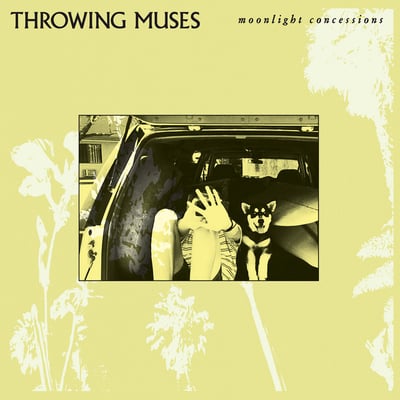
Throwing Muses Moonlight Concessions
Released Mar 14, 2025 Fire Records
Consensus forming 4 professional reviews Updated Dec 10, 2025
Broadly positive consensus
Consensus is still forming across 4 professional reviews. Throwing Muses's Moonlight Concessions arrives as a lean, emotionally volatile collection that foregrounds Kristin Hersh's roughened alto and exacting songcraft.
How ChoruScore worksCritics' Top Tracks
The songs critics returned to most
Good Riddance
1 critic mention
“she manages a perky as well as gorgeously floaty, cathartic, if still bittersweet final track - Good Riddance” — Song Bar
Math Equation
1 critic mention
“On Math Equation, for example: "You said I needed my own friends / So I found them / Then you fucked them.” — Song Bar
Moonlight Concessions
3 critic mentions
“On the closing title track, she’s a mighty storm of elemental wrath, howling of “breaking down then cracking up”, with that cello a churning undertow.” — The Guardian
Full critic consensus
Throwing Muses's Moonlight Concessions arrives as a lean, emotionally volatile collection that foregrounds Kristin Hersh's roughened alto and exacting songcraft. Across four professional reviews the record earned a 76.5/100 consensus score, with critics praising how spare arrangements and acoustic textures sharpen songs such as “Moonlight Concessions”, “Summer of Love” and “Math Equation” into moments of bruised clarity.
Critics consistently note a tension between sweetness and abrasiveness: cello, layered acoustics and economical percussion create an austerity that highlights themes of survival and trauma, addiction and desperation, and the bittersweet ironies of home and displacement. Reviewers from Dusted Magazine and The Guardian emphasize Hersh's vocal contrasts - the way she can purr, spit and snarl - while The Quietus and Song Bar highlight the record's modest, immediate arrangements that let lines of wry humour and human connection breathe. Standout tracks named across reviews include the title track “Moonlight Concessions”, the reflective “Summer of Love” and the punchier “Math Equation” as exemplars of the album's range from intimate vignettes to volcanic intensity.
While some critics point to a slow-reveal quality that rewards repeated listening rather than instant hooks, the consensus suggests Moonlight Concessions is a thoughtfully composed, occasionally abrasive work that reaffirms Throwing Muses' strength in turning domestic detail into visceral, redemptive art. For readers searching for a measured verdict on whether Moonlight Concessions is good, the critical reception across four professional reviews positions it as a compelling, often essential addition to the band's catalogue.
Track Ratings
How critics rated each track, relative to this album (0-100). Only tracks that made critics feel something are rated.
Summer of Love
South Coast
Theremini
Libretto
Albatross
Sally's Beauty
Drugstore Drastic
You're Clouds
Moonlight Concessions
Get the next albums worth your time.
Critic-backed picks in one clean digest. No clutter.
What Critics Are Saying
Deep insights from 5 critics who reviewed this album

Critic's Take
Throwing Muses have turned inward on Moonlight Concessions, and the best songs - notably “South Coast”, “Drugstore Drastic” and the title track “Moonlight Concessions” - show Kristin Hersh at her most volcanic and precise. The review’s tone is lean and urgent, celebrating how sparse arrangements and Pete Harvey’s cello make “South Coast” feel noirish and “Drugstore Drastic” ache with brooding blues. Hersh’s voice prowls through these top tracks, registering obsession, pain and survival with jolting imagery and a silvery snarl. The closing “Moonlight Concessions” seals the album as a stormy, elemental finale that proves the band’s austerity is thrilling rather than diminished.
Key Points
-
The best song, especially “South Coast”, is best because its primal strum and noirish tension showcase Hersh’s vocal menace and the album’s austere power.
-
The album’s core strengths are sparse arrangements, Pete Harvey’s brooding cello, and Kristin Hersh’s volcanic, survival-tinged vocals.
Themes

Critic's Take
In this reviewer's textured, close-reading voice the best songs on Moonlight Concessions are those that put Kristen Hersh's roughened alto front and centre - tracks like “Moonlight Concessions” and “Sally's Beauty” where she both purrs and spits. The critic lingers on the vocal contrasts and intimate arrangements, arguing that the album's strengths are its songcraft and the way a single voice can transform familiar words. Read as a catalogue of small revelations, the record rewards repeated listening, exposing its best tracks slowly rather than all at once.
Key Points
-
The best song(s) highlight Kristen Hersh's roughened, expressive alto.
-
The album's core strengths are its vocal contrasts and intimate songcraft.
Themes
mu


Critic's Take
Throwing Muses's Moonlight Concessions finds Kristin Hersh leaning into human-sized songs that feel lived-in and immediate, and the best tracks - notably “Summer of Love” and “Moonlight Concessions” - crystallise that intimacy and percussive clarity. The record uses cello and layered acoustics to give vignettes a muscular, atmospheric presence, so the best songs on Moonlight Concessions land as quietly powerful snapshots rather than arena gestures. Hersh's writing, personal and plainspoken, turns domestic detail into something that moves you, which is why “Summer of Love” stands out as a highlight for its line about life arriving as it should have been. The album's strengths are its clarity, modesty and the way the arrangements let the songs breathe without succumbing to slickness.
Key Points
-
The best song, notably "Summer of Love", distills Hersh's human-sized songwriting with a resonant lyric about life arriving as it should have been.
-
The album's core strengths are its intimate arrangements, cello-accented textures and plainspoken, empathetic storytelling.