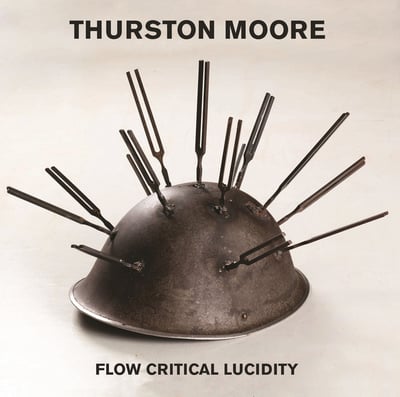
Thurston Moore Flow Critical Lucidity
Released Sep 20, 2024 Daydream Library
Consensus forming 4 professional reviews Updated Jan 1, 2026
Broadly positive consensus
Consensus is still forming across 4 professional reviews. Thurston Moore's Flow Critical Lucidity unfolds as a quietly adventurous chapter, where dreamlike atmospheres and melodic restraint replace abrasive noise in service of songcraft.
How ChoruScore worksCritics' Top Tracks
The songs critics returned to most
Good Riddance
1 critic mention
“she manages a perky as well as gorgeously floaty, cathartic, if still bittersweet final track - Good Riddance” — Song Bar
Sans Limites
3 critic mentions
“Sans Limites’ brings twinkling and clearly beautiful piano, as well as more of those high, discordant notes” — Clash Music
Math Equation
1 critic mention
“On Math Equation, for example: "You said I needed my own friends / So I found them / Then you fucked them.” — Song Bar
Full critic consensus
Thurston Moore's Flow Critical Lucidity unfolds as a quietly adventurous chapter, where dreamlike atmospheres and melodic restraint replace abrasive noise in service of songcraft. Critics agree the record stakes its claim through sustained, nocturnal moods and lucid guitar interplay, with a 77/100 consensus score across 4 professional reviews signaling a largely favorable reception. Tracks like “Sans Limites” and “Hypnogram” repeatedly surface as highlights, while moments such as “We Get High” and “Good Riddance” nod to Moore's grunge-tinged past without lapsing into mere nostalgia.
Across professional reviews, commentators praise the album's balance of experimentation and accessibility. PopMatters lauds the measured, melodic flow and names “Hypnogram” a slow-burning centerpiece; The Quietus celebrates six-string interplay and the Autumnal glow of “Sans Limites”; Clash points to cinematic, outdoor imagery and the way “Sans Limites” and “Hypnogram” convert experimental fragments into memorable songs. Song Bar highlights the tender “Amnesia” alongside punchier numbers such as “Math Equation” and “Good Riddance”, underscoring the record's range from elegiac drift to electronica-tinged immediacy.
There is nuance in the praise: some reviewers emphasize serenity and introspection, others the record's wry humour and collaborative textures. The consensus suggests Flow Critical Lucidity rewards repeat listens, revealing bittersweet irony and lucid dreamscapes that position the album as a reflective, forward-moving entry in Moore's catalog rather than a retread. For readers asking if Flow Critical Lucidity is worth listening to, critics consistently point to its standout tracks and cohesive mood as evidence of lasting value.
Track Ratings
How critics rated each track, relative to this album (0-100). Only tracks that made critics feel something are rated.
New In Town
Sans Limites
Shadow
Hypnogram
We Get High
Rewilding
The Diver
Get the next albums worth your time.
Critic-backed picks in one clean digest. No clutter.
What Critics Are Saying
Deep insights from 4 critics who reviewed this album

Critic's Take
Thurston Moore never abandons his exploratory instincts, but on Flow Critical Lucidity he privileges measured, melodic flow over abrasive noise, making the best tracks feel quietly revelatory. Yet it is “Hypnogram” that may be the album's crown, a slow-burning, dreamlike centerpiece that reads like an unconventional love song. Even moments like “We Get High” reconnect with Moore's distant guitar thunder, offering pleasing echoes of his past without leaning on nostalgia.
Key Points
-
“Hypnogram” is best because it builds a dreamlike, intimate world and is praised as the album's star.
-
The album's core strengths are its restraint, melodic flow, and introspective serenity that update Moore's guitar work.
Themes

Critic's Take
Thurston Moore’s Flow Critical Lucidity feels like a hazy drive through his past, where the best tracks - “Shadow”, “Sans Limites” and “The Diver” - crystallize the album’s strengths. The review revels in six-string interplay and Breeders-esque calls on “Shadow”, and savours the Youth-like cheer of “Sans Limites”. Finale “The Diver” is praised as a stoned daze of looping leads, the kind of closing that leaves you suspended. Overall the record’s nocturnal, autumnal glow makes these songs stand out as the best tracks on Flow Critical Lucidity.
Key Points
-
The best song is "Shadow" because of its Breeders-esque call-and-response and blues-infused fuzz finale.
-
The album’s core strengths are guitar interplay, nostalgic callbacks to Moore’s past, and a dreamlike, autumnal atmosphere.
Themes


Critic's Take
Thurston Moore sounds appropriately restless on Flow Critical Lucidity, and the best songs - notably “We Get High” and “Rewilding” - are where his outdoor, cinematic impulses meet plaintive melody. Phil Taylor’s voice is measured and affectionate, noting how “Sans Limites” and “Hypnogram” turn experimental fragments into gently rolling, familiar songs. The record rewards repeat listens because Moore’s oddness is balanced by warm vocal closeness and moments of clear, memorable songcraft.
Key Points
-
“We Get High” is best for its cinematic production and outdoor, dramatic feel.
-
The album’s core strengths are Moore’s experimental textures balanced by warm vocals and occasional clear song structures.