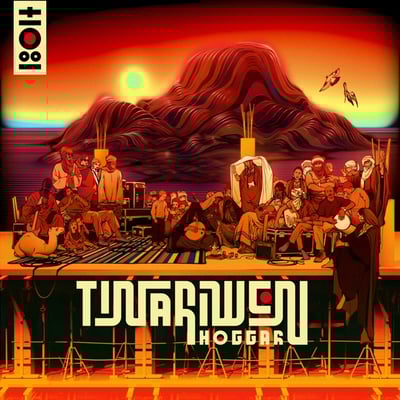
Tinariwen Hoggar
Released Mar 13, 2026 Wedge
Established consensus 9 professional reviews Updated Mar 20, 2026
Broadly positive consensus
Tinariwen's Hoggar arrives as a weathered, communal testament that reconfirms the band's desert blues authority while amplifying a generational voice.
How ChoruScore worksCritics' Top Tracks
The songs critics returned to most
Imidiwan Takyadam (feat. José González)
8 critic mentions
“Imidiwan Takyadam, a gospel-flavoured slice of nomad soul, is the only track to feature a Western musician” — Louder Than War
Amidinim Ehaf Solan
6 critic mentions
“From its opening moment, in the fiery script and chicken scratch of “Amidinim Ehaf Solan,” those liquid fire leads are necessary for that sound” — Spectrum Culture
Aba Malik
5 critic mentions
“the closing number, “Aba Malik,” which features Alhousseyni’s voice over spare instrumentation like a departing elder warning of divisive outside influences” — Glide Magazine
Full critic consensus
Tinariwen's Hoggar arrives as a weathered, communal testament that reconfirms the band's desert blues authority while amplifying a generational voice. Across professional reviews the record is praised for its campfire intimacy and political urgency, the kind of music that reads as both elegy and rallying cry about exile, homeland, and Tuareg resilience.
Critics consistently point to a handful of standout tracks as proof of the album's power: “Amidinim Ehaf Solan”, “Aba Malik” and “Imidiwan Takyadam (feat. José González)” recur as the best songs on Hoggar, with “Amidinim Ehaf Solan” named for its liquid guitar leads and hypnotic momentum, “Aba Malik” for its thunderous, elegiac close, and the José González collaboration for its warm, harmonised cameo. Across nine professional reviews the record earned an 83.56/100 consensus score, a signal that reviewers agree Hoggar is both a return to bluesy, guitar-driven roots and a forward-looking communal statement. Critics praise the inclusion of women and younger collaborators, the album's call-and-response communal chants, and its balance of mourning with brief sparks of playfulness.
While most assessments are admiring, some reviews note a restrained production that rewards patience more than instant hooks, making the record feel mellowed and reflective rather than aggressively immediate. Taken together the critical consensus frames Hoggar as essential listening for those tracking Tuareg cultural continuity and contemporary protest in music, a record whose best tracks double as both musical high points and acts of communal witness.
Track Ratings
How critics rated each track, relative to this album (0-100). Only tracks that made critics feel something are rated.
Amidinim Ehaf Solan
Imidiwan Takyadam (feat. José González)
Erghad Afewo
Tad Adounya
Asstaghfero Allah
Sagherat Assani (feat. Sulafa Elyas)
N’ak Tenere Iyat
Amidinin Wadar Nohar
Khay Erilan
Dounia Tau Ray
Aba Malik
Get the next albums worth your time.
Critic-backed picks in one clean digest. No clutter.
What Critics Are Saying
Deep insights from 9 critics who reviewed this album

Critic's Take
Tinariwen make on Hoggar a bruised, resolute record where the best songs - notably “Amidinim Ehaf Solan” and “Aba Malik” - carry the album's moral weight with mournful intensity. The result, he implies, is Tinariwen at their most deep and darkly compelling, songs that double as elegies and defiant witness statements about homeland and exile.
Key Points
-
The best song, "Amidinim Ehaf Solan", sets the mournful, foreboding tone that defines the album.
-
The album’s core strengths are its stripped-down earthiness, interlocking guitars, and powerful lyrical focus on exile and crisis.
Themes

Critic's Take
Tinariwen sound wholly embodied on Hoggar, and the review makes clear which are the best songs on Hoggar. The closing turmoil of “Aba Malik” is especially singled out as the album's emotional summit, its thunderous drums and echoed fury making it one of the best tracks on Hoggar. Overall, the critic frames these songs as proof that Hoggar is both a homecoming and a collective triumph.
Key Points
-
The best song is the closing “Aba Malik” because its drums, strings, and echoed fury make it the album's emotional summit.
-
Hoggar’s core strengths are its communal collaborations, reverent ties to history, and the visceral interplay of acoustic and electric guitars.
Themes
Fa
Critic's Take
Tinariwen sound older and wiser on Hoggar, a laidback, mournful record where the best tracks reward patience. The reviewer's eye lights on “Imidiwan Takyadam (feat. José González)” as a standout, its guest cameo and harmonies crystallising the album's collaborative spirit. Throughout, songs are given a campfire intimacy and country-tinged warmth, which makes the best songs on Hoggar feel both timeless and immediate. This is Tinariwen mellowed but still profound, the kind of record whose top tracks reveal themselves slowly but insistently.
Key Points
-
The best song is “Imidiwan Takyadam (feat. José González)” because the guest cameo and harmonies crystallise the album's collaborative heart.
-
Hoggar's core strengths are mournful, campfire intimacy, seasoned vocals, and sympathetic, country-tinged production.
Themes

Critic's Take
In a voice that feels ancestral and urgent, Tinariwen's Hoggar finds its best tracks in songs that marry politics and atmosphere, notably “Amidinim Ehaf Solan” and “Aba Malik”. Plummer lingers on the album's intimacy and renewed warmth, using the spare drone of “Amidinim Ehaf Solan” as a touchstone for the record's return-to-basics power. Other strong cuts such as “Erghad Afewo” and “Imidiwan Takyadam (feat. José González)” are praised for tense guitar interplay and soulful guest vocal, making them among the best songs on Hoggar for new and long-term listeners alike.
Key Points
-
The best song is the politically searing "Aba Malik", which serves as the album's emotional and thematic climax.
-
Hoggar's core strengths are its return-to-roots intimacy, haunting desert atmosphere, and clear political urgency.
Themes
Sp
Critic's Take
Tinariwen return with Hoggar, an album that feels like a fresh start and a deepening of their desert blues craft, where the best tracks reveal that balance of earth and sparkle. The fiery opening “Amidinim Ehaf Solan” sets the tone with liquid guitar leads and hypnotic solos that make it one of the best tracks on Hoggar. Equally notable is “Imidiwan Takyadam (feat. José González)”, a standout collaboration that sneaks González into the mix like a favorite singer by a roadside campfire. Overall, the best songs on Hoggar reward close listening for their communal voice, subtle production sheen, and purposeful protest.
Key Points
-
“Amidinim Ehaf Solan” is best for its fiery opening guitar leads and hypnotic solos that establish the album’s sound.
-
Hoggar’s core strengths are its communal desert-blues arrangements, subtle production sheen, and meaningful collaborations including female voices.
Themes

Critic's Take
Tinariwen's Hoggar feels urgent and generational, a record that foregrounds the Tuareg refugee plight while still finding space for musical uplift. The review leans on the buoyant opener “Amidinim Ehaf Solan” and the rollicking “Erghad Afewo” as musical high points, praising their soaring guitar tones and bluesy momentum. It also highlights the sparse, swelling intimacy of “Aba Malik”, where a claustrophobic brutality is met with time-worn baritone fury. The piece reads as both reportage and admiration, naming these best tracks on Hoggar while keeping its focus on purpose as protest music.
Key Points
-
Aba Malik is the best song for its spare, swelling guitar and emotive vocal protest.
-
The album’s core strengths are its blend of desert blues tradition with intergenerational collaboration and political urgency.
Themes

Critic's Take
Tinariwen return on Hoggar as elders passing the torch, their bluesy, guitar-driven roots threaded through collaborations with a younger generation. The review places emphasis on the album's vitality and communal songwriting, making tracks like “Imidiwan Takyadam (feat. José González)” and “Sagherat Assani (feat. Sulafa Elyas)” feel like central highlights. Sterdan's voice is measured and admiring, noting how the record reconnects with acoustic campfire origins while staking a claim in contemporary Tuareg music. For listeners asking about the best songs on Hoggar, the pieces featuring guest artists emerge as standout moments that embody the album's spirited, undulating grooves.
Key Points
-
Collaborations with guest artists make the best songs feel like torch-passing moments.
-
The album's core strength is its blend of bluesy, guitar-driven roots with younger Tuareg voices and communal songwriting.
Themes

Critic's Take
Tinariwen's Hoggar arrives as a gift, a record that refuses to meet expectations and demands participation rather than passive listening. Christopher Raley's voice admires how the band retains a lean, dark muscularity while letting communal singing and percussion steer the feeling, so the best tracks feel like gatherings rather than showcases. For listeners seeking the best tracks on Hoggar, these songs exemplify why Tinariwen's desert blues still resonates across oceans and eras.
Key Points
-
“Erghad Afewo” is the best song because its electric guitar, choir response, and murky atmosphere crystallize Tinariwen's desert blues.
-
The album’s core strength is communal, participatory music that blends ancient Tuareg frameworks with adaptable guest contributions.
Themes

Critic's Take
Tinariwen's Hoggar reads like a warm, meditative transmission from the Saharan range, its strings that simmer and blaze underpinning the record's strongest moments. The reviewer's voice lifts the best songs as communal anchors - “Amidinim Ehaf Solan”, “Tad Adounya” and “Asstaghfero Allah” emerge as standouts that balance sorrow and warmth. Hypnotic and hearty, these tracks showcase harmonic communal chants and guest flavours, making them the best tracks on Hoggar for transporting the listener. The praise is steady rather than breathless, presenting Hoggar as both a cultural declaration and universal soul food.
Key Points
-
The best song is best because it embodies the album's simmering strings and communal chants that transport the listener.
-
Hoggar's core strengths are its hypnotic, hearty sound, collaborative guest vocals, and a balance of sorrow and warmth.