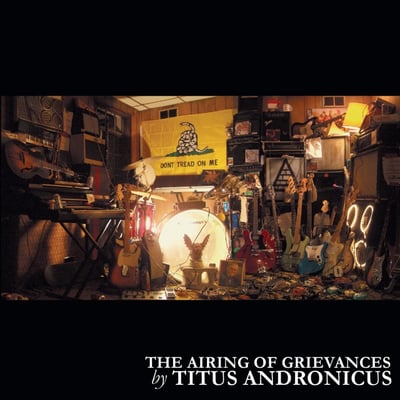
Titus Andronicus The Airing of Grievances
Released Oct 28, 2008 XL Recordings
Established consensus 21 professional reviews Updated Mar 23, 2026
Broadly positive consensus
Titus Andronicus's The Airing of Grievances explodes with bookish fury and punk abandon, a debut that channels suburban alienation into singalong carnage and literary punch.
How ChoruScore worksCritics' Top Tracks
The songs critics returned to most
Titus Andronicus
4 critic mentions
“Mostly I get this image in my head because of the production on The Airing Of Grievances” — Sputnik Music
Arms Against Atrophy
5 critic mentions
“Songs with titles such as Arms Against Atrophy and Fear and Loathing in Mahwah, NJ are packed with dark lyrics” — The Guardian
My Time Outside the Womb
2 critic mentions
“My Time Outside The Womb’ is a 100mph rough and ready account of life from start to finish.” — DIY Magazine
Full critic consensus
Titus Andronicus's The Airing of Grievances explodes with bookish fury and punk abandon, a debut that channels suburban alienation into singalong carnage and literary punch. Across professional reviews critics praise the record's raw production and communal catharsis, noting how tracks like “Titus Andronicus” and “Arms Against Atrophy” convert chaotic noise into memorable, anthemic hooks while “My Time Outside the Womb” and “Albert Camus” reveal the band's knack for marrying existential lyricism with violent energy.
The critical consensus is positive: the album earned an 81/100 consensus score across 21 professional reviews, with reviewers consistently pointing to its intensity and anger as strengths rather than flaws. Critics highlight a tension between chaos and melody, where bracingly loud, abrasive punk textures sit beside folk-punk touches and occasional shoegaze haze. Multiple reviewers singled out the communal, chant-ready moments and the record's dark humour and nihilistic undercurrents as what make the best songs on The Airing of Grievances resonate beyond mere adolescent fury.
While some accounts note tinny or raw production and moments of overblown bravado, most critics frame those imperfections as part of the album's urgent personality - a post-collegiate howl that feels both sincere and theatrically inflated. For anyone asking whether The Airing of Grievances is worth listening to, the critical verdict stresses its standout tracks, literary ambition, and unfiltered punk exuberance as reasons to hear it now.
Track Ratings
How critics rated each track, relative to this album (0-100). Only tracks that made critics feel something are rated.
Fear and Loathing in Mahwah, NJ
My Time Outside the Womb
Joset of Nazareth’s Blues
Arms Against Atrophy
Upon Viewing Brueghel’s "Landscape with the Fall of Icarus"
Titus Andronicus
No Future
No Future, Pt. 2: The Days After No Future
Albert Camus
Get the next albums worth your time.
Critic-backed picks in one clean digest. No clutter.
What Critics Are Saying
Deep insights from 21 critics who reviewed this album
En

Critic's Take
Titus Andronicus's The Airing of Grievances feels like a cramped apartment where Patrick Stickles screams and somehow belongs, and that paradox makes songs like “Titus Andronicus” and “No Future” the best tracks on The Airing of Grievances. The production places Stickles slightly apart from the band, a choice that turns those tracks into coal-hot declarations rather than tidy anthems, and it is precisely that jaggedness that elevates them. The record sells the idea that communal music can be salvation, and the charged energy of “Titus Andronicus” and “No Future” register as the clearest examples of that conviction.
Key Points
-
The best song works because production isolates Stickles while the band swells, making the performance feel urgent and communal.
-
The album's core strength is its raw conviction and the sense that playing together is itself a form of salvation.
Themes
Pr


Critic's Take
Titus Andronicus's The Airing of Grievances finds its best tracks in the brazen, communal snarls of “Titus Andronicus” and the cathartic surge of “Arms Against Atrophy”. Chris Baynes writes with amused, exacting relish about how “Titus Andronicus” delivers a joyfully malicious group chant and how “Arms Against Atrophy” is seized by a massive riff that turns haze into clarity. The review keeps a fond, slightly sardonic tone - praising the album's clamorous sonics and the raw, open-wounded delivery that makes these best songs on The Airing of Grievances feel like a sweaty triumphant gig. Read as both punk spirit and intellectual reach, those two tracks exemplify why listeners ask about the best songs on The Airing of Grievances.
Key Points
-
“Titus Andronicus” is the best song for its joyfully malicious group chant and inward-directed venom.
-
The album's core strength is its raw, clamorous intensity that turns fuzzed sound into moments of piercing clarity.
Themes

Critic's Take
Titus Andronicus arrive on The Airing of Grievances with a bravado that is as witty as it is violent, and the best songs showcase that blend. The opener, “Fear and Loathing in Mahwah, NJ”, sets the tone with tinny production and a world-caving guitar riff that makes it one of the best tracks on the record. Meanwhile “My Time Outside the Womb” is a 100mph account of life, claustrophobic and thrilling, and stands out as another top song. The album’s intellectual punk, dark humour and relentless crescendos make those tracks the clearest high points here.
Key Points
-
The opener “Fear and Loathing in Mahwah, NJ” is the album's most effective track, setting its aggressive, tinny tone.
-
The album's core strengths are loud, literate punk delivered with dark humour and relentless crescendos.
Themes
Al

Critic's Take
<strong>Titus Andronicus</strong>'s <em>The Airing of Grievances</em> bristles with suburban fury and earnestness, and the review points to a handful of best tracks that crystallize that energy. The author singles out “No Future, Pt. 2: The Days After No Future” for its bouncy power-pop echoes and the closing horns of “Fear and Loathing in Mahwah, NJ” as a laconic, effective bookend. He frames “My Time Outside the Womb” and “Arms Against Atrophy” as raw centers of anger and fatalism, which is why listeners searching for the best songs on The Airing of Grievances should start with those named highlights. The writing emphasizes sincerity over contrivance, making these tracks stand out as the album's emotional core.
Key Points
-
The best song is emotionally potent because it channels anger and fatalism with genuine sincerity.
-
The album's core strengths are raw suburban angst, unvarnished vocals, and stylistic variety from power pop to laconic horn closures.
Themes

Critic's Take
Titus Andronicus indicts suburban despair on The Airing of Grievances with an almost joyful ferocity, and the best songs - notably “Titus Andronicus” and “Arms Against Atrophy” - show why. The reviewer's voice revels in the band's violent, overblown energy, praising how three-minute war cry “Titus Andronicus” distills the album's pathos into a taunting chorus maxim. Likewise, “Arms Against Atrophy” is celebrated for waiting to unleash a killer, song-altering guitar riff that justifies the record's inebriated aesthetic. These standout tracks encapsulate the record's blue-collar frustration, literary flourishes, and bar-band loudness that make the best tracks on The Airing of Grievances so compelling.
Key Points
-
“Titus Andronicus” is the album's standout, distilling the record's pathos into a memorable, taunting chorus.
-
The album's strengths are its raw live energy, literary flourishes, and inventive dynamic shifts that turn bar-band aesthetics into catharsis.
Themes

Critic's Take
Titus Andronicus arrive with a raucous, full-throttle celebration on The Airing of Grievances, songs like “Arms Against Atrophy” and “Fear and Loathing in Mahwah, NJ” crashing in with couldn't-care-any-more euphoria. The reviewer hears an unholy collision of influences - Pogues grit, Springsteen heart, Arcade Fire largesse - and singles out the singalong, messily triumphant moments as the album's best tracks. Even when chaos reigns, beautiful countermelodies save the songs, making the best tracks on The Airing of Grievances feel immediate and communal. If you search for the best songs on The Airing of Grievances, these anthemic bursts are the ones you will learn and sing loudly and drunkenly.
Key Points
-
The best song(s) are the anthemic, chant-ready tracks like "Arms Against Atrophy" because they pair dark lyrics with euphoric delivery.
-
The album's core strength is its blend of chaotic punk energy and beautiful countermelodies that make songs immediate and communal.
Themes

Critic's Take
Titus Andronicus's The Airing of Grievances insists that the best songs are those that marry raw punk energy with literary ambition, and you hear that in the record's surging life-blood. Patrick Stickles' larynx-stretching vocals make tracks like “Titus Andronicus” and “Albert Camus” feel less like affectation and more like prophetic fervor. The band wear their references to Brueghel and Camus without pretension, so the best tracks stand out for passion rather than posturing.
Key Points
-
The best song, “Titus Andronicus”, crystallizes the record's raw vocal intensity and emotional surge.
-
The album's core strengths are its fusion of punk immediacy with literary and existential themes.
Themes
Ir
Critic's Take
Titus Andronicus arrive on The Airing of Grievances with a scrappy, bookish roar, and the review points squarely to “Arms Against Atrophy” and “Albert Camus” as the best tracks, songs that distill their folk-punk and literary impulses into air-thumping anthems. Lauren Murphy’s tone is appreciative and amused, noting how Patrick Stickles’s throaty vocals give the material a gruff, charismatic bite while the band balances rambunctious punk with woozy shoegaze. The best tracks on The Airing of Grievances are singled out for being both imperfect and endearing, the moments where the band’s rawness becomes an asset rather than a flaw. For listeners asking what the best songs on the album are, start with “Arms Against Atrophy” and “Albert Camus” for a clear sense of their thrust and heart.
Key Points
-
The best song, “Arms Against Atrophy”, is highlighted as a representative air-thumping anthem that crystallizes the band’s folk-punk thrust.
-
The album’s core strengths are its bookish literary references and an effective mix of rambunctious punk energy with woozy shoegaze textures.
Themes
mu
Sp


Sp

