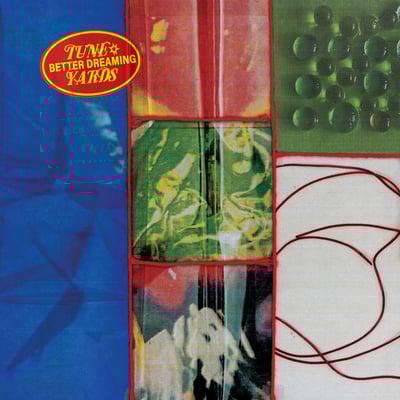
tUnE-yArDs Better Dreaming
Released May 16, 2025 4AD
Consensus forming 4 professional reviews Updated Nov 30, 2025
Mostly positive consensus
Consensus is still forming across 4 professional reviews. tUnE-yArDs's Better Dreaming opens as a riot of communal joy and political urgency, pairing Merrill Garbus' propulsive vocals with polyrhythmic grooves that invite movement and reflection.
How ChoruScore worksCritics' Top Tracks
The songs critics returned to most
Heartbreak
4 critic mentions
“On opener "Heartbreak" she starts out in a comfortable mid-range, then raises the pitch and delivers the chorus with the intensity of Aretha Franklin” — The Line of Best Fit
Limelight
4 critic mentions
“Limelight, the funk-driven lead single, was inspired by Garbus and Brenner dancing to George Clinton” — Pitchfork
How Big Is The Rainbow
4 critic mentions
“anthemic songs that build a sense of joyful coalition, such as the handclap-fueled "How Big Is the Rainbow” — Pitchfork
Full critic consensus
tUnE-yArDs's Better Dreaming opens as a riot of communal joy and political urgency, pairing Merrill Garbus' propulsive vocals with polyrhythmic grooves that invite movement and reflection. Across professional reviews, critics point repeatedly to danceable, protest-minded songs such as “Heartbreak”, “Limelight” and “How Big Is The Rainbow” as the record's most immediate wins, tracks that translate anti-authoritarian anger and queer/trans advocacy into celebratory, funk-forward arrangements.
The critical consensus is mixed-positive: Better Dreaming earned a 68.75/100 consensus score across four professional reviews, with reviewers consistently praising the album's blend of vulnerability and strength, its focus on parenthood and political self-reflection, and its capacity for joyful resistance. Critics from Pitchfork and The Line of Best Fit highlight the best songs on Better Dreaming for marrying lyric-forward urgency with buoyant production, while Paste and Far Out emphasize how intimate moments like “See You There” and the title track “Better Dreaming” anchor the record's protest themes in personal stakes.
Not all critics landed in the same camp; some reviews celebrate a clearer, brighter chapter in Garbus' work while others find the tension between celebration and darkness more uneven. Still, reviewers agree that standout tracks - notably “Heartbreak”, “Limelight” and “How Big Is The Rainbow” - demonstrate why the collection matters: it channels political advocacy, familial tenderness and resilient joy into songs built to be danced to and debated. For readers asking whether Better Dreaming is worth listening to, the professional reviews suggest a record whose strengths make it essential listening for those attuned to politically charged, rhythm-driven pop.
Track Ratings
How critics rated each track, relative to this album (0-100). Only tracks that made critics feel something are rated.
Heartbreak
Swarm
Never Look Back
Suspended
Limelight
Get Through
Better Dreaming
How Big Is The Rainbow
See You There
Perpetual Motion
Sanctuary
Get the next albums worth your time.
Critic-backed picks in one clean digest. No clutter.
What Critics Are Saying
Deep insights from 6 critics who reviewed this album

Critic's Take
tUnE-yArDs refuse the easy route on Better Dreaming, choosing buoyant, danceable defiance instead of despair. The review highlights the best songs on Better Dreaming - “Heartbreak”, “Never Look Back” and “Sanctuary” - as moments where Merrill Garbus channels raw power, from soulful peaks to punkish catharsis. Garbus and Nate Brenner stitch polyrhythmic layers into songs that feel both meticulously crafted and instinctively joyful, which is precisely why listeners searching for the best tracks on Better Dreaming will find themselves returning to these standouts. The record is ultimately uplifting, energetic and life-affirming, a clearer, brighter chapter in the duo's adventurous catalogue.
Key Points
-
"Sanctuary" is the best song for its tour-de-force vocal arc and cathartic finale.
-
The album's core strengths are polyrhythmic constructions, joyful energy, and emotionally honest, politically minded songwriting.
Themes
mu


Critic's Take
In his characteristically playful yet pointed voice, Andy Crump argues that tUnE-yArDs' Better Dreaming is built to make you move even as it aims a political jab. He singles out “Never Look Back” for its breathy, punchy delivery and “See You There” for its scorched indignation, both tracks serving as the record's sharpest moments. At the same time he praises lighter reprieves like “Limelight” for pure, irresistible funk, so the best songs on Better Dreaming are those that fuse activist bite with dance-floor craft. The result, he suggests, is an album you will want to revisit until its point lands.
Key Points
-
The best song, notably “See You There,” is best for its scorched, indignant outro that crystallizes the album's political fury.
-
The album's core strength is combining urgent, protest-driven lyrics with irresistibly danceable, funk-forward production.
Themes

Critic's Take
On tUnE-yArDs’ Better Dreaming Merrill Garbus leans into communal joy and taut arrangements, making the best songs feel like invitations to move. The record’s highlights - “Heartbreak”, “Limelight” and “Get Through” - balance vulnerability and buoyant groove in the reviewer’s characteristic attentive, lyric-forward voice. Garbus’s vocals surge, from the rousing belting of “Heartbreak” to the family-friendly funk of “Limelight”, and the album often channels political intent into danceable, accessible songs. It is Tune-Yards made more outward-facing and hopeful, songs you can really dance to and sing along with.
Key Points
-
“Heartbreak” is the best song because it combines rousing vocal force with a groove that balances joy and pain.
-
The album’s core strengths are its fuller vocals, taut instrumentation, and ability to turn political introspection into danceable, communal songs.
Themes
Fa
Critic's Take
In his textured, slightly sardonic tone Reuben Cross finds the best songs on Better Dreaming to be the ones that marry protest with melody - namely “Heartbreak” and the title track “Better Dreaming”. Across the review Cross frames the record as vibrant yet introspective, singling out upbeat disco cuts like “Limelight” and advocacy-minded songs like “How Big Is The Rainbow” as standout moments that balance joy with serious intent.
Key Points
-
The album's core strengths are its blend of vibrant protest songwriting, experimental instrumentation, and moments that balance joyful grooves with earnest political urgency.