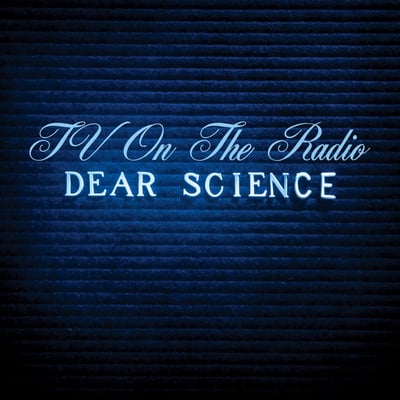
TV on the Radio Dear Science
Released Sep 21, 2008 Touch and Go Records
Established consensus 33 professional reviews Updated Aug 25, 2026
Strong critical consensus
TV on the Radio's Dear Science arrives as a high-water mark of ambitious pop and art-rock craft, a record where sleek production and restless imagination collide.
How ChoruScore worksCritics' Top Tracks
The songs critics returned to most
Family Tree
13 critic mentions
“Songs with sentimental titles carry the most dire lyrics—like “Family Tree,” a gorgeous ballad about forbidden love whose titular plant becomes a gallows.” — Pitchfork
Golden Age
11 critic mentions
“Take the first single and the album’s fulcrum, “Golden Age,” which ice skates to heaven on billowing horns” — Pitchfork
Halfway Home
13 critic mentions
“The album’s opening track, “Halfway Home”, uses noise and rhythm as a myopic beacon to push things forward” — PopMatters
Full critic consensus
TV on the Radio's Dear Science arrives as a high-water mark of ambitious pop and art-rock craft, a record where sleek production and restless imagination collide. Across 33 professional reviews the record earned an 85.06/100 consensus score, and critics consistently point to a handful of songs that turn the album's dense textures into unforgettable hooks. For readers wondering what the best songs on Dear Science are, frequent praise falls on “Family Tree”, “Halfway Home”, “Golden Age” and “Red Dress” as the tracks that most vividly balance groove, lyricism and studio daring.
Reviewers agree that the album's strengths lie in its focus and production clarity: layered horns, crisp rhythms and inventive arrangements let political unease and personal melancholy coexist with pop accessibility. Several critics highlight “Family Tree” as the emotional centerpiece, while “Halfway Home” and “Golden Age” are singled out for marrying bleak themes to propulsive hooks. Praise for the band's genre-blending appears repeatedly - afrobeat horns, funk and soul underpinnings, digital beats woven with organic groove - and many music critics celebrate the record's ability to be simultaneously danceable and contemplative.
Not all voices are uniformly celebratory: a minority of professional reviews find certain tracks distant or programmatic, arguing that some experimental textures dilute earlier urgency. Still, the prevailing critical consensus frames Dear Science as a focused, often thrilling statement in TV on the Radio's catalog - one where production prowess and songwriting meet to produce several standout tracks worth repeated plays. Scroll down for full reviews and track-by-track notes that unpack why critics say Dear Science is both inventive and enduring.
Track Ratings
How critics rated each track, relative to this album (0-100). Only tracks that made critics feel something are rated.
Halfway Home
Crying
Dancing Choose
Stork & Owl
Golden Age
Family Tree
Red Dress
Love Dog
Shout Me Out
DLZ
Lover's Day
Get the next albums worth your time.
Critic-backed picks in one clean digest. No clutter.
What Critics Are Saying
Deep insights from 33 critics who reviewed this album
Ho
Critic's Take
TV on the Radio's Dear Science arrives as a soulful, edge-retaining triumph, and the reviewer's conviction is plain: the best songs on Dear Science are anchored by “Family Tree”. Patrick Freyne praises “Family Tree” as the album's beautiful centerpiece, noting its piano base and haunting melody that evoke an updated Wizard Of Oz, and he frames the record's strengths around lush strings, horns and Tunde Adebimpe's multi-tracked singing. In this voice the album's best tracks are those that marry cosmic soul searching with disjointed funk and tight lyricism, which is why “Family Tree” stands out as the key track.
Key Points
-
The reviewer names "Family Tree" the best song because of its piano base, haunting melody and deeply beautiful lyrics.
-
The album's core strengths are its blend of soulfulness, disjointed funk, lush strings and searching lyricism.
Themes

Critic's Take
TV on the Radio make Dear Science feel like a febrile open letter to reason, and the best tracks — notably “Golden Age” and “Red Dress” — distill that paradox of hope and dread with surgical precision. Jonathan Keefe’s sentences brim with apocalyptic humor and curious tenderness, so his praise of “Golden Age” as an anthem that arrives "like a natural disaster" reads as both literal and ironic. Likewise, “Red Dress” is presented as the album’s moral center, where political fury and private fear become one, its searing lines doing much of the emotional work. The review frames these songs as exemplary of the record’s balance of clarity and chaos, and it names “Family Tree” and opener “Halfway Home” as additional accessible moments that widen the album’s reach to non-critics.
Key Points
-
The best song, "Golden Age", is best for capturing the album’s paradoxical optimism amid disaster.
-
The album’s core strength is balancing political urgency with personal depth through clear, motif-driven production.
Themes

Critic's Take
TV on the Radio barely ever sounds like a band content to repeat itself on Dear Science, and the record's best songs - notably “Halfway Home” and “Crying” - show why. Mitchell's prose is giddy but precise, praising the album's breathtakingly vast stylings while admiring the merciful understatement that stops it tipping into indulgence. He singles out “Halfway Home” as a superlative opener and points to “Crying” for its funk, framing both as evidence that the band have made something likely to be called a classic. The voice is sharp, confident and a little cheeky, and it leaves readers wanting to seek out the best tracks on Dear Science themselves.
Key Points
-
The best song, “Halfway Home”, stands out as a superlative opener that encapsulates the album's confident experimentation.
-
Dear Science's core strengths are its genre-blending musicianship, insightful lyricism and refined production, kept mercifully understated.
Themes

Critic's Take
TV on the Radio's Dear Science finally marries experimentation to tune, so the best songs on Dear Science feel both odd and irresistible. The driving “Halfway Home” is hailed as a propulsive opener - that Spector-Numanesque momentum makes it one of the best tracks on the album. Equally, “Family Tree” is called a spectacularly lovely art-rock ballad, and its emotional reach marks it among the best songs on the record. The record repeatedly turns abrasive sounds into singable hooks, which is why these two songs stand out in the reviewer's ear and why listeners hunting for the best tracks on Dear Science should start there.
Key Points
-
The driving, Spector-Numanesque “Halfway Home” is praised as the album's standout opener.
-
Dear Science's core strength is turning abrasive experimental sounds into consistently singable, career-defining songs.
Themes
Q

Critic's Take
In his punchy, vivid voice Chris Dahlen casts TV on the Radio as a band of contradictions on Dear Science, praising the immediate thrills while insisting the album is streaked with dread. He highlights “Golden Age” as the album’s fulcrum, a soaring, utopian-sounding single that nevertheless rests on an insecure beat. He lauds “Dancing Choose” and “DLZ” for their big-chorus, confrontational energy, and he singles out “Shout Me Out” as the rare unselfconscious joy.
Key Points
-
“Golden Age” is the best song because it functions as the album’s fulcrum, pairing soaring horns and falsetto with an unsettling undercurrent.
-
Dear Science’s core strength is marrying irresistible, catchy arrangements with thorny, ambivalent lyrics about death and political unease.
Themes

Critic's Take
TV on the Radio sound like a band who have finally bridged the gap between art-rock ambition and pop immediacy on Dear Science. Highkin writes with near-breathless admiration, pointing to “Dancing Choose” and the string-laden “Family Tree” as centerpiece highlights and naming “Golden Age” and “Red Dress” as rhythm-driven bangers. He praises the opening shock of “Halfway Home” and the crowd-pleasing stomp of “Shout Me Out” as proof that this record will play equally well on headphones or in stadiums. The review frames the best songs on Dear Science as both hooks and structural marvels, songs that make the album one of the decade's great rock records.
Key Points
-
"Family Tree" is the album's emotional and orchestral centerpiece, earning the strongest praise.
-
Dear Science's core strengths are its blend of adventurous production with irresistible pop hooks and a powerful rhythm section.
Themes

En
Sp
Critic's Take
TV on the Radio arrive on Dear Science with a restless urgency that makes the best tracks feel both apocalyptic and oddly hopeful. The reviewer's voice lingers on “Shout Me Out” and “Red Dress” as immediate standouts - “Shout Me Out” channels rage through a drum-machine shuffle while “Red Dress” erupts into furious disco-punk. Equally memorable is “Golden Age”, whose chattering guitars announce a tentative possibility of renewal. The album's arrangements turn bleak themes into fresh textures, which is why many listeners will ask, what are the best songs on Dear Science.
Key Points
-
The best song is "Shout Me Out" for its urgent drum-machine shuffle and charged lyric.
-
Dear Science balances preapocalyptic dread with inventive arrangements and a thread of guarded optimism.
Themes
Dr
Critic's Take
TV on the Radio's Dear Science is hailed here as near-masterpiece pop that still retains its oblique art-rock heart, and the best songs - notably “Family Tree” and “DLZ” - carry the album's emotional weight. The reviewer's voice delights in the record's stylistic range, calling “Golden Age” a flirtation with futuristic Prince pop while praising the poignant heartbreak of “Family Tree”. Production is repeatedly noted as crisp yet warm, which makes the hooks on these tracks land without sacrificing complexity. For readers searching for the best songs on Dear Science, the review repeatedly returns to “Family Tree” and “DLZ” as the album's emotional and political centers, even as the whole LP is celebrated as one of the year's finest records.
Key Points
-
The best song is 'Family Tree' because its poignant chorus is singled out as particularly affecting.
-
The album's core strengths are stylistic variety and high-quality, crisp production that balances pop accessibility with complexity.
Themes

Critic's Take
TV on the Radio maps the city’s clatter into a coherent pop-smash on Dear Science, and the best tracks on Dear Science make that transformation obvious. The record’s highs - “DLZ” and “Golden Age” - crystallize the band’s knack for marrying paranoid lyricism to irresistible groove, while “Love Dog” stands out for its aching string-underscored melody. The reviewer’s language stays tactile and kinetic, praising how fuzz, horn charts and handclaps propel the album’s best songs into something both danceable and emotionally weighty. This is music that goes boom, often by design and often beautifully so.
Key Points
-
“Golden Age” best synthesizes the album’s horns, handclaps and dance impulses into a definitive highlight.
-
Dear Science’s core strength is turning urban noise and dense production into accessible, groove-driven songs without losing emotional weight.
Themes
Pr
Gi

Critic's Take
TV on the Radio channels its ambition into the lean, nimble songs of Dear Science, and the best songs on Dear Science make that sharper focus feel like a revelation. The reviewer's voice lingers on “Family Tree” as one of the band's most accessible songs and on “Red Dress” as self-evidently sexy, praising Antibalas' brass and taut guitars. Equally noted are “Stork & Owl” and “Love Dog” for their soulful loops and affecting singing, which together explain why the best tracks on Dear Science balance craft and passion so effectively. This is an album that turns tightened arrangements into immediacy and optimism without losing complexity.
Key Points
-
The best song is praised for accessibility and emotional clarity, making "Family Tree" stand out.
-
The album's core strengths are tightened arrangements, clearer vocals, and a balance of craft and passion.
Themes

Critic's Take
TV on the Radio's Dear Science is as funky and soulful as it is sharp, and the reviewer keeps circling back to a few standouts. “Family Tree” is praised as an "awesome low-key tune" while “Crying” is singled out for slithering out of a Prince-ish era with effortless funk. The narrative makes it clear that the best tracks on Dear Science are those that balance pop flair with compositional weight and crystal-clear production.
Key Points
-
The reviewer names "Golden Age" the album's best track for its growing rewards on each listen.
-
Dear Science's strengths are its fusion of genres, funk-infused production, and clear, engrossing arrangements.
Themes
Co
Xl
Ti

Critic's Take
TV on the Radio’s Dear Science finds its best songs in the collision of bleakness and pop craft, most notably “Halfway Home” and “Golden Age”. Hermes writes with the same mixture of admiration and precise cultural context that animates the review, praising the band’s knack for turning Joy Division gloom into majestic hooks on “Halfway Home” and celebrating “Golden Age” as an effervescent funk pop highlight. He also flags rhythmic surprises and political bite across tracks like “Red Dress” and “Shout Me Out”, making clear these are among the best tracks on Dear Science because they marry invention with danceable ambition. The narrative stays focused: these are the best songs on Dear Science because they balance pop aspiration with music-geek aesthetics.
Key Points
-
“Halfway Home” is best for its majestic, Joy Division-tinged opening and memorable melodic hooks.
-
The album’s core strength is balancing pop hooks and dance beats with bleak lyrical visions and inventive production.
Themes
Re
Critic's Take
TV on the Radio prowls futuristic dystopias on Dear Science, and the reviewer's ear is caught most keenly by “Halfway Home” and “DLZ”. The piece praises the luscious sweep of “Halfway Home”, likening it to Jonah Lewie’s Stop The Cavalry taken hostage by Trans Am, and celebrates the sassy swagger of “DLZ” as a delicious, delirious high point. While it flags occasional claustrophobic excesses, the critic insists that when the band balances ambition and execution they forge brooding sonic vistas, which is why listeners seeking the best songs on Dear Science should start with those two tracks.
Key Points
-
The best song is "Halfway Home" because it pairs lush melodies with tight execution, exemplifying the album’s strengths.
-
Dear Science’s core strength is ambitious, synthetic soundscapes that achieve powerful brooding vistas when balanced well.
Themes
mu

Critic's Take
TV on the Radio sound more like a united force on Dear Science, and the best tracks - notably “Halfway Home” and “Golden Age” - show why they are the album’s high points. The reviewer’s admiration for Sitek’s studio craft runs throughout, praising the way “Halfway Home” fuses surf-rock oddness with synth gravity, and how “Golden Age” erupts into a brass-lifted gospel chorus. There is playful critique too, such as calling “Crying” almost a Prince pastiche, but that does little to dent the record’s consistent production triumphs. The narrative here is that Dear Science refines TVOTR’s eccentricities into accessible, often stunning pop moments.
Key Points
-
The best song, "Halfway Home", is best for its adventurous fusion of surf-rock oddness and swooping synths that set the album's tone.
-
The album's core strength is Sitek’s production, which layers sonic tricks and genre-blending to make eccentric ideas feel accessible.
Themes

Critic's Take
TV on the Radio split the difference on Dear Science, balancing moody digital ballads with kinetic funk, and the review leans toward the funky high points. The best tracks on Dear Science are framed as the standout grooves - “Crying” with its Prince influence and “Red Dress” for its irresistible Afro-funk. Overall the tone is approving and specific, praising the band for harnessing texture and song to powerful effect.
Key Points
-
The best song moments come from the funky numbers like "Red Dress" and "Crying", which the reviewer highlights as immediate standouts.
-
The album's core strength is its balance of rich textures and well-crafted songs, pairing moody ballads with irresistible funk.
Themes
Critic's Take
TV on the Radio sound as if they have finally arrived on Dear Science, and the best tracks make that arrival unmistakable. The reviewer singles out “Halfway Home” as an exultant opening, praises “Family Tree” for its "swirling strings and echoing piano", and crowns “Dancing Choose” for its Antibalas horn-powered Afrobeat lift. These are the best songs on Dear Science because they balance Sitek's maximal production with the band's newfound focus, while the funk-leaning “Crying” and the celebratory “Golden Age” add accessible, singalong highs. Overall the album is both brainy and horny, a rare pleasure where ideas and groove meet.
Key Points
-
The best song is “Halfway Home” because its exultant opening signals the band's arrival.
-
The album's strengths are expansive production, inventive horns and a successful flirtation with funk.
Themes
NO
Ti
Ar


Critic's Take
TV on the Radio arrives in a more dance-ready mood on Dear Science, and the review makes clear the best tracks are the ones that balance groove and lyric. The reviewer lauds “Dancing Choose” as a barn-burning live addition, and praises “Love Dog” and “Family Tree” as down-tempo gold where Tunde Adebimpe shines. While the record misfires on some aggressive attempts like “Red Dress”, the album's layered production and memorable verses make the best songs on Dear Science stand out on repeat. Overall, the critic frames the album as sometimes-confusing but frequently triumphant, a grower that rewards repeated listens.
Key Points
-
The best song, “Dancing Choose”, is the most immediate and barn-burning track that translates well live.
-
The album’s core strengths are layered instrumentation and Tunde Adebimpe’s singular vocals, which make down-tempo tracks like "Love Dog" rewarding.
Themes
Co


Critic's Take
TV on the Radio never sounded more disengaged than on Dear Science, a record that exchanges the band’s old grab-you-by-the-throat urgency for programmable beats and drab tunes. Alan Shulman writes with weary disappointment, pointing to “Halfway Home” as a decent opener but singling out “DLZ” as the lone track that still oozes natural tension. The review makes clear that the best songs on Dear Science are few, with “DLZ” and to a lesser extent “Halfway Home” salvaging some of the band’s former intrigue. Overall the record is likely to please by reputation, yet the songs themselves mostly fall short in real musical reward.
Key Points
-
DLZ is the best track because it uses an actual-sounding drummer and oozes natural tension.
-
The album’s core strength was once its urgency and intrigue, but here it is undermined by programmable beats and a bored tone.