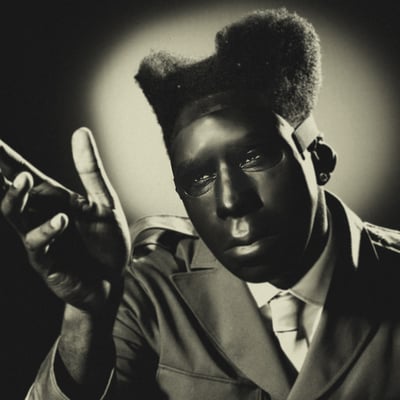
Tyler, The Creator CHROMAKOPIA
Released Oct 28, 2024 Columbia
Established consensus 17 professional reviews Updated Oct 21, 2026
Broadly positive consensus
Tyler, The Creator's CHROMAKOPIA turns the tensions of adulthood into restless, vivid hip-hop, and its strongest moments make a persuasive case for one of his most revealing records.
How ChoruScore worksCritics' Top Tracks
The songs critics returned to most
Noid
16 critic mentions
“Loop around the block, eyes glued to the rearview / Rather double back than regret hearing, ‘Pew, pew,’” raps Tyler, The Creator on Chromakopia ’s lead single “Noid.” — HipHopDX
Hey Jane
14 critic mentions
“Hey Jane” – also the name of a US-based virtual abortion provider – alludes to Tyler potentially being a father” — The Line of Best Fit
St. Chroma (feat. Daniel Caesar)
11 critic mentions
“This opening mantra segues into his first track ‘St. Chroma’, where Tyler and Daniel Caesar’s vocals intertwine” — The Quietus
Full critic consensus
Tyler, The Creator's CHROMAKOPIA turns the tensions of adulthood into restless, vivid hip-hop, and its strongest moments make a persuasive case for one of his most revealing records. Across 17 professional reviews, it earns an 82.94/100 consensus score, with critics drawn to the way swagger and theatrical production give way to anxiety, tenderness, and self-questioning.
The critical consensus centers on family, parenthood, identity, and the costs of fame. Critics repeatedly praise “Noid” for its distorted, Zamrock-inflected take on celebrity paranoia, while “Hey Jane” stands out as an unusually candid, two-sided meditation on possible parenthood. The opening “St. Chroma (feat. Daniel Caesar)” establishes the album’s soulful, narrative ambition, and “Balloon (feat. Doechii)” brings a playful burst of collaborative energy. Other reviewers point to “Take Your Mask Off” as a searching statement on authenticity, and “Like Him” for its raw family reckoning. Together, these tracks show why the best songs on CHROMAKOPIA often balance personal exposure with audacious sound design.
Praise is substantial, but not unanimous. Many reviewers hear a mature, cohesive work whose vulnerability deepens Tyler’s musical experimentation; others find the deliberate messiness, shifting concepts, or showmanship can blunt the payoff. Even the less enthusiastic responses recognize flashes of striking invention, while noting uneven passages and misdirections. The result is an ambitious, sometimes unsettled album whose emotional highlights reward close attention. These reviews trace where CHROMAKOPIA’s candor and chaos cohere, and where its abundant ideas resist resolution.
Track Ratings
How critics rated each track, relative to this album (0-100). Only tracks that made critics feel something are rated.
St. Chroma (feat. Daniel Caesar)
Rah Tah Tah
Noid
Darling, I (feat. Teezo Touchdown)
Hey Jane
I Killed You
Judge Judy
Sticky (feat. GloRilla, Sexyy Red & Lil Wayne)
Take Your Mask Off (feat. Daniel Caesar & LaToiya Williams)
Tomorrow
Thought I Was Dead (feat. ScHoolboy Q & Santigold)
Like Him (feat. Lola Young)
Balloon (feat. Doechii)
I Hope You Find Your Way Home
Get the next albums worth your time.
Critic-backed picks in one clean digest. No clutter.
What Critics Are Saying
Deep insights from 19 critics who reviewed this album

Critic's Take
Tyler, The Creator frames CHROMAKOPIA as a record that alternates between vulnerability and gleeful swagger, and the best songs prove that duality. Fitzgerald writes with a clear eye for how those tracks foreground Tyler’s themes of fear, fatherhood anxiety, and joy, making them the best tracks on CHROMAKOPIA by emotional weight and pop immediacy. The result is an album that feels like the apex of his career, alive with dramatic moments and tender pullbacks.
Key Points
-
The best song is “Noid” because it most directly and viscerally confronts Tyler’s celebrity paranoia.
-
The album’s core strengths are its emotional range and successful collaborations across generations.
Themes

Critic's Take
The review makes clear that the best tracks on CHROMAKOPIA are those that marry personal vulnerability to adventurous production, creating an album meant to be heard as a continuous journey. This is an album that insists listeners pay attention, and its strongest songs reward repeated, focused listening.
Key Points
-
‘NOID’ is the best song for its piercing, Zamrock-sampled exploration of paranoia and fame.
-
The album’s core strength is its seamless continuity and emotional honesty, presenting a cohesive narrative that rewards focused listening.
Themes

Critic's Take
The review reads like a close-reading, insisting these songs reward replays and cement the album among Tyler's most revealing work.
Key Points
-
The album’s core strengths are vivid storytelling, replay value, and daring, track-by-track sonic variety.
Themes
Critic's Take
Moore stresses that the best tracks on CHROMAKOPIA pair personal revelation with sharp production, songs that force listeners to reckon with who Tyler was and who he has become. The critic pitches these songs as the album’s emotional center, where confession and craft meet.
Themes

Critic's Take
In a voice equal parts theatrical and intimate, Tyler, The Creator excavates identity on CHROMAKOPIA, where the best tracks reveal his restless humanity. Ultimately, the review argues these best songs make CHROMAKOPIA a risky, revealing triumph rather than a retreat into past comforts.
Key Points
-
The album's core strengths are immersive production, melodic neo-soul hooks, and a thematic focus on identity, loneliness, and self-revelation.
Themes

Critic's Take
There is a clear through-line of self-examination on CHROMAKOPIA, and Tyler, The Creator never hides the wounds. The reviewer's voice prizes the album's mix of wild production and emotional clarity, singling out songs like “Noid” and “Hey Jane” as where Tyler's rock-infused paranoia and devastating vulnerability land hardest. This is an album that balances the sonic adventurousness of IGOR with the plainspoken introspection of later work, making the best tracks on CHROMAKOPIA feel both daring and intimately revealing. The result is Tyler proving he can take it seriously and, crucially, do it better than most expect.
Key Points
-
The best song, "Hey Jane", is the album's emotional center, depicting a raw pregnancy scare with striking vulnerability.
-
CHROMAKOPIA's core strengths are its blend of sonic adventurousness and intimate self-examination, anchored by maternal themes.
Themes

Key Points
-
The best song is "Hey Jane" because its empathetic narrative and sultry R&B make the album's emotional core most resonant.
-
The album’s core strengths are its introspective themes, narrative structure framed by Tyler's mother, and a balance of tenderness with swagger.
Themes

Critic's Take
Tyler, The Creator arrives at CHROMAKOPIA with the kind of bruised, reflective intelligence Lisa Wright highlights, where tracks like “Hey Jane” and “I Killed You” do the heaviest lifting. Wright lingers on “Hey Jane” as a set-piece about female body autonomy, and she praises the record’s emotional range, from racial pride to possible parenthood. The result is an album that registers as both a testimony to change and a muscular, nuanced record of life in flux.
Key Points
-
“Hey Jane” is the best song because it crystallises Tyler’s emotional growth and tackles female body autonomy with memorable lyrics.
-
The album’s core strengths are its emotional range and bold musical choices, from glammy guitars to sparse African drumbeats.
Themes
Th
Critic's Take
Tyler, the Creator\'s CHROMAKOPIA lands as a study in grown-up contradictions, and the reviewer highlights its best tracks accordingly. Overall the album balances candour with artfulness, delivering both unequivocally banging tunes and introspective moments that justify its praise.
Key Points
-
The best song is “Rah Tah Tah” because it packs a punch and stakes a bold claim that elevates Tyler.
-
The album’s core strengths are its balance of candour and artful production that mixes brash hooks with introspective vulnerability.
Themes

Critic's Take
In his most sonically polished and introspective record to date, Tyler, The Creator frames CHROMAKOPIA as an end to a long career arc while spotlighting standout tracks like “St. The opener “St. Chroma” sets the tone with Daniel Caesar’s vocals and angelic strings, a signpost for the album’s narrative intent. The record’s blend of autobiographical detail and thoughtful sonic construction makes its best songs the ones that marry story with fresh production choices.
Key Points
-
“St. Chroma” is the best song because it introduces the album’s narrative with potent strings and Daniel Caesar’s vocals.
-
The album’s core strengths are polished production, intimate storytelling, and successful collaborations that let Tyler experiment.
Themes

Critic's Take
Tyler, The Creator’s CHROMAKOPIA feels unsettled and compelling, its best tracks wrestling with fame and midlife doubt rather than grand personas. The review repeatedly points to songs like “Noid” and “Tomorrow” as places where lyrical contradiction and musical risk pay off, Noid’s distorted guitars and Tomorrow’s flip from boast to emptiness making them among the best tracks on CHROMAKOPIA. Overall the record’s restless invention makes its highlights enthralling even when the album as a whole refuses neat resolution.
Key Points
-
Noid is best for its abrasive guitar and surprising samples that exemplify the album’s bravest musical turns.
-
The album’s core strength is its restless unpredictability, where lyrical contradiction and sudden musical pivots create enthralling tension.
Themes


Critic's Take
The tone is measured and appreciative, noting Tyler's expanding ambitions while still calling the album mature and era-defining. This reads like a reviewer delighted by refinement, pointing listeners to the best tracks on CHROMAKOPIA as proof of Tyler's continued evolution.
Key Points
-
The album's core strengths are thematic cohesion around parenthood and increasingly complex, refined production.
Themes

Critic's Take
I grew up with Tyler and on CHROMAKOPIA he feels like a matured artist, balancing personal reflection with sonic daring. Tyler, The Creator leans into questions about kids and family, and the best songs on CHROMAKOPIA - like “St. Chroma (feat. Daniel Caesar)” and “Tomorrow” - most acutely capture that tension. The grooves on “Judge Judy” and the closing warmth of “I Hope You Find Your Way Home” make the record feel cohesive and deliberate. It is his producerly ambition and newfound vocal confidence that make these tracks stand out.
Key Points
-
St. Chroma stands out for Daniel Caesar's contribution and is highlighted by the reviewer as a shining feature.
-
The album's core strengths are its thematic focus on family/fatherhood and Tyler's matured production and vocal confidence.
Themes

Critic's Take
In a voice equal parts wry and intimate, Tyler, The Creator maps the best tracks on CHROMAKOPIA to moments of reckoning and showmanship.
Key Points
-
The album’s core strengths are its candid self-examination and the blend of braggadocio with vulnerable storytelling.
Themes

Critic's Take
The record finds beauty within chaos, but a less frantic approach would have helped the songs land more consistently. Overall this is an album where the best songs shine through Tyler’s looseness rather than being constrained by his concept.
Key Points
-
The best song, "Hey Jane", stands out for its sensitivity and intelligent conversation about unexpected pregnancy.
-
The album’s core strength is finding beauty within chaotic production and candid reflections on ageing and parenthood.
Themes

Key Points
-
The album's core strength is ambitious experimentation, though its messiness often prioritizes showmanship over payoff.
Themes
Critic's Take
Tyler, The Creator is older, certainly smarter and probably softer on CHROMAKOPIA, where the best songs turn big questions into answers that are, of course, so unclear. These best tracks on CHROMAKOPIA capture the confusion of 21st century identity as Tyler quests to find out who he is and where he wants to be.
Key Points
-
The album’s core strength is its unsettled, searching account of identity, family, fame and Blackness.
Themes
Th
Critic's Take
The record opens grand with “St. Chroma” and leans into paranoia across cuts like “Noid”, but the first half is uneven at times, making the bangers stand out even more. Anthony's voice here is conversational and excited, praising the soundtrack-sized blasts while still calling out flabby bridges and cartoonish bits.