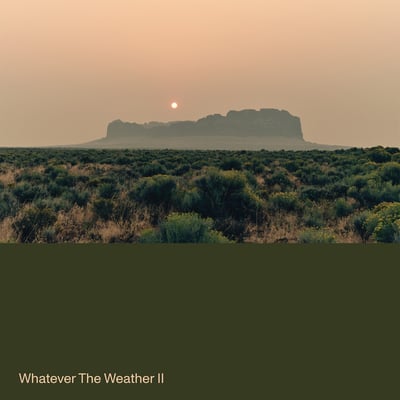
Whatever the Weather Whatever The Weather II
Released Mar 14, 2025 Ghostly International
Early read 1 professional review Updated Dec 10, 2025
Broadly positive consensus
Early read based on 1 professional reviews. Whatever the Weather's Whatever The Weather II arrives as a study in emotional temperature, translating intimacy into sound through hybrid electronic styles and minimalism.
How ChoruScore worksCritics' Top Tracks
The songs critics returned to most
8°C
1 critic mention
“8°C is nothing but a single plangent synthesizer melody” — Pitchfork
23°C (Intermittent Sunshine)
1 critic mention
“23°C (Intermittent Sunshine) repeats a single loop of microtonal harmonies” — Pitchfork
15°C
1 critic mention
“In the most rhythmically intricate track, "15°C," a jittery percussive pattern runs alongside a pair of flickering chords” — Pitchfork
Full critic consensus
Whatever the Weather's Whatever The Weather II arrives as a study in emotional temperature, translating intimacy into sound through hybrid electronic styles and minimalism. Pitchfork's Philip Sherburne highlights how sparse arrangements and ambient textures turn moments like “8°C” and “23°C (Intermittent Sunshine)” into standout tracks, while “15°C” and “12°C” underline James's compositional ambition and studio spontaneity.
Across the single professional review, critics note a consistent focus on texture and restraint: muted synth pads, pared-down beauty, and compact tone poems that reward repeat listens. The record earned a 79/100 consensus score from one professional review, reflecting a generally favorable reception among music critics who praise the clarity of the production and the strength of the album's recurring emotional temperature metaphor. Reviewers consistently point to the balance between minimalism and subtle electronic layering as the release's chief achievement.
While the feedback leans positive, the review also signals that the album's quietness is deliberate rather than incidental - some may find its understatement austere, others will value the intimacy and careful pacing. For readers searching for a measured, texture-forward listening experience, Whatever The Weather II stakes a persuasive claim as a must-hear entry in the artist's catalog and an intriguing example of modern ambient-pop craft.
Track Ratings
How critics rated each track, relative to this album (0-100). Only tracks that made critics feel something are rated.
1°C
3°C
18°C
20°C
23°C (Intermittent Sunshine)
5°C
8°C
26°C
11°C (Intermittent Rain)
9°C
15°C
12°C
Get the next albums worth your time.
Critic-backed picks in one clean digest. No clutter.
What Critics Are Saying
Deep insights from 2 critics who reviewed this album


Critic's Take
In his measured, detail-rich voice, Philip Sherburne singles out the best tracks on Whatever The Weather II by leaning into simplicity and texture: “8°C” and “23°C (Intermittent Sunshine)” emerge as highlights for their pared-down beauty, while “15°C” and “12°C” show James’ compositional ambition. Sherburne praises the album’s focus and directness, arguing that the muted synth pads and minimalist arrangements make these songs the clearest statements on the record. The reviewer frames the best tracks as tone poems - compact, evocative pieces that reward repeated listening and reveal James’ thoughtful restraint.
Key Points
-
The best song, "8°C," is best for its singular, plangent synthesizer melody that exemplifies the album's minimalist beauty.
-
The album’s core strengths are focused, spontaneous arrangements and a consistent palette of muted synth pads and subtle textures.