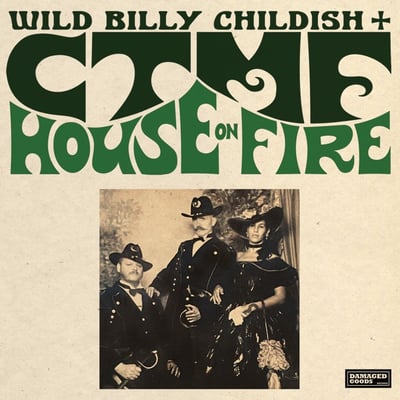
Wild Billy Childish & CTMF House On Fire
Released Mar 27, 2026 Damaged Goods Records
Consensus forming 3 professional reviews Updated Apr 6, 2026
Broadly positive consensus
Consensus is still forming across 3 professional reviews. Wild Billy Childish's House On Fire delivers a concentrated blast of emotional guitar intensity and raw garage-punk energy that reminds listeners why his prolific output still matters.
How ChoruScore worksCritics' Top Tracks
The songs critics returned to most
Bridge Burner
1 critic mention
“songs like "Bridge Burner," "Blues That Kills," and "Have You Seen the Devil,” — AllMusic
Blues That Kills
1 critic mention
“songs like "Bridge Burner," "Blues That Kills," and "Have You Seen the Devil,” — AllMusic
Have You Seen the Devil?
1 critic mention
“songs like "Bridge Burner," "Blues That Kills," and "Have You Seen the Devil,” — AllMusic
Full critic consensus
Wild Billy Childish's House On Fire delivers a concentrated blast of emotional guitar intensity and raw garage-punk energy that reminds listeners why his prolific output still matters. Across three professional reviews the record earned a 76.67/100 consensus score, and critics consistently point to a committed performance and a tight collaborative rhythm section that propels both frenzied rockers and folk-rooted detours.
Reviewers praise standout tracks such as “Bridge Burner”, “Blues That Kills” and “Have You Seen the Devil?” as high points, citing ripping six-string blare, a raw howl, and sustained emotional force. The collection balances punk immediacy with moments of folk tradition and a faithful freakbeat cover like the Yardbirds-tinged highlight that expands the album's range while keeping the punk core dominant. Critics agree the rhythm section's chemistry underpins the record, turning short, urgent songs into memorable bursts of attitude.
While some notes of roughness are inherent to the aesthetic, professional reviews frame those qualities as deliberate choices that reinforce authenticity rather than undermine it. In sum, House On Fire stands as a solid entry in Wild Billy Childish's catalog: not a reinvention, but a snarling, emotionally charged statement that offers several standout tracks and plenty of the unpolished energy longtime fans expect. Scroll down for full reviews and track-by-track impressions.
Track Ratings
How critics rated each track, relative to this album (0-100). Only tracks that made critics feel something are rated.
The Magpie's Flown
Shapes of Things
Bridge Burner
Trafalgar
Beneath Your Touch
Traces of You
Untitled
Keep Mojave Weird
Blues That Kills
House on Fire
Have You Seen the Devil?
A Surprise to You (No Surprise to Me)
The Rope Puller
Searching From the Losing Place
Get the next albums worth your time.
Critic-backed picks in one clean digest. No clutter.
What Critics Are Saying
Deep insights from 3 critics who reviewed this album

Critic's Take
Wild Billy Childish sounds as furious and committed as ever on House On Fire, and the best tracks show why he still matters. The ripping intensity of “Bridge Burner” and the raw howl of “Blues That Kills” capture the frenzy and six-string blare that define the album, while “Have You Seen the Devil?” carries that same emotional force. Imitation of classic freakbeat in the Yardbirds cover and moments like “The Magpie's Flown” show the record's range even as the punk core dominates.
Key Points
-
The best song is a furious rocker like "Bridge Burner" because it crystallizes Childish's six-string blare and emotional force.
-
The album's core strengths are relentless garage-punk energy paired with touches of folk and freakbeat that broaden its palette.

