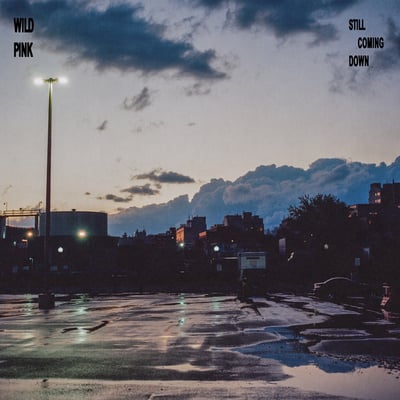
Wild Pink Still Coming Down
Released Aug 21, 2026 Fire Talk
Consensus forming 3 professional reviews Updated Oct 21, 2026
Mostly positive consensus
Consensus is still forming across 3 professional reviews. Wild Pink's Still Coming Down turns noisy guitars, melancholy, and oddball American detail into a record with flashes of real catharsis, though its measured pace can blunt the momentum.
How ChoruScore worksCritics' Top Tracks
The songs critics returned to most
Still Coming Down
1 critic mention
“You got a compass right where your heart is, you know what to do.” — Pitchfork
Plates Keep Spinning
2 critic mentions
“Plates Keep Spinning” offers brief respite from the monotony, with its mid-’70s Neil Young guitars and pleasing pedal steel,” — No Ripcord
Dead For A Sec
2 critic mentions
“MJ Lenderman’s contributes a wonderfully freewheeling Neil Young-influenced solo on “Dead For A Sec,” but it’s the highlight of an otherwise modest track,” — No Ripcord
Full critic consensus
Wild Pink's Still Coming Down turns noisy guitars, melancholy, and oddball American detail into a record with flashes of real catharsis, though its measured pace can blunt the momentum. The critical reception is mixed but leans favorable: the album earns a 68.67/100 consensus score across 3 professional reviews, with critics praising John Ross's specific, wry songwriting while questioning how often the arrangements settle into familiar mid-tempo rock.
The best songs on Still Coming Down make that push and pull vivid. “Like Water” pairs intimate feeling with pedal steel, while “Dead For A Sec” stands out for its freewheeling solo, clarinet color, and harmonic payoff. Critics also repeatedly singled out “Round Of Applause At The End Of The World”, a guitar-forward rocker sparked by Kennedy-assassination lore, and its blend of cultural detritus with contemporary American life. “Plates Keep Spinning” offers another highlight, its mid-’70s Neil Young-style guitars bringing welcome warmth. Across the record, Ross favors concrete scenes, domestic details, and wry observations over tidy polish, moving between loss, recovery, and small moments of connection.
Reviewers disagree most about the album's consistency. Some hear a concise, swaggering return to simplicity, where crunchy chords and personal declarations make the songs feel immediate; others find the heartland-indie-rock blend workmanlike, with plodding tempos and stretches that drift into a fuzzed-out comfort zone. That tension gives Still Coming Down its character: its strongest tracks are vivid and warmly unruly, even when the full collection doesn't sustain their urgency. The detailed reviews below explore where its noisy tenderness connects, and where it loses steam.
Track Ratings
How critics rated each track, relative to this album (0-100). Only tracks that made critics feel something are rated.
Box Store
Round Of Applause At The End Of The World
Still Coming Down
Plates Keep Spinning
Like Water
Simple
Dead For A Sec
500 Is The New 250
Relaxing, Special Interests
Get the next albums worth your time.
Critic-backed picks in one clean digest. No clutter.
What Critics Are Saying
Deep insights from 5 critics who reviewed this album

Critic's Take
Wild Pink are still crumbing their songs with the crushed detritus of American culture on Still Coming Down, and doing so with a weird combination of wit and guilelessness. The best songs on Still Coming Down find their small, distinct pleasures in melancholy pedal steel on “Like Water,” sweetie, some-DJ-should-sample-this clarinet on “Dead For A Sec,” and wailing fiddle on the title track. Ross doesn’t tend towards punch-the-air climaxes, just warm, excitable builds.
Key Points
-
The title track stands out for wailing fiddle and lyrics that find kindness in an ordinary traffic moment.
-
The album’s small, distinct pleasures come from its broader palette, terse literary writing, and warm, excitable builds.
Themes

Critic's Take
Wild Pink’s Still Coming Down is a concise, swaggering rock record that makes its case in short, urgent bursts. Patrick Gill hears John Ross leaning into simplicity and catharsis, with “Box Store”, “Like Water”, and “Round Of Applause At The End Of The World” standing out as the album’s best songs for how they marry crunchy chords with intimate declaration. Even when the LP risks settling into fuzzed-out convention, the hooks and moments of clarity keep the focus on songwriting and feel.
Key Points
-
The best song is notable for marrying crunchy chords with lyrical simplicity and emotional resolve.
-
The album’s core strengths are concise songwriting, big rock arrangements, and a focus on simplicity and catharsis.
Themes

Critic's Take
Wild Pink follow an invigorating record with a significant setback on Still Coming Down, where spritely hooks give way to a workmanlike fusion of heartland and indie rock. The best tracks on Still Coming Down offer brief respite: “Plates Keep Spinning” brings mid-’70s Neil Young guitars and pleasing pedal steel, while “Dead For A Sec” gets a wonderfully freewheeling solo. But the album settles back into its familiar comfort zone, then peters out into a haze of plodding mid-tempo rock. After a record as invigorating as the last one, that’s one hell of a comedown.
Key Points
-
“Plates Keep Spinning” is the best song discussed, offering respite with its mid-’70s Neil Young guitars and pleasing pedal steel.
-
The album’s big guitar textures and plodding mid-tempo heartland rock make its brief runtime feel excessive.
Themes
Am
Critic's Take
Wild Pink’s Still Coming Down is at once noisy and tender, and the best songs on the album prove why John Ross’s oddball specificity still cuts deep. The best tracks, especially “Round Of Applause At The End Of The World” and “500 Is The New 250”, balance raucous, guitar-forward arrangements with lines that land like punches. “Dead For A Sec” sneaks in as a highlight too, thanks to the deadpan duet and harmonic payoff. Across the record Ross trades perfection for honest commotion, and that choice makes the standout songs feel immediate and necessary.
Key Points
-
The best song is “Round Of Applause At The End Of The World” because of its memorable couplet and heartland-rock energy.
-
The album’s core strengths are Ross’s oddball, specific lyrics and a decision to trade pristine polish for loud, cathartic arrangements.
Themes

Critic's Take
Wild Pink’s Still Coming Down feels like John Ross turning the ordinary and the bizarre into vivid snapshots, and the best songs on the album - “Round Of Applause At The End Of The World” and “Box Store” - wear that weirdness proudly. Ross previews the knotty rocker “Round Of Applause At The End Of The World” with Kennedy-assassination inspiration, a track that brands the record with curiosity and momentum. Meanwhile “Box Store” and the slyly titled “500 Is The New 250” extend the album’s focus on modern American life, the rising cost of things, and domestic detail. The result is a nine-track collection that leans heavier, rooted in concrete scenes and oddball reference points, making those standout tracks the clearest answers to queries about the best tracks on Still Coming Down.
Key Points
-
The best song is “Round Of Applause At The End Of The World” because its knotty, Kennedy-assassination–inspired rocker frames the record’s curiosity and momentum.
-
The album’s strength is Ross’s vivid, detail-rich songwriting that turns ordinary American life and oddball references into a cohesive heavier-rock snapshot.