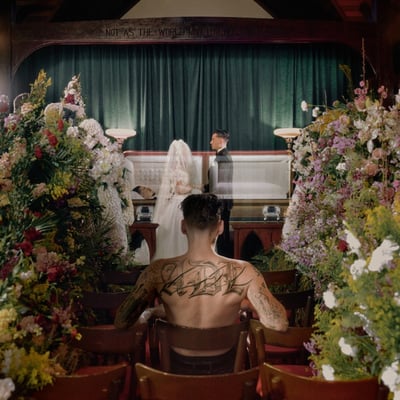
Yeat ADL
Released Mar 27, 2026 Lyfestyle Corporation/Field Trip Recordings/Capitol Records
Consensus forming 3 professional reviews Updated Apr 2, 2026
Mixed-to-negative consensus
Consensus is still forming across 3 professional reviews. Yeat's ADL opens as a production-forward spectacle that both dazzles and frustrates critics, and the consensus suggests a mixed verdict on whether the scale pays off.
How ChoruScore worksCritics' Top Tracks
The songs critics returned to most
Griddlë
3 critic mentions
“Griddlë,” with its cadet-march pulse, is one of the few moments that even gestures toward Yeat’s earlier sound” — Slant Magazine
2Nite
1 critic mention
“the explosive, stadium-worthy ‘2Nite’.” — Clash Music
My Time
1 critic mention
“the digital bounce of "My Time," the latter featuring Swizz Beatz’s trademark shouts and ad-libs.” — Rolling Stone
Full critic consensus
Yeat's ADL opens as a production-forward spectacle that both dazzles and frustrates critics, and the consensus suggests a mixed verdict on whether the scale pays off. Across three professional reviews, the record earned a 46.67/100 consensus score, with reviewers praising moments of clarity and melodic payoff while criticizing uneven songwriting and a loss of the eccentric personality that defined earlier work. Critics repeatedly point to clearer enunciation and maturity in Yeat's delivery on specific cuts, but they disagree about whether polish improves or neuters his voice.
Reviewers consistently single out “Griddlë”, “2Nite” and “My Time” as the standout tracks on ADL, citing hard-hitting bangers, stadium-sized hooks and gelatinous trap production as the record's strongest elements. Rolling Stone and Clash commend the album's momentum and spectacle, noting that production-driven sound and guest collaborations supply much of the album's heft. Slant Magazine, however, warns that glossy ambition often strips away the zany personality that made Yeat distinctive, labeling several cuts as surplus to requirement and pointing to inconsistent lyricism.
The critical consensus frames ADL as an experiment in excess - commercial experimentation and melodic rap influences push Yeat toward bigger, more polished textures, but inconsistency and occasional limp lyricism leave the double set feeling scattered. For readers asking whether ADL is worth listening to, the answer is conditional: its high points are genuinely compelling, yet the album's unevenness keeps it from a clean critical triumph. Below are full reviews that unpack where the record lands in Yeat's evolving catalog.
Track Ratings
How critics rated each track, relative to this album (0-100). Only tracks that made critics feel something are rated.
Purpose General
Face The Flamë
Lose Control
Griddlë
What I Want
Liv Likë Dis
Tallër
My Way
Let King Tonka Talk
Dangerous House
NO MORE GHOSTS
2Nite
Geek Luv
Naked
Went Wrong
Real Life Shit
My Time
2Planës
Silk Facë
Back Home
Up From Here
Get the next albums worth your time.
Critic-backed picks in one clean digest. No clutter.
What Critics Are Saying
Deep insights from 3 critics who reviewed this album

Critic's Take
In his brisk, observational cadence Mosi Reeves finds the best songs on ADL in the album’s hard-hitting bangers and sticky digital rolls, praising tracks like “Griddlë” and “My Time” as moments where Yeat’s clearer voice actually works to his advantage. Reeves writes with amused skepticism about guest turns and stunt casting but concedes that Yeat crafts “nice bangers” that showcase production and momentum. The review positions Yeat as a figure melding influences into something both beguiling and irritating, so the best tracks on ADL are those that embrace the trap hammers and gelatinous beats while letting Yeat’s vocal quirks carry the song.
Key Points
-
The best song is "Griddlë" because its trap hammers and production make it a clear standout.
-
The album’s core strengths are its production variety and Yeat’s vocal quirks, which turn shallow lyrics into compelling textures.
Themes

Critic's Take
Yeat has made ADL an event record that thrives on spectacle but falters in focus, and the best songs - like “Griddlë” and “2Nite” - are the ones that cut through the excess. At the same time he stresses that many tracks feel surplus to requirement, so the best tracks on ADL are those that offer genuine melodic or stadium-sized payoff rather than studio fun alone. Overall the album's highs are Alpine and immediate, but they are too scattered across a sprawling double set to make the whole consistently compelling.
Key Points
-
The best song, such as "2Nite", succeeds by delivering explosive, stadium-worthy payoff amid the album's excess.
Themes

Critic's Take
Yeat sounds buffed and ambitious on ADL, yet Paul Attard argues that the gloss often strips away the zany personality that made earlier songs compelling. He singles out “Griddlë” as one of the few moments gesturing toward Yeat's earlier sound, and praises “Naked” for its sticky, if juvenile, hook. At the same time, tracks like “Lose Control” and “Let King Tonka Talk” are described in withering terms, illustrating why the best songs on ADL are those that still let production carry Yeat rather than relying on his limp lyricism.
Key Points
-
The best song is best because production carries it back toward Yeat’s earlier chaotic energy.
-
The album’s core strength is polished, production-forward sound, but it sacrifices the artist’s off-kilter personality.