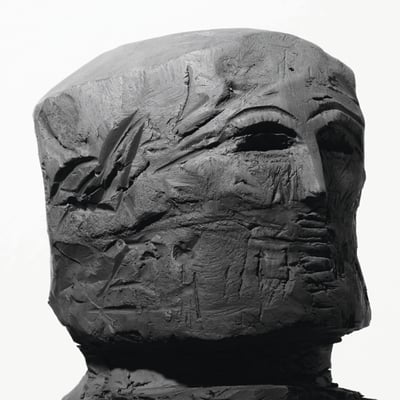
YHWH Nailgun Magazine
Released Jun 11, 2026 4AD
Established consensus 5 professional reviews Updated Oct 1, 2026
Broadly positive consensus
YHWH Nailgun's Magazine arrives as a compact manifesto of claustrophobic intensity, trading sprawling post-punk for short-form explosions that hit like ritual incantations.
How ChoruScore worksCritics' Top Tracks
The songs critics returned to most
Stillness Blues
3 critic mentions
“He is so intensely sibilant during "Stillness Blues" that his tone seems etched into flaking magnetic tape” — Pitchfork
Ghost of Love
3 critic mentions
“The longest track here, the opener, is barely a minute and a half” — The Line of Best Fit
Hips on a Wheel
2 critic mentions
“I’m a hangman, mama, but I love to breathe," he hilariously grunt-sings at the start of the mighty "Hips on a Wheel.” — Pitchfork
Full critic consensus
YHWH Nailgun's Magazine arrives as a compact manifesto of claustrophobic intensity, trading sprawling post-punk for short-form explosions that hit like ritual incantations. Across five professional reviews the record earned an 84/100 consensus score, and critics consistently point to a thrilling collision of mechanical electronics, abrasive vocals and haunting atmosphere that feels both prophetic and fiercely concise.
The critical consensus highlights a sonic collage where brevity becomes a strength: reviewers repeatedly praise “Ghost of Love”, “Stillness Blues” and “Innocent Sigh” as the album's clearest focal points, with “Hips on a Wheel” and “Give Blood” also singled out for their punch. Far Out Magazine calls “Stillness Blues” the standout for its concentrated punch, Pitchfork admires how “Ghost of Love” and “Hips on a Wheel” pack whole worlds into seconds, and The Line of Best Fit and DIY flag the opener “Ghost of Love” and the spectral “Innocent Sigh” as moments of eerie grandeur. Reviewers note a tension between vocal clarity and abrasion, and they praise the band’s concise songcraft for turning chaos into controlled assault.
Not all commentary is unqualified adulation - critics temper praise with observations about density and occasional overload - yet the prevailing view frames Magazine as a successful reinvention: a terse, inventive follow-up that sharpens YHWH Nailgun's industrial chaos into purposeful, memorable bursts. For anyone searching for a review of Magazine or wondering what the best songs on Magazine are, the consensus points to those named tracks as the record's most revealing and rewarding moments, and the collection merits close, repeated listens.
In short, the critical reception positions Magazine as a bruising, concise statement that solidifies YHWH Nailgun's post-punk reinvention while leaving space for debate about its relentless density.
Track Ratings
How critics rated each track, relative to this album (0-100). Only tracks that made critics feel something are rated.
Ghost of Love
Stillness Blues
Innocent Sigh
Hips on a Wheel
Ballerina
Give Blood
Magazine
Sewer Tree
Burns
To the Devil
Get the next albums worth your time.
Critic-backed picks in one clean digest. No clutter.
What Critics Are Saying
Deep insights from 5 critics who reviewed this album
Fa
Critic's Take
There is a thrilling, panicked energy running through YHWH Nailgun on Magazine, and the best tracks capture that in spades. The reviewer singles out “Stillness Blues” as the standout, praising its concentrated punch and inventive growl, while “Innocent Sigh” opens breathing space with elegiac, biting shards that let Pickard's percussion breathe. Equally, “Hips on a Wheel” keeps the seething howls intact and “Sewer Tree” reveals a streak of potent humour, so these are the best tracks on Magazine for listeners seeking the album's strange, galvanising core. The overall verdict frames the record as a concise, combustible sophomore that tightens their industrial racket without losing its abrasive heart.
Key Points
-
The best song is “Stillness Blues” because the review explicitly labels it the standout and praises its concentrated punch.
-
The album’s core strengths are concise, combustible industrial energy, inventive percussion, and a knack for blending severity with dark humour.
Themes

Critic's Take
YHWH Nailgun arrive on Magazine as punk mystics, and the best songs prove it: “Ghost of Love” and “Give Blood” feel like ritual pieces that crystallise the record's cold grandeur. The opener “Ghost of Love” and the spectral “Innocent Sigh” show how the band metamorphose from primitive grunts to mechanical clanging, while “Stillness Blues” drives with ray-gun electronic stabs that keep the ferocity front and centre. For listeners asking which are the best tracks on Magazine, these cuts stake the album's claim as original, prophetic punk without losing its bruising power.
Key Points
-
The best song is the opener "Ghost of Love" because it crystallises the album's shift from primitive thrash to cold, mechanical clanging.
-
The album's core strengths are its ghostly atmosphere, inventive electronics, and prophetic originality within punk.
Themes

Critic's Take
In his irreverent, zoomed-in style Grayson Haver Currin sees YHWH Nailgun’s Magazine as a structural marvel, praising compact highlights like “Ghost of Love” and “Hips on a Wheel” for packing worlds into seconds. He lingers on how “Ghost of Love” opens with a drums-down-the-hallway fade-in that makes the album feel like an ellipsis from 45 Pounds, and how “Hips on a Wheel” balances guitar growl and synth washes into a three-way counterpoint. The review reads like a guided dissection, noting the band’s move away from rototoms and celebrating songs that reveal themselves only if you sit with them. Ultimately Currin presents Magazine as a tremendous next step, a dense, short album whose best tracks reward close listening.
Key Points
-
The best song, particularly "Ghost of Love," is best for how its opener sets the album’s elliptical, idea-dense tone.
-
The album’s core strength is fitting structure and sophistication into very brief, idea-packed songs.
Themes

Critic's Take
YHWH Nailgun deliver on Magazine with shards of controlled chaos, and the review makes clear which moments cut deepest. The opener “Ghost of Love” registers as the longest, a rare breath in an album of rapid assaults, while the title track “Magazine” is a brief, violent punctuation that exemplifies the record's aesthetic. Matthew Kim writes with sardonic relish about how short blasts - like “Magazine” - smack you across the face, and he frames those hits as both repulsive and brilliant. For listeners searching for the best tracks on Magazine, the review singles out “Ghost of Love” and “Magazine” as the clearest focal points of the album's intent and impact.
Key Points
-
The best song is the title track “Magazine” because its brief, violent statement distills the album's aesthetic.
-
The album's core strength is its relentless short-form intensity that marries controlled production with anarchic noise.