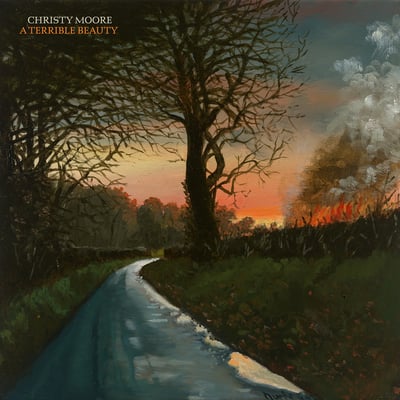
Christy Moore A Terrible Beauty
Released Nov 1, 2024 Universal Music Ireland Ltd.
Early read 2 professional reviews Updated Oct 2, 2026
Strong critical consensus
Early read based on 2 professional reviews. Christy Moore's A Terrible Beauty arrives as a morally charged collection where tenderness and protest sit side by side, and critics largely agree it succeeds.
How ChoruScore worksCritics' Top Tracks
The songs critics returned to most
Black & Amber
2 critic mentions
“Take the lead single, Black & Amber, written by A Lazarus Soul’s Briany Brannigan” — The Observer (UK)
Palestine
2 critic mentions
“Honour is paid to Ukraine on Mike Harding’s Sunflowers, to murdered journalist Lyra McKee and to Palestine” — The Observer (UK)
Sunflowers
2 critic mentions
“With a wistful piano for company, he movingly speaks Mike Harding’s poem ‘Sunflowers” — Hot Press
Full critic consensus
Christy Moore's A Terrible Beauty arrives as a morally charged collection where tenderness and protest sit side by side, and critics largely agree it succeeds. Across professional reviews the record earned an 85/100 consensus score from two aggregated reviews, with reviewers praising Moore's spare arrangements and the moral weight carried by songs such as “Black & Amber”, “Sunflowers” and “Palestine”.
Critics consistently point to vocal intimacy and narrative detail as the album's strongest assets. Hot Press highlights “Palestine” and “Sunflowers” for transforming covers and topical odes into elegiac statements, while KLOF Mag and The Observer single out “Black & Amber” and “Boy in The Wild” as the emotional centrepieces. Reviewers note recurring themes of tragedy, remembrance, homelessness and social injustice, and praise Moore's capacity to marry political commentary with traditional songwriting without grandstanding. Several accounts emphasize acapella and sparsely scored moments - particularly “Black & Amber” and “Snowflakes” - where Moore's delivery alone lends authority.
There is some nuance in the reception: At The Barrier praises the album's first half as among his strongest work while finding the latter side less essential, so the consensus reads as high praise tempered by selectivity over pacing. Overall the critical consensus suggests A Terrible Beauty is worth seeking out for those looking for the best songs on the record, especially “Black & Amber”, “Sunflowers” and “Palestine”. The following reviews unpack how these standout tracks and their themes of loss, empathy and protest secure the album's place in Moore's late-career canon.
Track Ratings
How critics rated each track, relative to this album (0-100). Only tracks that made critics feel something are rated.
Boy in The Wild
Sunflowers
Black & Amber
Lemon Sevens
Broomielaw
Cumann na Mná
The Rock
The Life and Soul
Lyra McKee
Darkness Before Dawn
The Big Marquee
Palestine
Snowflakes
Get the next albums worth your time.
Critic-backed picks in one clean digest. No clutter.
What Critics Are Saying
Deep insights from 4 critics who reviewed this album
Ho
Critic's Take
Christy Moore does not sugarcoat here; on A Terrible Beauty his best songs are the ones that carry moral weight and human detail, notably “Palestine” and “Sunflowers”. Hayden’s voice — patient, clear-eyed and elegiac in the original review — singles out “Palestine” as a chief example of Moore making a cover his own, and praises “Sunflowers” for its wistful plea for optimism. The narrative lingers on acapella moments like “Black & Amber” and “Snowflakes” where Christy’s voice alone is declared enough. If you search for the best songs on A Terrible Beauty, look to those tracks that pair restraint with moral insistence, because they are where the album’s power resides.
Key Points
-
The best song is "Palestine" because Moore makes the cover his own and it crystallises the album's political potency.
-
The album's core strength is its unflinching witness to tragedy, delivered through sparse arrangements and Christy’s voice.
Themes
Th
Critic's Take
Neil Spencer writes with affection and authority about Christy Moore's A Terrible Beauty, singling out “Black & Amber” for its lilting, devastating tale and noting tributes like “Sunflowers” and “Lyra McKee” that anchor the album's political conscience. The review frames the album as work from a 79-year-old national treasure still capable of transforming sharp material with spare arrangements and uncanny narrative skills.
Key Points
-
Black & Amber is best for its spare, lilting delivery that animates a harrowing story.

Critic's Take
Christy Moore in A Terrible Beauty is at his most affecting on tracks like “Boy In The Wild” and “Sunflowers”, the former opening with Moore's low, ember-like voice and the latter delivering a chilling ode to Ukraine. The reviewer hears Moore's peculiar instrument swinging between razor and feather, and praises the centrepieces - the intimate “Boy In The Wild” and the stark “Sunflowers” - as the best tracks on A Terrible Beauty. Side one, especially the first five songs, is declared as strong as anything in his catalogue, while the record's flip is judged weaker and occasionally dispensable. Overall the album is a potent mix of political weight and traditional tenderness, with those standout tracks making it worth seeking out.
Key Points
-
The best song is "Boy In The Wild" for its gorgeous low-register delivery and emotional weight.
Themes
KL
Critic's Take
In his characteristically measured, quietly passionate voice Dave McNally argues that Christy Moore's A Terrible Beauty still finds its power in tenderness and political urgency. He lingers over tracks like “Boy in The Wild” and “Black & Amber”, noting how intimate vocals and spare arrangements make those songs the best tracks on A Terrible Beauty. The review foregrounds Christy’s ability to marry protest and compassion, so the best songs - particularly “Boy in The Wild” and “Black & Amber” - land as both personal and political statements. McNally’s steady, appreciative tone insists this is as good as anything Christy has done before, sustained by empathy rather than grandstanding.
Key Points
-
The best song, "Boy in The Wild", is best for its tender vocal, hushed piano, and emotional father-son lyric.
-
The album's core strengths are its empathy, political commitment, and tasteful, understated arrangements.