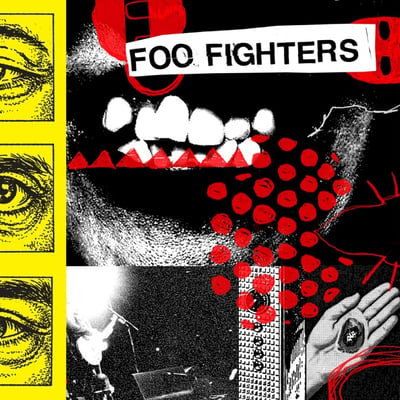
Foo Fighters Your Favorite Toy
Released Apr 24, 2026 RCA Records Label
Established consensus 19 professional reviews Updated Oct 1, 2026
Broadly positive consensus
Foo Fighters's Your Favorite Toy arrives as a bruised, high-voltage return that channels grief and defiant joy into blunt, guitar-driven rock.
How ChoruScore worksCritics' Top Tracks
The songs critics returned to most
Spit Shine
12 critic mentions
“But perhaps best of all is the berserk 'Spit Shine', which mixes drill-like guitar with stuttering drums” — Hot Press
Caught In The Echo
11 critic mentions
“Caught In The Echo’ kicks off the album with a quintessential Foo Fighters guitar riff and tone” — Clash Music
Your Favorite Toy
11 critic mentions
“The title track and single ‘Your Favorite Toy’, which Grohl credits as being “the key that unlocked the tone and energetic direction” — Clash Music
Full critic consensus
Foo Fighters's Your Favorite Toy arrives as a bruised, high-voltage return that channels grief and defiant joy into blunt, guitar-driven rock. Across professional reviews, critics point to a renewed sense of urgency and catharsis, and the record's best songs repeatedly foreground that tension: “Caught In The Echo”, “Your Favorite Toy” and “Of All People” emerge as the most-discussed highlights, while “Spit Shine” and “Asking For A Friend” earn frequent praise for their venomous riffs and stadium-sized payoff. The consensus suggests the band has recommitted to a raw, live-sounding approach that trades studio polish for punch and immediacy.
Critical consensus lands at a 74.58/100 across 19 professional reviews, reflecting mostly favorable reactions tempered by recurring notes about formulaic moments and lyrical thinness. Reviewers consistently celebrate the record's percussive drive, punk-tinged energy and moments of honest self-examination - critics name survivor guilt, fame and ego, and resilience as central themes - but some also call out midtempo tracks that drift into familiar padding. When the Foos lean into ferocity and concise songwriting, critics agree the songs feel revitalised; when the band settles into arena-rock comfort, reviews grow more mixed.
Taken together, the professional reviews frame Your Favorite Toy as a return-to-basics statement that balances melancholy and hope. For readers searching for a clear verdict on whether Your Favorite Toy is good, the record's critical reception and standout tracks point to a mostly successful, cathartic chapter in Foo Fighters' catalog - one that rewards repeated listens when you follow the highs highlighted by critics and the raw immediacy that defines the album's strongest moments.
Track Ratings
How critics rated each track, relative to this album (0-100). Only tracks that made critics feel something are rated.
Caught In The Echo
Of All People
Window
Your Favorite Toy
If You Only Knew
Spit Shine
Unconditional
Child Actor
Amen, Caveman
Asking For A Friend
Get the next albums worth your time.
Critic-backed picks in one clean digest. No clutter.
What Critics Are Saying
Deep insights from 19 critics who reviewed this album
Ho
Critic's Take
Foo Fighters sound like they mean it again on Your Favorite Toy, cranking the amps up to 11 and unleashing electrifying rockers. The reviewer's delight is evident in how “Caught In The Echo” arrives as a serious statement of intent and how “Spit Shine” is called the album's berserk best, mixing drill-like guitar with stuttering drums. Lesser but vital highlights include “Window” and “If You Only Knew”, each bringing different flavours of frenzied riffing. Overall the record is addictive and easily one of the albums of the year, a high-octane return that still finds room for moody moments like “Unconditional” and “Child Actor”.
Key Points
-
‘Spit Shine’ stands out as the album's fiercest and most inventive rocker, mixing drill-like guitars with stuttering drums.
-
The album's core strengths are high-octane, guitar-driven tracks balanced with moody, introspective moments for replay value.
Themes
Cl
Critic's Take
Foo Fighters sound revitalised on Your Favorite Toy, and the best songs here - notably “Caught In The Echo” and “Window” - push that post-grunge roar with rare melodic care. Beaumont writes with impatient relish, calling opener “Caught In The Echo” an instant Foos classic and praising “Window” as a gorgeous, casual indie-rock interlude that still hits hard. He frames “If You Only Knew” and “Unconditional” as further high points, country-blues and canyon-rock moments that underline Grohl's knack for turning private turbulence into thrilling, full-throttle rock. The review keeps its focus on the songs that make the album feel like a reaffirmation of the band’s core strengths rather than a confessional outpouring.
Key Points
-
Opener “Caught In The Echo” is the album's standout, an instant Foos classic with climactic delivery.
-
The album's core strength is revitalised post-grunge power that channels personal turmoil into aggressive, melodic rock.
Themes

Critic's Take
Foo Fighters’s Your Favorite Toy finds its best tracks in candid moments of reckoning, especially “Your Favorite Toy” and “Amen, Caveman”, where Grohl’s confessions sit atop the band’s familiar alt-rock muscle. The record leans on short, punchy songs that let lyrics do the heavy lifting - the title track makes the internal battle explicit and “Amen, Caveman” roars as an album highlight. Also notable are quieter reckonings like “Child Actor” and “Of All People” that expose survivor guilt and insecurity while fitting snugly into Foo Fighters’ signature sound.
Key Points
-
Amen, Caveman stands out as a roaring album highlight where Grohl surveys the wreckage with real intensity.
-
The album’s core strength is candid self-examination delivered through familiar Foo Fighters rock dynamics.
Themes

Critic's Take
There’s a giddy relish to Foo Fighters on Your Favorite Toy, where the best tracks - notably “Caught In The Echo” and “Asking For A Friend” - favour lean, full-throttle riffs and singalong payoff. Sarah Jamieson’s prose leans on the band’s touring muscle, noting how the first half channels punk urgency while the back half returns to widescreen stadium drama. She praises the album’s rawness and brevity, calling it a thrilling, white-knuckle ride even when a few lyrics feel repetitive. The result reads as fun, immediate and played with conviction, answering questions about the best songs on Your Favorite Toy by pointing to its loudest, most satisfying moments.
Key Points
-
The best song moments are the short, adrenaline-fuelled tracks like "Caught In The Echo" that deliver full-throttle riffs and singalong payoff.
-
The album’s core strengths are its raw energy, concise runtime, and the balance between punk immediacy and widescreen stadium moments.
Themes

Critic's Take
Foo Fighters sound brisk and no-nonsense on Your Favorite Toy, an album that wears its back-to-basics mission on its sleeve while delivering crowd-pleasing hooks. The reviewer's voice favors punchy, descriptive lines, so the best songs - “Caught In The Echo”, “Of All People” and “Your Favorite Toy” - read as the clearest highlights, from full-throttle openers to caustic, emotional outbursts. Grohl's ragged howl and the band’s crunchy riffs make “Caught In The Echo” and “Of All People” feel potent and unexpectedly fun, while the title track supplies singalong moments that stick. Closing cuts like “Asking For A Friend” bring the stadium-sized catharsis that frames the record as one of their best back-to-basics efforts.
Key Points
-
The opener “Caught In The Echo” is best for its full-throttle delivery and Grohl's ragged howl.
-
The album's core strengths are concise, anthemic songwriting, nostalgic alt-rock textures, and stadium-ready catharsis.
Themes

Critic's Take
Foo Fighters make a bracing case on Your Favorite Toy, where the best tracks - notably “Caught In The Echo” and “Of All People” - thrust the band into euphoric, furious territory. Loftin’s prose insists the record is both a reckoning and a rediscovery, and he leans on the ecstatic surge of “Caught In The Echo” to show what life remains in the 30-year-old beast. He frames “Of All People” as proof this is no momentary burst, a vicious, youthful bite that oozes resentment rather than resolving it. The review keeps a measured awe throughout, landing on the idea that Foo Fighters have reclaimed a playful, unhinged edge without merely retreading past triumphs.
Key Points
-
“Caught In The Echo” is best for its bursting, euphoric energy that signals the band’s renewed life.
-
The album’s core strengths are its balance of grief-fueled reckoning and playful, unhinged rock that nods to the past while moving forward.
Themes

Critic's Take
Foo Fighters return with Your Favorite Toy, a bracing, candid record where Grohl scrubs at his own contradictions and finds strange clarity. The reviewer's voice revels in the album's bluntness - tracks like “Caught In The Echo” and “Your Favorite Toy” deliver self-directed barbs, while “Window” channels Seattle grit with real bite. There is tenderness too: “Child Actor” pleads for validation to stop, turning a personal crisis into powerful songwriting. Overall this is a tremendous, back-to-basics record whose best songs cut deepest because they are unafraid to name what hurts.
Key Points
-
The title track is best for its brutal self-critique and mocking lyrics that expose the destructive side of fame.
-
The album's core strength is candid, emotionally direct songwriting that turns personal turmoil into powerful rock moments.
Themes

Critic's Take
Foo Fighters reconceive grief as full-throttle release on Your Favorite Toy, and the best songs like “Caught In The Echo” and “Of All People” make that case with punishing riffs and surprising tenderness. Jon Dolan’s tone is punchy and vivid, praising how “Caught In The Echo” bangs with a punk-torpedo riff and how “Of All People” turns an Eighties L.A.-punk figure into a poignant two-and-a-half-minute ripper. The record’s centerpiece “Asking For A Friend” is singled out as the emotional summation, moving from power-ballad calm to a hopeful, racing close. This is rock that hits hard and keeps you coming back, so searches for the best tracks on Your Favorite Toy will point to these immediate standouts.
Key Points
-
The best song is "Asking For A Friend" because it serves as the album’s emotional centerpiece, resolving grief into hopeful momentum.
-
The album’s core strength is high-energy garage-rock catharsis that turns personal grief into propulsive, catchy alt-rock anthems.
Themes

Critic's Take
Foo Fighters sound defiantly themselves on Your Favorite Toy, a return-to-form record that rides big riffs and shouted choruses. The reviewer's voice revels in the immediacy of tracks like “Caught In The Echo” and the title single “Your Favorite Toy”, noting how groove and tone unlock the album's direction. There is room for quieter reflection too, with “Unconditional” and “Child Actor” supplying genuine emotional weight amid the racket. By the close, the lead single “Asking For A Friend” cements the album's highs with a memorable build and cathartic scream, making it one of the best tracks on Your Favorite Toy.
Key Points
-
The best song, "Asking For A Friend", is the record's highlight due to its build, melodies and cathartic finale.
-
The album's core strengths are its return-to-form guitar tone, big choruses and a mix of raucous energy with intimate reflection.
Themes


Critic's Take
Every so often Grant Sharples writes with a weary clarity, and that tone carries through his take on Foo Fighters and Your Favorite Toy. He finds a few redeeming moments — “Window” and “Child Actor” — where chugging riffs and sincere vocals peek through the autopilot, but mostly this is paint-by-numbers arena rock that feels like filler between hits.
Key Points
-
The best song is "Window" for its memorable riffs that momentarily transcend the album's formula.
-
The album's core strength is competent musicianship, but it is weakened by generic production and vague lyrics.
Themes
Cl
Critic's Take
Foo Fighters sound like a band clawing their way back on Your Favorite Toy, bloody and eager, and the best songs are the ones that bare the teeth. Opener “Caught In The Echo” sets the tone, loose and cathartic, while the title cut “Your Favorite Toy” is a bruising, giddy highlight that pushes Dave into a rasping, taunting yowl. There is sting in “Spit Shine” too, its spiralling riffs recalling the frayed energy of their debut, but some midtempo tracks drift into familiar padding. Overall the best tracks on Your Favorite Toy win by force of urgency and rawness, songs that make the band sound hungry again rather than comfortable.
Key Points
-
The title track is best for its bruising groove and Dave Grohl’s rasping, accelerated delivery.
-
The album’s core strength is its raw, back-to-basics energy that makes the band sound hungry and live.
Themes

Critic's Take
Foo Fighters sound uncannily like their early self on Your Favorite Toy, and the best tracks — especially “Your Favorite Toy” and “Of All People” — bristle with exposed-nerve punk energy. Joe Goggins writes in clipped, analytical bursts that celebrate riff-driven swagger and thunderous percussion, noting how songs like “Spit Shine” and “Amen, Caveman” haul the listener along at breakneck pace. He balances admiration for the raw roar with frankness about thin lyricism, yet singles out “Child Actor” as a revealing, unflinching moment of self-examination. The review positions these best songs as proof that fast, loud, no-frills punk still suits the band better than middle-of-the-road dad-rock.
Key Points
-
The title track is best because its riff-driven swagger crystallizes the album’s returned punk energy.
-
The album’s core strength is thunderous, percussion-led, fast and loud no-frills punk that recalls the band’s earliest work.
Themes
mu

Th
Critic's Take
Tom Carr finds Foo Fighters' Your Favorite Toy bruised and reflective, a record that processes loss with steady, forensic attention; the album reads as adjustment and memory rather than reinvention, where mood and nuance create the most resonant moments.
Key Points
-
No specific tracks are discussed in the review, so the best song cannot be identified from this text.
-
The album's core strength is its processing of grief and transition, carried in mood and nuance.
Themes
Fa
Critic's Take
Foo Fighters on Your Favorite Toy feel like a band locked into a familiar groove, delivering the best moments when they lean into anger and grit rather than nostalgia. The review points to “Spit Shine” as the album standout, a twisting, post-punky eruption where Grohl snarls and the new rhythm feels urgent. Other tracks such as “Caught In The Echo” and “Of All People” demonstrate Ilan Rubin's thunderous drumming, but they often land in the same predictable territory the Foos have occupied for decades. Overall, the best songs on Your Favorite Toy are those that push ferocity over comfort, with “Spit Shine” leading the pack.
Key Points
-
Spit Shine is best because it channels renewed ferocity and a post-punky edge that showcases Grohl's snarling delivery.
-
The album's core strength is its raw, stadium-ready grit and a tighter rhythm section thanks to Ilan Rubin, but it is held back by predictability and nostalgia.

Critic's Take
Foo Fighters sound reinvigorated on Your Favorite Toy, but the record's best songs - “Your Favorite Toy” and “If You Only Knew” - are fleeting bright spots in a largely monotonous set. Richie Assaly's voice here is blunt and slightly sardonic, noting crisp drumming and moments where the band flirts with punk and prog-metal, yet he keeps returning to the album's tendency to retreat to a familiar, clamorous centre. The title track's crunchy, dance-y rush and the plainspoken hook of “If You Only Knew” are what make them the best tracks on Your Favorite Toy, because they briefly break the pattern.
Key Points
-
The title track is best for its crunchy, dance-y energy and live appeal.
-
The album's core strength is short bursts of reinvigorated, high-energy rock amid otherwise monotonous maximalism.