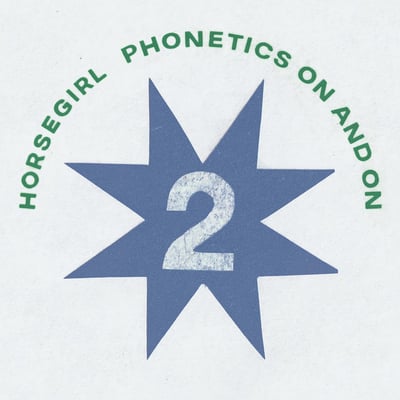
Horsegirl Phonetics On And On
Released Feb 14, 2025 Matador
Established consensus 14 professional reviews Updated Oct 15, 2026
Broadly positive consensus
Horsegirl's Phonetics On And On finds the trio trading dense garage rock for spare, playful guitar pop, a change that earns warm critical approval without convincing every reviewer it amounts to a full reinvention.
How ChoruScore worksCritics' Top Tracks
The songs critics returned to most
Sport Meets Sound
1 critic mention
“Sport Meets Sound,” featuring a head-nodding tempo dropping off staggering drums and spurts of guitar prowess” — Glide Magazine
In Twos
3 critic mentions
“On ‘In Twos’, she rudimentarily plucks away at it, adding scratchy stabs to the drifting, gentle song.” — New Musical Express (NME)
Well I Know You're Shy
1 critic mention
“Moments like “Julie” and “Well I Know You’re Shy” capture the moodiness of grunge and the whimsy of pop with an accent of slowcore” — Glide Magazine
Full critic consensus
Horsegirl's Phonetics On And On finds the trio trading dense garage rock for spare, playful guitar pop, a change that earns warm critical approval without convincing every reviewer it amounts to a full reinvention. Across 14 professional reviews, the album holds a 79.29/100 consensus score. Critics praise its glistening guitars, chiming harmonies and lighter touch, while noting how the band’s minimalism leaves space for subtle experimentation and diary-like writing. The result feels curious and open-hearted, with nostalgia for indie-rock sounds balanced by a developing sense of Horsegirl’s own identity.
The best songs on Phonetics On And On often make a virtue of simplicity. “2468” emerges as a standout, its playful, shape-shifting tongue-twister drawing praise from multiple critics; “Where'd You Go?” pairs a jittery groove with an easy, memorable charm. Reviewers also point to “In Twos” for its unpretentious, back-to-basics spirit and willingness to take a different path. Elsewhere, “Julie” and “Well I Know You're Shy” show the trio bringing melody and whimsy to more reflective or moodier material.
The critical consensus is favorable but not unreserved. Some critics hear an affectionate pastiche that delivers flashes of brilliance rather than sustained momentum, while others celebrate a daring step toward minimalistic pop, shaped by empathy, fanciful harmonies and creative growth. That tension makes the album’s modest scale part of its appeal: it favors small turns in rhythm, sound and feeling over grand gestures. For listeners curious about Horsegirl’s evolving songwriting, the reviews below trace both the record’s quiet pleasures and its limits.
Track Ratings
How critics rated each track, relative to this album (0-100). Only tracks that made critics feel something are rated.
Where'd You Go?
Rock City
In Twos
2468
Well I Know You're Shy
Julie
Switch Over
Information Content
Frontrunner
Sport Meets Sound
I Can't Stand To See You
Get the next albums worth your time.
Critic-backed picks in one clean digest. No clutter.
What Critics Are Saying
Deep insights from 14 critics who reviewed this album


Critic's Take
Horsegirl continue to grow on Phonetics On And On, where the best songs like “Where'd You Go?” and “2468” show charming, playful songwriting and confident hooks. The record often trades on an approachable cool-girl detachment, but tracks such as “In Twos” and “Julie” push the band into riskier, interesting territory. The songwriting feels diary-like, balancing cheeriness and lethargy, which makes the best tracks on Phonetics On And On feel both immediate and lived-in.
Key Points
-
The best song, "Where'd You Go?", succeeds with intertwined vocals, playful surfy instrumentation, and charming vocables.
-
The album’s core strengths are well-crafted indie-rock songwriting and tasteful, subtle experimentation (violin, Gamelan bells, organ).
Themes

Critic's Take
Horsegirl strip back the words on Phonetics On And On to bundles of phonetics, bringing a lighter and more playful touch, even when the lines around them are heavy with gravitas. On “Julie”, the staccato refrain adds chiming levity, while “2468” becomes a hypnotic tongue-twister as it changes speed. The best songs on Phonetics On And On leave room for experimentation, too: “In Twos” works because of its lack of pretensions and back-to-basics spirit.
Key Points
-
“In Twos” earns its place among the best songs through scratchy violin and a drifting, gentle sound that works without pretension.
-
The album’s core strengths are its back-to-basics minimalism, playful phonetic refrains, and room for experimentation.
Themes


Critic's Take
Horsegirl’s Phonetics On and On rarely misses, trading dense garage rock for lighthearted empathy, glistening guitar tones, and soaring pop harmonies. The best songs on Phonetics On and On, especially “Julie” and “2468,” are fantastically spellbinding examples of the trio’s refreshing take on minimalistic pop. “Well I Know You’re Shy” captures the moodiness of grunge and the whimsy of pop, while “Sport Meets Sound” finds the band dropping off staggering drums and spurts of guitar prowess. The highs make it all worthwhile: this is a daring second album, with infectious melodies and fanciful harmonies dancing around glimmering acoustics and cinematic strings.
Key Points
-
“Julie” is a standout for its spellbinding minimalistic pop and its balance of grunge moodiness, pop whimsy, and slowcore.
-
The album’s core strengths are its imaginative melodies, swelling strings, and a fearless move toward glistening pop harmonies.
Themes


Critic's Take
Horsegirl keep things spare and immediate on Phonetics On And On, favoring playful, low-stakes guitar pop that sometimes clicks. The reviewer’s voice lands on jaunty moments like “2468” and the jittery groove of “Where'd You Go?” as the album's best songs, while noting the band’s pastiche of the sounds of the past. There is concrete charm in “Rock City” and “Switch Over” with their shambling instrumentals and whimsical harmonies, but the record rarely ignites beyond flashes. The critique remains affectionate and measured, pointing to occasional brilliance rather than wholesale reinvention.
Key Points
-
Frontrunner is the emotional standout thanks to its twang and developing romantic yearning.
-
The album’s strengths are playful immediacy and charming, low-stakes guitar pop rooted in nostalgia.
Themes
