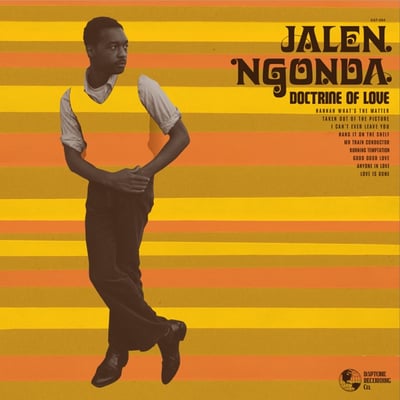
Jalen Ngonda Doctrine of Love
Released Jun 5, 2026 DAPTONE RECORDS
Established consensus 9 professional reviews Updated Oct 1, 2026
Broadly positive consensus
Jalen Ngonda's Doctrine of Love channels 1960s and 1970s soul with a modern sheen, and the critical consensus suggests it's a warmly convincing entry in the retro-soul revival.
How ChoruScore worksCritics' Top Tracks
The songs critics returned to most
Anyone In Love
5 critic mentions
“opening track 'Anyone In Love' pulls a chair from the table and invites you to sit back” — DIY Magazine
I Can't Ever Leave You
3 critic mentions
“I Can’t Ever Leave You is more adventurous, with its fanfaring horns and twisting guitar solo” — The Skinny
Hang It On The Shelf
2 critic mentions
“Hang It On the Shelf soars to the album’s most feel-good chorus” — The Skinny
Full critic consensus
Jalen Ngonda's Doctrine of Love channels 1960s and 1970s soul with a modern sheen, and the critical consensus suggests it's a warmly convincing entry in the retro-soul revival. Across nine professional reviews the record earned a 77.78/100 consensus score, with critics repeatedly praising Ngonda's vocal command, sophisticated arrangements and the album's warm lyricism. Highlights named most often include “Anyone In Love”, “I Can't Ever Leave You” and “Good Good Love”, each cited for their immediacy and melodic craft.
Reviewers agree that the production and vintage aesthetic are central to the album's appeal. Critics consistently point to gospel and doo-wop elements, Motown-inflected grooves and rock 'n' roll propulsion as the scaffolding for Ngonda's songwriting, while tracks like “Hang It On The Shelf” and the title song “Doctrine of Love” are singled out as emotional and stylistic high points. Praise centers on the record's live-performance intimacy and tight harmonies, with several reviews calling out the danceable classic sound and the meticulous arrangements that make the best songs on Doctrine of Love feel both timeless and immediate.
Yet the coverage is not without reservation. Some critics admire the craftsmanship while questioning lyrical depth in places, and a few reviews frame the album as faithful homage rather than a radical reinvention. Overall the consensus suggests that Doctrine of Love is worth hearing for its standout tracks, vocal prowess and the pleasure of hearing vintage soul rendered with contemporary polish, setting the stage for deeper examination in the full reviews below.
Track Ratings
How critics rated each track, relative to this album (0-100). Only tracks that made critics feel something are rated.
Anyone In Love
Doctrine of Love
Mr. Train Conductor
Burning Temptation
Love is Gone
I Can't Ever Leave You
Hannah, What's the Matter?
Good Good Love
Hang It On The Shelf
Taken Out of The Picture
Get the next albums worth your time.
Critic-backed picks in one clean digest. No clutter.
What Critics Are Saying
Deep insights from 10 critics who reviewed this album

Critic's Take
Jalen Ngonda’s Doctrine of Love is presented as a soulful triumph, and the review makes clear which are the best songs on Doctrine of Love. The writer singles out “Mr. Train Conductor” for its harmonies and rhythm section, and praises “Burning Temptation” as a soaring Motown-infused highlight. He also notes the smooth balladry of “Love Is Gone” and the doo-wop charm of “Good Good Love”, explaining why these tracks stand out on the record. The tone is exuberant and admiring, emphasizing craftsmanship, vintage influences, and songs that make you want to play the album again.
Key Points
-
“Mr. Train Conductor” is best for its harmonies and compelling rhythm section, exemplifying the album’s peak soul moments.
-
The album’s core strengths are vintage Motown/Stax influences, immaculate production and vocals, and varied stylistic touches that keep it fresh.
Themes

Critic's Take
Jalen Ngonda sustains the honeyed calm of his debut on Doctrine of Love, and the best tracks on Doctrine of Love are those that let his voice and vintage soul arrangements breathe. From the opening comfort of “Anyone In Love” to the album-wide warm lyricism, the record asks you to sit back, take a deep breath and unwind. Frankie Austick’s tone is admiring and gently celebratory, noting that each track stands as a stellar body of work while Ngonda’s storytelling and soul-touching demeanour keep the listener intoxicated. For listeners searching for the best songs on Doctrine of Love, start with “Anyone In Love” and move through the album as if attending a live performance - sway, smile and relish the moment.
Key Points
-
The best song is "Anyone In Love" because it immediately establishes the album’s soothing, soulful atmosphere and Ngonda’s spellbinding voice.
-
The album’s core strengths are warm, witty lyricism, vintage Motown-rooted arrangements, and an intimate live-performance feel.
Themes

Critic's Take
Jalen Ngonda leans deep into the past on Doctrine of Love, and the reviewer's ear keeps returning to the album's warm standouts. Equally notable are “Burning Temptation” for its rolling neo-Motown groove and “Taken Out of The Picture” for its wrenching final-register plea. Together these tracks demonstrate Ngonda's careful production choices and emotional clarity across the record.
Key Points
-
The best song, “Anyone In Love”, sets the album's Delfonics-inflected tone with graceful, aching vocals.
-
Doctrine of Love's core strengths are its vintage arrangements, concise production, and emotionally clear vocal performances.
Themes

Critic's Take
Jalen Ngonda’s Doctrine Of Love feels like a love letter to classic soul and the best songs on Doctrine of Love - notably “Anyone In Love” and “Doctrine Of Love” - show him at his most magnetic, falsetto and arrangement perfectly aligned. The record keeps itself succinct and every note counts, while tracks such as “Love Is Gone” and “I Can’t Ever Leave You” underline his songwriting growth and emotional punch. There is an assured veracity to his voice and craft throughout, which makes the best tracks on Doctrine Of Love feel both timeless and immediate.
Key Points
-
“Anyone In Love” is best for its feather-soft arrangement and Jalen’s controlled falsetto.
-
The album’s core strength is timeless songwriting that blends vintage soul references with modern craft.
Themes

Critic's Take
In her warm, attentive voice Zoë White finds the best songs on Doctrine of Love in those that marry vintage reverence with irresistible hooks. Jalen Ngonda opens assuredly with “Anyone In Love”, a string-brushed opener, while the title track “Doctrine of Love” serves as a solemn, minor-key sermon that underpins the record. The sunny bounce of “Mr. Train Conductor” and the piano-studded joy of “Good Good Love” are called out as spirit-lifting moments, and the album’s high point is the feel-good chorus of “Hang It On The Shelf”, which the reviewer routes listeners toward as one of the best tracks on the album.
Key Points
-
Hang It On The Shelf is the album’s standout due to its soaring, feel-good chorus.
-
Doctrine of Love’s strengths are warm, vintage production and memorable, reverent melodies.
Themes


Critic's Take
Jalen Ngonda carries forward the warmth of his debut on Doctrine of Love, and the best songs on Doctrine of Love prove why. The stellar “Anyone In Love” arrives as a clear crowd-pleaser, while “Mr. “Hannah, What's the Matter?” is called out as a sumptuous advert for his vocal range, and these highlights show how his craft, musicianship and production make the record smooth, impeccable and often exhilarating.
Key Points
-
“Anyone In Love” is best because it was the standout lead single that reignited interest in his career.
-
The album’s core strengths are Ngonda’s vocal charm, high-quality production, and fusion of classic soul with 60s rock influences.
Themes

Ho
Critic's Take
Jalen Ngonda wears his love of 1960s soul on his sleeve across Doctrine of Love, and the reviewer hears that template most clearly in the title song and in “Burning Temptation”. The tone is admiring of the musicianship and slick production but guarded about lyrical depth, noting the title track’s motivational-speak lines as emblematic rather than wholly convincing. If you are searching for the best songs on Doctrine of Love, the review steers you to the title track and “Burning Temptation” as the clearest highlights, while suggesting the record rarely truly thrills beyond faithful genre homage.
Key Points
-
The title track is the clearest highlight because it encapsulates the album’s Motown homage and lyrical shortcomings.
-
The album’s core strengths are vintage soul styling, strong musicianship and slick production, offset by limited lyrical flair.
Sh
Critic's Take
Jalen Ngonda sings with a sensuous, raw command on Doctrine of Love, and the title track “Doctrine of Love” emerges as the album’s centerpiece, preaching the gospel of love with full-bodied vintage soul. Elsewhere, the record’s atmosphere and Ngonda’s vocal heft make “I Can't Ever Leave You” a likely favorite for fans who prize emotional directness and palpable grit. Overall, this is an arresting retro-soul statement that rewards those digging for authentic, old-fashioned soul in 2026.
Key Points
-
The title track “Doctrine of Love” is best for its full-bodied ensemble and Ngonda’s commanding, sensuous vocals.
-
The album’s core strength is its vintage Daptone-style retro-soul production paired with a powerful, gospel-tinged vocal performance.