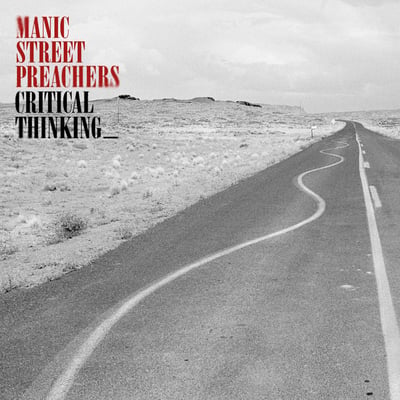
Manic Street Preachers Critical Thinking
Released Feb 7, 2025 Columbia
Established consensus 11 professional reviews Updated Oct 15, 2026
Broadly positive consensus
Manic Street Preachers' Critical Thinking turns familiar rock instincts into a spirited case for facing uncertainty with beauty, rage, and a measure of hope.
How ChoruScore worksCritics' Top Tracks
The songs critics returned to most
Hiding in Plain Sight
2 critic mentions
“the Anne Sexton-inspired ‘Hiding In Plain Sight’ is the first ever Manics' single with lead vocals from the band’s primary lyricist” — Hot Press
Decline & Fall
3 critic mentions
“The song taps into mid-life nostalgia, which lead single ‘Decline & Fall’ also maps, whilst harnessing an ABBA energy” — Hot Press
People Ruin Paintings
1 critic mention
“the celebration of pure truth in nature on ‘People Ruin Paintings” — New Musical Express (NME)
Full critic consensus
Manic Street Preachers' Critical Thinking turns familiar rock instincts into a spirited case for facing uncertainty with beauty, rage, and a measure of hope. The critical reception is positive: the record earned a 79.09/100 consensus score across 11 professional reviews, with critics praising its sharp social commentary and melodic force while noting that it favors the band's established strengths over reinvention.
The best songs on Critical Thinking balance pointed critique with a lift in their hooks. The abrasive title track sets the tone, taking aim at mindfulness culture over a wiry, Gang of Four-influenced backdrop. Critics also single out “Decline & Fall” for its bittersweet euphoria and piano-driven sweep, while “Hiding in Plain Sight” stands out as a melodic gem. On “Brushstrokes of Reunion,” yearning and doubt make room for hope; elsewhere, the album's reflections on ageing and mid-life nostalgia sit alongside resistance, empathy, and a critique of contemporary life.
Reviewers hear a band drawing on rock tradition without retreating into mere nostalgia. One perspective emphasizes the record's familiar Manics strengths and graceful ageing; another finds a satisfying clash of classic-rock swagger and atmospheric unease. Together, the reviews suggest a reflective, occasionally scabrous collection whose songs keep searching for meaning without surrendering their bite. For anyone asking whether Critical Thinking is worth hearing, its strongest tracks offer a persuasive answer, and the detailed reviews below explore where the album's familiar approach pays off.
Track Ratings
How critics rated each track, relative to this album (0-100). Only tracks that made critics feel something are rated.
Critical Thinking
Decline & Fall
Brushstrokes of Reunion
Hiding in Plain Sight
People Ruin Paintings
Dear Stephen
Being Baptised
My Brave Friend
Out Of Time Revival
Deleted Scenes
Late Day Peaks
OneManMilitia
Get the next albums worth your time.
Critic-backed picks in one clean digest. No clutter.
What Critics Are Saying
Deep insights from 11 critics who reviewed this album

Ho
Critic's Take
Manic Street Preachers open Critical Thinking with a brusque question that sets the tone, and the best tracks - notably “Critical Thinking” and “Hiding in Plain Sight” - deliver sharp social commentary wrapped in classic rock muscle. Will Russell's voice lingers on the album's mid-life nostalgia, with “Decline & Fall” and “Late Day Peaks” mining the same territory while still finding melodic lift. The record feels like a strange, satisfying hybrid of JG Ballard atmosphere and '70s rock swagger, and the closing anthem “OneManMilitia” seals the Manics' 2020s identity. This is an affectionate, occasionally scabrous set that rewards listeners looking for both critique and singalong hooks.
Key Points
-
Hiding in Plain Sight is best for its novelty and '70s rock swagger with Nicky Wire on lead vocals.
-
The album's core strengths are sharp social critique delivered through classic Manics rock and nostalgic melodicism.
Themes
mu

Critic's Take
Manic Street Preachers find no absolute design for life, but that’s no reason to give up the fight on Critical Thinking. The best songs on Critical Thinking include “Decline & Fall,” a slab of bittersweet euphoria, and the Wire-fronted gem “Hiding in Plain Sight.” Hope shot through yearning and doubt ring out on “Brushstrokes of Reunion,” while “People Ruin Paintings” celebrates pure truth in nature. Met with the void, the Manics battle on to fill it with beauty and rage.
Key Points
-
“Decline & Fall” is the standout for its bittersweet euphoria and its song of small victories in a waning world.
-
The album’s core strengths are its uplifting warmth, provocative spikiness, and persistent search for beauty amid uncertainty.
Themes


Th
Critic's Take
Manic Street Preachers have returned with Critical Thinking, an album that mostly trades on the band’s familiar strengths rather than radical reinvention. The abrasive title track and opener, “Critical Thinking”, jolts the record into life with Nicky Wire skewering mindfulness and wellness over a Gang of Four-influenced backdrop, making it one of the best tracks on Critical Thinking. The result is a reflective, thought-provoking set that finds the Manics ageing gracefully rather than reinventing themselves.
Key Points
-
The title track is best because its abrasive, curveball opening and sharp social skewering give the album immediate bite.
-
The album’s core strength is trading on familiar Manics’ signifiers—galloping piano, 1980s jangle—and ageing into reflective, thought-provoking songs.
Themes


Re
