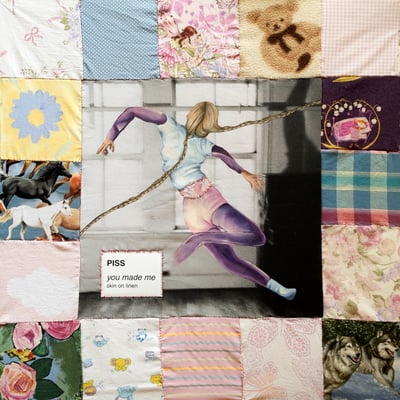
PISS you made me / skin on linen
Released Oct 30, 2026 Sub Pop Records
Established consensus 9 professional reviews Updated Nov 5, 2026
Strong critical consensus
PISS's you made me / skin on linen turns testimony into a volatile collision of noise rock, hardcore, spoken word, and performance art.
How ChoruScore worksCritics' Top Tracks
The songs critics returned to most
blocking a scene you can't remember
8 critic mentions
“At the album’s climax, “blocking a scene you can’t remember,” Zantingh, backed by a Slint-esque slowcore build, performs a screenplay in third-person perspective:” — The Line of Best Fit
i wanted to be a singer
7 critic mentions
“I wanted to be a singer” launches with shimmery arpeggios but soon segues into crushing, distortion-drenched chords.” — Beats Per Minute
i keep trying to change the ending
4 critic mentions
“I keep trying to change the ending” is similarly epic in its vision and sonic range.” — Beats Per Minute
Full critic consensus
PISS's you made me / skin on linen turns testimony into a volatile collision of noise rock, hardcore, spoken word, and performance art. The critical consensus is emphatic: the record earned an 87/100 score across 9 professional reviews, with critics praising its refusal to soften its confrontation with misogyny, sexual violence, and the lasting effects of trauma. This is demanding, often punishing music, but its intensity gives the subject matter force rather than spectacle.
The standout track, “blocking a scene you can't remember,” was singled out by reviewers for its fractured account of trauma, shifting from slow, hazy passages to eruptions of manic yelling. Critics also praised “i wanted to be a singer” for turning spoken-word urgency into a visceral roar, while “there was a door” delivers some of the album's most harrowing moments. Across these songs, PISS channel anger at systems that normalize abuse, pairing abrasive guitars and clattering rhythms with vulnerable, sometimes disorienting vocal performances. The best songs on you made me / skin on linen are not easy listening; their volatility is central to how they make survivor testimony impossible to ignore.
Reviewers broadly agree that the album rejects neat resolutions. Some hear its closing stretch, especially “i keep trying to change the ending,” as a fragile opening toward safety, healing, or change; elsewhere, hope remains tentative, shadowed by trauma's cycles. That tension gives the record more than a single register of fury: it makes room for vulnerability without pretending that recovery is simple. Critics' strong reception makes the case for listening, though the album's unflinching subject matter and confrontational sound are part of the experience, not incidental obstacles.
Track Ratings
How critics rated each track, relative to this album (0-100). Only tracks that made critics feel something are rated.
kai and friends
i wanted to be a singer
andrea I
time loop at hot slit
manon on the trial of gisèle pelicot
a little girl's horse craze betrays her
toni
there was a door
andrea II
how can you act opposite to this emotion?
blocking a scene you can't remember
self-blame with thorn necklace and hummingbird
vikki
Rote Zora. “Resistance is Possible.” Emma, no. 6, June 1984, pp. 39-41.
i keep trying to change the ending
Get the next albums worth your time.
Critic-backed picks in one clean digest. No clutter.
What Critics Are Saying
Deep insights from 10 critics who reviewed this album
Fa
Critic's Take
The best tracks on you made me / skin on linen are not easy listens, and that is precisely the point: PISS make these conversations impossible to ignore. “time loop at hot slit” and “a little girl's horse craze betrays her” move through the misogyny of adolescence, before the most horrific scenes are played out on “there was a door”. The album’s centrepiece, “blocking a scene you can't remember”, is where fractured syntax and Zantingh’s fearless recounting of past trauma feel heaviest. By the end, “i keep trying to change the ending” softly sings a mantra to herself in order to make herself feel safe, though there’s only so long that feeling of ease can be retained before the cycle repeats itself.
Key Points
-
“blocking a scene you can't remember” is the centrepiece, where Zantingh’s confrontation with her fears and fractured syntax feel heaviest.
-
The album’s core strength is its uncompromising account of trauma and misogyny, with music that makes these conversations impossible to ignore.
Themes

Critic's Take
PISS cuts right down to the bone on you made me / skin on linen, constructing and deconstructing noise-rock soundscapes at the pace of a post-traumatic flare-up. The best tracks on you made me / skin on linen include “blocking a scene you can't remember,” where a Slint-esque slowcore build gives way to manic yelling as Zantingh recalls her assault, over and over. Hope is an uphill battle, but it is there to be found among the rubble of this confrontational album, which refuses to temper its own righteous anger and dares to imagine a world where survival must be possible.
Key Points
-
“blocking a scene you can't remember” stands out as the album's climax, its slowcore build giving way to Zantingh's manic recollection.
-
The album's confrontational noise-rock and feminist voices contextualise trauma while holding fast to resistance and survival.
Themes
Th
Critic's Take
PISS are coming at you made me / skin on linen like it's anything but an album or just much more than an album, and the best songs on the record make that ambition painfully clear. “i wanted to be a singer” is a statement of intent and, in a way, desperation, with a vocal performance like none other in 2026. “time loop at hot slit” is another incredible moment of blistering hardcore and noise rock, with layers to what is being said here. The most harrowing moments arrive with “there was a door” and “blocking a scene you can't remember,” where the music and message make for a very powerful, emotionally punishing experience. And “i keep trying to change the ending” closes on a gentle, eerie loop that is difficult to break.
Key Points
-
“i wanted to be a singer” stands out for its raw, painful vocal performance, which the reviewer calls unlike any other in 2026.
-
The album's core strengths are its blistering noise rock, layered writing, and bold engagement with trauma and rape culture.
Themes

Critic's Take
PISS make a towering monument in an endless fight on you made me / skin on linen, a complex and challenging record built from carefully crafted rage. The best songs on you made me / skin on linen include “i wanted to be a singer,” whose gnawing guitar swings like a buzzsaw, and the heart-wrenching slowcore of “blocking a scene you can't remember,” where Zantingh's vivid, haunting imagery makes the vulnerability feel brutal. On “i keep trying to change the ending,” notes seem to cast out to infinity, turning pain into something beautiful and imagining a future reality without its predetermination.
Key Points
-
The heart-wrenching slowcore of “blocking a scene you can't remember” makes its vulnerable brutality and haunting imagery especially gripping.
-
The album's carefully crafted rage, plural perspectives and calls for resistance make it a complex, challenging record.
Themes

Critic's Take
PISS tie themselves to sociolegal and academic contexts, the relatively studious nature of these texts and the equanimous tone with which they’re communicated highlighting their rawer and primal qualities. The best songs on you made me / skin on linen include “i wanted to be a singer,” where shimmery arpeggios soon segue into crushing, distortion-drenched chords, and “a little girl's horse craze betrays her,” which captures Zantingh’s unexpurgated rage. On the spellbinding “blocking a scene you can't remember,” she pivots from a drawly, almost narcotized delivery to a Kali-like mania, while the band moves between echoey slowcore segments and cacophonic eruptions. “i keep trying to change the ending” is similarly epic in its vision and sonic range, and PISS are an undeniable juggernaut blending punk, hardcore, and trauma-soaked yet beguiling lyricism.
Key Points
-
“blocking a scene you can't remember” is a standout for its therapeutic psychodrama, shifting delivery, and movement between slowcore and cacophony.
-
The album's core strength is the collision of punk and hardcore with trauma-soaked, literarily charged narratives.
Themes
No
Critic's Take
Piss demands to be heard. On you made me / skin on linen, the best songs include “i wanted to be a singer”, which builds up and tears down as Zantingh repeats “listen” with shifting feelings of expression. “time loop at hot slit” and “a little girl's horse craze betrays her” bring the social and political exploitation of childhood to attention. And “blocking a scene you can't remember” brings a shoegaze haze to one of the record's most heartbreaking phrases. The record is important work, and Piss emerges as a lasting, forward-leaning voice that will inspire.
Key Points
-
“i wanted to be a singer” stands out for connecting the album's themes and carrying the weight of an impact statement.
-
The album's raw noise-rock, spoken-word poetry, and personal accounts make its advocacy against sexual violence impossible to sweep under the rug.
Themes

Critic's Take
PISS reject tidy resolutions: the best songs on you made me / skin on linen direct their fury straight at the jugular of a political and social system underpinned by rampant misogyny. “i wanted to be a singer” sets out the band’s terms plainly, its pile-driver guitars and clattering drums turning grindcore’s macho brutality against the patriarchy. On “blocking a scene you can’t remember”, harrowing testimony is violently and repeatedly interrupted, evoking the dehumanising ordeal of reporting rape and trauma’s fractured sense of time. What survives is not hope but anger, unsoftened, unapologetic, and absolutely necessary.
Key Points
-
“i wanted to be a singer” is best because it sets out the band’s terms plainly, with pile-driver guitars and clattering drums.
-
The album’s core strength is turning personal testimony and feminist politics into unsoftened, unapologetic anger.
Themes

Critic's Take
PISS’s debut you made me / skin on linen leaves you feeling like you haven’t been able to exhale properly for its entire duration. The review does not single out individual songs, so there are no named best tracks on you made me / skin on linen; instead, its collage of spoken word and noise rock gives space to different voices. It is this multidisciplinary method, and the more developed discussion of sexual violence and gender norms it allows, that makes the record feel breathtaking.
Key Points
-
The review does not identify a best song, praising the album’s overall impact instead.
-
The album’s collage of spoken word and noise rock gives space to different voices and a more developed discussion of its subject matter.
Themes

Critic's Take
PISS opens you made me / skin on linen with the innocence of “kai and friends,” immediately shattered by the thrashing distortion of “i wanted to be a singer.” That song sets up an album of vignettes where soft and melancholic melodies give way to escalating, screaming vocals, and ripping guitars. The reckless abandon of “time loop at hot slit” and “blocking a scene you can't remember” teeters between hardcore and performance art, while “there was a door” and “how can you act opposite to this emotion?” stand as highlights. These are the best tracks on you made me / skin on linen not because they make for easy listening, but because the band's raw, volatile performance makes its vulnerable and defiant message hit with power.
Key Points
-
“there was a door” and “how can you act opposite to this emotion” stand out as abrasive highlights.
-
The album's raw, volatile performance turns its vulnerable and defiant message into a powerful, heartbreaking statement.
Themes
Th
Critic's Take
PISS drag you under with you made me / skin on linen, a shocking, unflinchingly stark debut. The best songs on you made me / skin on linen are the ones that leave no room to look away: “i wanted to be a singer” turns spoken word into a brutal scream, while “blocking a scene you can't remember” is haunting, intensely private and captivating. The record winds down with “i keep trying to change the ending”, one of its most ambitious and satisfying tracks, making space for silence, crashing reverb and frenetic drums. PISS lean into atonal sounds with flashes of punk fury, making for an often uncomfortable, entirely non-passive listening experience.
Key Points
-
“i keep trying to change the ending” stands out as one of the album’s most ambitious and satisfying tracks, with its free-flowing structure and melodic turns.
-
The album’s core strength is its unflinching mix of spoken word, atonal noise and punk fury in service of confronting violence and trauma.