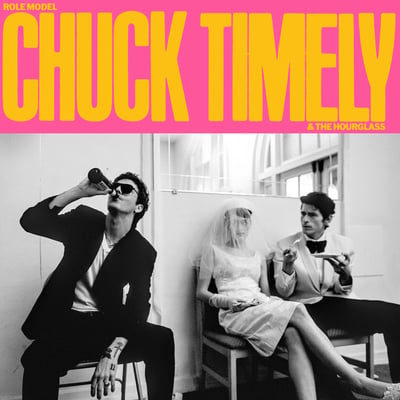
ROLE MODEL Chuck Timely & The Hourglass
Released Aug 7, 2026 Interscope Records
Consensus forming 3 professional reviews Updated Oct 11, 2026
Split critical consensus
Consensus is still forming across 3 professional reviews. ROLE MODEL's Chuck Timely & The Hourglass channels a masochistic nostalgia into a roadhouse-flavored collection that often trades raw confession for crafted pastiche.
How ChoruScore worksCritics' Top Tracks
The songs critics returned to most
High Hopes 3000
2 critic mentions
“Slickly produced lead single ‘High Hopes 3000’ sets the protagonist up as a wannabe optimist” — New Musical Express (NME)
Harmony
1 critic mention
“Closer ‘Harmony’ opens up the sky, relieving Chuck’s neuroses, leaving him a “little less lonely”.” — DIY Magazine
Service Receipt
1 critic mention
“The quest continues on ‘Service Receipt’, an MOR adventure in which he visits a diner” — New Musical Express (NME)
Full critic consensus
ROLE MODEL's Chuck Timely & The Hourglass channels a masochistic nostalgia into a roadhouse-flavored collection that often trades raw confession for crafted pastiche. Across professional reviews, critics note that the album's charm comes from its vivid character work and melodic instincts even when the Americana affect threatens to feel performative; the consensus suggests a record that's likable more for its moments than its momentum.
Critics agree that the album earned a middling reception, compiling a 60/100 consensus score across 2 professional reviews, with praise concentrated on a handful of standout tracks. Reviewers consistently point to “High Hopes 3000” and “Song Is All You Get” as the record's clearest successes—examined for their indie-Americana shimmer, barn-dance ache, and sticky hooks—while “Service Receipt” and “Good Thing” receive nods for theatricality and sheepish charm. Themes of singledom, failed romantic pursuits, loneliness, and romantic dissonance recur throughout, wrapped in barroom/roadhouse atmosphere and a self-reflexive alter-ego conceit that frames much of the songwriting.
While some critics fault stretched ballads and occasional cartoonish shtick, others argue that Pillsbury's production and Jordan Bassett's witty delivery make this an accessible, occasionally essential detour in Role Model's catalog. For listeners asking "is Chuck Timely & The Hourglass good?" the critical consensus is mixed but appreciative: the record is worth seeking out for its best songs and its confident Americana revival takes, even if it doesn't fully cohere from start to finish. Read on for full reviews and track-by-track notes.
Track Ratings
How critics rated each track, relative to this album (0-100). Only tracks that made critics feel something are rated.
Chuck’s Mantra
High Hopes 3000
Song Is All You Get
Love I You
Chasing Midnight
Good Thing
Joy
Service Receipt
Honeydew
Stain
The Wedding
Harmony
Chuck Timely & The Hourglass
Get the next albums worth your time.
Critic-backed picks in one clean digest. No clutter.
What Critics Are Saying
Deep insights from 5 critics who reviewed this album
mu

Critic's Take
ROLE MODEL's Chuck Timely & The Hourglass sketches a sleazy, sentimental protagonist whose best moments arrive in the album's more vividly characterised tracks. The review loiters on “High Hopes 3000” and “Song Is All You Get”, praising their indie-Americana and barn-dance ache while noting the charmingly performative self-pity of “Good Thing”. Otis Robinson's voice relishes the throwback textures and near-psychedelic Beatles-esque flourishes that make the best tracks feel alive and hopeful. By closing with “Harmony” the record relieves Chuck's neuroses and leaves the listener with a warming, melancholic resolution.
Key Points
-
The best song moments—especially on “High Hopes 3000”—capture the album's indie-Americana heart and evocative nostalgia.
-
The album's core strength is its vivid character work and throwback, Beatles-esque Americana that makes the protagonist sympathetically alive.
Themes

Critic's Take
ROLE MODEL sounds less claustrophobic on Chuck Timely & the Hourglass, leaning into singledom with a knowing wink rather than wallowing. Jordan Bassett’s voice prizes craft over confession, so he lands on the album’s best songs - chiefly “High Hopes 3000” and “Service Receipt” - where Pillsbury’s slick production and sly lyrics make the hooks stick. There is still self-pity in spots, notably on “Love I You” and “Stain”, but Bassett argues the record’s plucky country-pop pastiche makes it Role Model’s most likeable album yet. The result reads as a step outside himself, a record more interested in melody and scene than in biography.
Key Points
-
“High Hopes 3000” stands out for its slick production and optimistic, catchy protagonist lines.
-
The album’s core strength is polished country-pop craftsmanship that frames singledom with wry self-awareness.
Themes

Critic's Take
In a voice that’s equal parts smirk and softboy charm, ROLE MODEL leans into the roadhouse affect of Chuck Timely & The Hourglass, and the best songs here make that conceit work. The clearest winner is “Song Is All You Get”, where Pillsbury gets misty and the Hornsby nod actually lands, and “Service Receipt” is perfect in its sheepish, corny, howl-at-last-chorus way. Lead single “High Hopes 3000” has rollicking ambition even if it sometimes plays it safe, while ballads like “Honeydew” and “Stain” start to drag the set. Overall, the record’s charm keeps it listenable even when the roadhouse shtick feels a little cartoonish.
Key Points
-
“Service Receipt” is the album’s clearest high point for its perfect blend of humor and vocal release.
-
The album’s strengths are its nostalgic roadhouse mood and improved songwriting, even when the throwback shtick feels self-conscious.