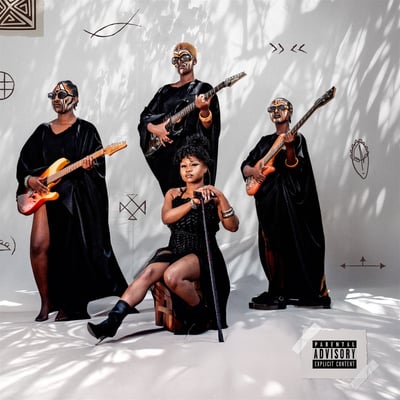
Sampa the Great Nu Zamrock
Released Oct 30, 2026 Loma Vista Recordings
Consensus forming 3 professional reviews Updated Nov 2, 2026
Strong critical consensus
Consensus is still forming across 3 professional reviews. Sampa the Great's Nu Zamrock turns musical reinvention into an act of cultural pride: a vibrant, full-circle vision that draws on Zambian heritage while moving confidently into new territory.
How ChoruScore worksCritics' Top Tracks
The songs critics returned to most
Canary
2 critic mentions
“heralds a new vanguard on the moody and menacing ‘Canary” — Clash Music
Simon Says
2 critic mentions
“Sampa lambasts suffocating industry standards on the nimble ‘Simon Says” — Clash Music
Star (feat. KAMAUU)
2 critic mentions
“Later, on Star, she croons affirmation to someone who might be wondering how to get from the crowd to the stage” — The Guardian
Full critic consensus
Sampa the Great's Nu Zamrock turns musical reinvention into an act of cultural pride: a vibrant, full-circle vision that draws on Zambian heritage while moving confidently into new territory. The critical consensus is emphatically positive, with a 93.33/100 score across three professional reviews. Critics praise the record’s eclectic fusion as cohesive rather than borrowed, shaped by family history, distinctive polyrhythms, raw guitar fuzz, and Sampa’s forceful, self-possessed rap. Its shifts in sound give the album momentum while keeping its roots in view.
Among the best songs on Nu Zamrock, “Simon Says” stands out as both a stomping declaration of personal resolve and a pointed challenge to suffocating music-industry standards. “Canary” draws praise for its menacing intensity and sense of arrival, while “Location” sets Zamrock guitar riffs against trap production, sharp flows, and a traditional choir to address geopolitics and inequality. Near the album’s close, “Nicole's Interlude” provides a serene pause within the larger narrative. Reviewers differ in emphasis, from the pleasure of the record’s changing textures to its fearless genre fusion, but agree that those contrasts serve a distinctive artistic identity. Nu Zamrock makes a compelling case for evolution without abandoning lineage, and its strong critical reception makes it a rewarding listen for anyone drawn to adventurous, culturally grounded rap.
Track Ratings
How critics rated each track, relative to this album (0-100). Only tracks that made critics feel something are rated.
Intro
Prayer In A Dance
Can't Quit Music
Simon Says
Catch If You Can
Can’t Hold Us (feat. Mwanje)
Location
Canary
Maybe Then
Supernova (feat. Sia)
So Mone
Star (feat. KAMAUU)
The Journey Is Underrated
Gone (feat. Nicole Gumbe)
Nicole's Interlude
I Can Love
Get the next albums worth your time.
Critic-backed picks in one clean digest. No clutter.
What Critics Are Saying
Deep insights from 4 critics who reviewed this album

Critic's Take
Sampa the Great’s full-circle blend of blends settles in beautifully on repeat listens, tumbling distinctive polyrhythms and raw, high-gain guitar fuzz alongside the self-possessed snap of her lyrical style. The best songs on Nu Zamrock include the stomping “Simon Says,” where she declares her demons dead, and “Canary,” which hits like a truck.
Key Points
-
“Canary” is a standout because its unflinching force hits like a truck.
-
The album’s core strength is the full-circle fusion of psych-rock, distinctive polyrhythms, kalindula, and raw guitar fuzz.
Themes
Hi
Critic's Take
Sampa the Great’s Nu Zamrock is her boldest genre fusion yet, a sprawling musical narrative that honours the sound of her roots while fearlessly pushing into new territory. The best songs on Nu Zamrock make its sudden genre shifts feel cohesive: “Location” sets original Zamrock guitar riffs against modern trap production, sharp rap flows, and a traditional backing choir. Near the close, “Nicole's Interlude” offers a serene, meditative moment, a quiet space to absorb the broader narrative.
Key Points
-
The album’s core strength is weaving Zambian musical foundations with modern rap and melodic singing into a cohesive whole.
Themes

Critic's Take
Sampa the Great signals an anointed rebirth on Nu Zamrock, where an intense and fearless flow punches through a vibrant meld of sounds. The best tracks on Nu Zamrock find her lambasting suffocating industry standards on “Simon Says”, delivering a sermon on geopolitics and inequality on “Location”, and heralding a new vanguard on the moody and menacing “Canary”.
Key Points
-
The album’s core strengths are its fearless flow, vibrant musical blend, and defiant conversation between past and present.
Themes

Critic's Take
Sampa the Great returns with a hugely entertaining, eclectic and colourful Nu Zamrock, a remixing reinvention with a strong sense of family history and cultural pride. Its many influences and changing textures never feel like a collection of borrowed styles, but part of a living, breathing, viscerally evolving musical identity.
Key Points
-
“Simon Says” stands out for its fierce psychedelic hip-hop, restless percussion, and Sampa's rapid-fire, syncopated flow.
-
The album's changing textures and wide-ranging influences become a distinctive musical identity rooted in Zambian history and cultural pride.