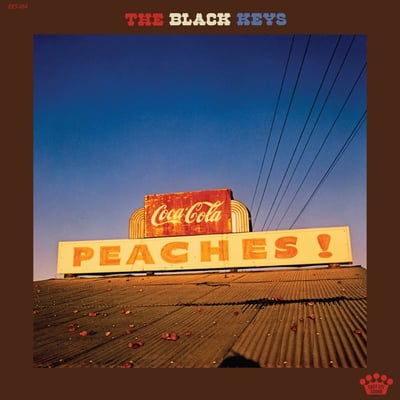
The Black Keys Peaches!
Released May 1, 2026 Easy Eye Sound/Warner Records
Established consensus 10 professional reviews Updated Oct 1, 2026
Broadly positive consensus
The Black Keys's Peaches!
How ChoruScore worksCritics' Top Tracks
The songs critics returned to most
You Got to Lose
6 critic mentions
“The rockingest moment is a rip through Ike Turner’s Chicago-blues scorcher “You Got to Lose,” — Rolling Stone
Where There's Smoke, There's Fire
6 critic mentions
“their reimagining of Willie Griffin’s crate-digger gem “Where There’s Smoke, There’s Fire” turns a spooky shimmy into something with the haunted intensity” — Rolling Stone
Tomorrow Night
4 critic mentions
“the inclusion of two Junior Kimbrough numbers — Nobody But You Baby and Tomorrow Night — are hardly surprising” — Classic Rock Magazine
Full critic consensus
The Black Keys's Peaches! reconnects the duo with the ragged, swamp-born blues that defined their early years, delivering gritty covers and a handful of genuinely electrifying moments. Across professional reviews the record earned a 78.4/100 consensus score from 10 reviews, and critics consistently point to raw one-take urgency, slide-guitar juke-joint swagger and a live-in-the-room feel as the album's chief virtues. For listeners asking "is Peaches! good?" the short answer rests in those peaks: several reviewers name specific standouts while others admire the record as a whole for its return-to-roots energy.
Reviewers repeatedly praise tracks such as “You Got to Lose”, “Tomorrow Night”, “Where There's Smoke, There's Fire” and “Who’s Been Foolin' You” as the best songs on Peaches!, citing snarling guitar, crunchy drums and cathartic performances that feel lived-in rather than overproduced. Pitchfork and Mojo highlight the ferocity of “You Got to Lose” and the seven-minute sweep of “Nobody But You Baby” as high points, while Clash, Classic Rock and DIY celebrate the album's garage-blues immediacy. Critics note recurring themes - homage to Mississippi Hill Country blues, improvisation and band camaraderie - even as some point to excessive personnel and added percussion muddying certain arrangements.
The consensus among music critics frames Peaches! as a revitalised, if occasionally messy, homage to blues predecessors: a record where vintage grit and impulse sometimes trump curation. For readers searching for a Peaches! review or wondering about the best songs on Peaches!, the critics agree that the album's strongest moments make The Black Keys sound vital again, offering enough raw craft and catharsis to be worth hearing and debating in equal measure.
Track Ratings
How critics rated each track, relative to this album (0-100). Only tracks that made critics feel something are rated.
Where There's Smoke, There's Fire
Stop Arguing Over Me
Who’s Been Foolin' You
It’s a Dream
Tomorrow Night
You Got to Lose
Tell Me You Love Me
She Does It Right
Fireman Ring the Bell
Nobody But You Baby
Get the next albums worth your time.
Critic-backed picks in one clean digest. No clutter.
What Critics Are Saying
Deep insights from 16 critics who reviewed this album

Critic's Take
The Black Keys sound like they’re reveling in the mud on Peaches!, and the reviewer salutes tracks that carry that brazen youthfulness - the record’s slow numbers and infectious grooves stand out. The prose singles out the album’s unexpected falsetto and classic melodies, which makes the best tracks feel both polished and raw.
Key Points
-
The best song(s) are the album’s slower, "stellar" numbers because they fit snugly into the album’s flawless pacing.
-
The album’s core strengths are its grime-and-swagger blues-rock revival and an R&B-infused, sexy polish that feels genuine.
Themes

Critic's Take
The Black Keys make Peaches! feel like a return to a room where sweat, grit and groove matter most, and the reviewer's pleasure is obvious in the way they dwell on “Who’s Been Foolin' You” and “It’s a Dream”. The record's rough, live-in-a-single-room production reconnects the duo with their early medium-fidelity approach, which is precisely what makes the best tracks on Peaches! hit: the drums are crunchy, the guitars bleed, and the grooves drive songs such as “Who’s Been Foolin' You” into being standouts. Reworking deep cuts like “Where There's Smoke, There's Fire” and “She Does It Right” also underlines how the band bring signature sound and juke-joint boogie to familiar material, making these among the best tracks on Peaches! for anyone asking about the album's best songs or best tracks.
Key Points
-
“Who’s Been Foolin' You” is the best song because its deep, heavy grooves epitomize the record's raw, live energy.
-
The album’s core strengths are its live, medium-fidelity production and a return to the duo’s unpolished, groove-driven roots.
Themes

Critic's Take
The Black Keys return to the grit that made them vital on Peaches!, and the best songs on the album prove it. Tracks like “You Got to Lose” and “Who’s Been Foolin' You” are raw, urgent highlights, where the duo sound ferocious and unencumbered. The closer pair, “Fireman Ring The Bell” and “Nobody But You Baby”, provide a satisfying one-two punch, the former a sweeping blues jam and the latter a slicker seven-minute coda. Overall, the record reads as a triumphant, cathartic return that balances rough garage energy with refined musicianship.
Key Points
-
“You Got to Lose” stands out as the album’s fiercest, a fast, dirty blues rocker and likely live staple.
-
The album’s core strength is a return to garage-blues basics, blending raw energy with refined musicianship.
Themes
Cl
Critic's Take
The Black Keys return to the raucous roots on Peaches!, and the best songs on the album - notably “Nobody But You Baby” and “Tomorrow Night” - showcase a mystical swagger and deep groove that feels revitalised. The reviewer revels in how “Where There's Smoke, There's Fire” becomes an electrified jolt and “You Got to Lose” is slashed and torn in a midnight rumble, restoring the band’s filthy amp-driven DNA. Recorded largely live with minimal overdubs, the top tracks carry an urgency and intimacy that makes them the clear standouts on Peaches!. This is exactly the raw, gloriously unrefined sound the band needed, and it makes the album’s best tracks truly sing.
Key Points
-
The best song, 'Nobody But You Baby', stands out for its mystical swagger and particularly deep groove.
-
The album’s core strengths are live-recorded urgency, raw distortion, and faithful yet inventive reinterpretations of blues sources.
Themes
Fa
Critic's Take
The Black Keys return on Peaches! sounding like a band rediscovering comfort in chaos, and the record’s best tracks crystallise that feeling. There is also attention paid to “It’s a Dream” for its tinny mouth organ, but the piece insists this is an album you inhabit rather than cherry-pick. The tone is affectionate and admiring, presenting the best songs on Peaches! as moments within a raw, improvised whole.
Key Points
-
The best song, "Tomorrow Night", stands out for its braggadocious guitar solo and is named the standout track.
-
The album's core strength is its raw, improvised bluesy emotion that makes it best experienced as a whole.
Themes

Critic's Take
In his typically observant, slightly elegiac tone Danny Eccleston hears The Black Keys reconnecting with the rough-hewn pleasures of the blues on Peaches!, and he singles out the album’s nastier covers as its best tracks. He praises “You Got To Lose” for being "attacked with anarchic gusto" and applauds “Tomorrow Night” for Auerbach’s "snarling, reverb-laden guitar" spiraling out of control, both framed as the record’s high points. Eccleston frames these moments as cathartic and urgent rather than nostalgic, arguing that the band play the material "like the blazes" and so reclaim their grit. The result, in his view, is that the best songs on Peaches! truly feel lived-in and immediate, proof that the Keys still make thrilling, raw music.
Key Points
-
You Got To Lose is the album's best song for its anarchic gusto and reclaiming of raw garage-blues energy.
-
Peaches! succeeds by privileging urgent, lived-in performances and homages to hill country blues over polished pop.
Themes

Re

Critic's Take
Grant Sharples hears spark and slog on Peaches!. He praises the raw soloing on She Does It Right while arguing the crowded arrangements often smother those moments. He describes the seven-minute take on Nobody But You Baby as meandering and thinks the band turns You Got to Lose into a questionable, interchangeable exercise. He also calls the version of Stop Arguing Over Me by-the-numbers and notes that added percussion on Fireman Ring the Bell further muddies the mix.
Key Points
-
The best song, “She Does It Right”, stands out for raw soloing that still struggles against an overcrowded mix.
-
The album's core strengths are spontaneous, live-in-the-room performances that are undermined by excessive personnel and poor editing.
Themes

Critic's Take
The Black Keys lean into rootsy covers on Peaches!, and the best songs land where their garage-blues grit meets careful craft. The record feels like a band-of-brothers exercise in perseverance, recorded with raw one-take urgency yet lovingly burnished, which is why these two interpretations stand out. Even in quieter moments the Keys make an echoing noise that keeps the strongest tracks resonant.
Key Points
-
“You Got to Lose” is the album's high-octane standout for its Chicago-blues rip and urgency.
-
Peaches! succeeds by returning to back-to-basics blues covers, recorded with one-take immediacy and warm polish.
Themes

Critic's Take
The review insists that on Peaches! the Black Keys' best tracks - notably “You Got to Lose” and “Nobody But You Baby” - actually flicker with life amid an otherwise staid covers set. Grayson Haver Currin writes with a weary, exacting cadence, arguing that “You Got to Lose” is "electrifying" while the seven-minute “Nobody But You Baby” is "languid and heartsick" and finally gives Auerbach something to say. The tone is elegiac and impatient, pitching praise for those moments against a larger diagnosis that the record is "weirdly free of feeling." This keeps the answer to searches for the best songs on Peaches! grounded in the reviewer's clear stands rather than idle hype.
Key Points
-
The best song is "You Got to Lose" because the band injects real conviction and rhythmic invention into the performance.
-
The album's core strength is occasional bursts of genuine feeling amid otherwise staid, studio-polished covers.
Themes

Critic's Take
I cannot find any discussion of specific songs from The Black Keys on Peaches! in this review text, so there are no identified best tracks or best songs on Peaches! to highlight in the reviewer’s voice. The review is a miscellany of festival and band news rather than a focused album critique. Because the reviewer does not address individual tracks, a track-by-track appraisal of Peaches! is not possible from this text.
Key Points
-
No individual track from Peaches! is discussed, so no best song can be determined from this review.
-
The review's core strength is broad music-industry reportage, not album analysis.
Critic's Take
The Black Keys sound revitalised on Peaches!, and the best songs on Peaches! The record's devotion to R.L. Burnside and Junior Kimbrough gives those standout covers an authenticity that makes them the best tracks here. The result is a covers album that feels raw, telepathic and, simply put, fantastic.
Key Points
-
The album's core strengths are raw, telepathic covers that channel Mississippi Hill Country blues with revitalised energy.
Themes

Critic's Take
Phoebe Hedges writes with measured, slightly critical affection: The Black Keys' return on Peaches! is a reclamation of their roots that delivers reliable highlights rather than surprises. The review insists the best tracks on Peaches! sparkle for their simplicity and swagger, even as the album occasionally slips into predictable territory. Ultimately Hedges frames these songs as strong examples of craft - enjoyable, confidently played, but not revolutionary.
Key Points
-
The best song is praised for cool, radio-ready hooks and chart success, exemplifying the album's strengths.
-
The album's core strengths are confident simplicity and a return-to-roots sound, tempered by predictability.
Themes
Sp
Critic's Take
This review does not discuss specific songs from Peaches!, so there is no clear list of the best songs on Peaches! to surface. The writer focuses on Michael Cera's intimate, home-recorded approach rather than singling out tracks from The Black Keys album, leaving readers without guidance about the best tracks on Peaches!. Because no Black Keys tracks are analyzed in the text, definitive rankings or recommendations for best songs on Peaches! cannot be responsibly offered here.
Key Points
-
No individual tracks from Peaches! are discussed, so no best-song determination can be made from this review.
-
The review emphasizes intimacy and home-recording charm rather than track-level critique.

Critic's Take
This review does not discuss individual songs from Peaches!, so there is no clear list of the best tracks on the album. The piece focuses on tour news and a botched Kings of Leon show rather than evaluating The Black Keys or naming songs from Peaches!. Because the reviewer never addresses tracks like “Where There's Smoke, There's Fire” or “Stop Arguing Over Me” in the text, we cannot identify best songs on Peaches! from this review.
Key Points
-
No specific track is identified as best because the review does not discuss album songs.
-
The review's core strength is reporting touring and incident details rather than musical analysis.